Australian Oilseeds (COOTW): Customer relationships underpin a volatile but scalable retail shift
Australian Oilseeds Holdings Ltd. operates as a producer and processor of chemical-free, non‑GMO cold‑pressed edible oils and oilseed protein meals and monetizes through two principal channels: wholesale contracts and branded retail sales, supplemented by tolling services (a usage‑based fee for crushing oilseeds). Recent FY2024 customer wins with major grocery and wholesale chains have rebalanced revenue away from bulk wholesale toward packaged retail, creating both recurring distribution upside and concentrated counterparty risk. For deeper diligence, visit https://nullexposure.com/.
The commercial model in plain English: how customers drive cash flow
Australian Oilseeds sells finished oils and protein meals at a point in time under standard sales contracts and provides tolling as a service charge for processing oilseeds. Core revenue derives from cold‑pressed edible oils (about 85% of revenue historically) and the business operates with a mix of short‑term, rolling sales arrangements and usage‑based tolling fees. That mix produces two competing dynamics: rapid revenue volatility from short contracts and scalable per‑unit margins when retail distribution expands.
Key operating characteristics drawn from the FY2024 filing:
- Contracting posture: The company uses three‑month rolling contracts for bulk oil sales, creating high revenue re‑price frequency and turnover.
- Pricing and service mix: Tolling is charged as a usage‑based fee, which converts processing throughput into a direct service revenue stream.
- Customer concentration: Top five customers accounted for 64.8% of sales in FY2024, and three customers represented ~60.7% of accounts receivable as of June 30, 2024 — a material concentration that amplifies counterparty risk.
- Counterparty profile and geography: The company targets large retail and wholesale channels (including major supermarket chains and wholesale distributors) and sells products to customers globally.
- Revenue role: The company is primarily a seller of finished goods, with the transfer of goods recognized at a point in time; tolling is an ancillary revenue stream.
- Product focus and maturity: The portfolio is heavily weighted to the core product (cold‑pressed oils), which explains the strategic focus on grocery placements and branded retail distribution.
These firm signals support a view that Australian Oilseeds is a commercially validated small‑cap producer with structural exposure to major buyers and short contract cycles. Investors should weigh the accelerating retail placements against the risk of rapid revenue swings driven by rolling contracts and concentrated receivables.
Who the company sells to — relationship-by-relationship readout
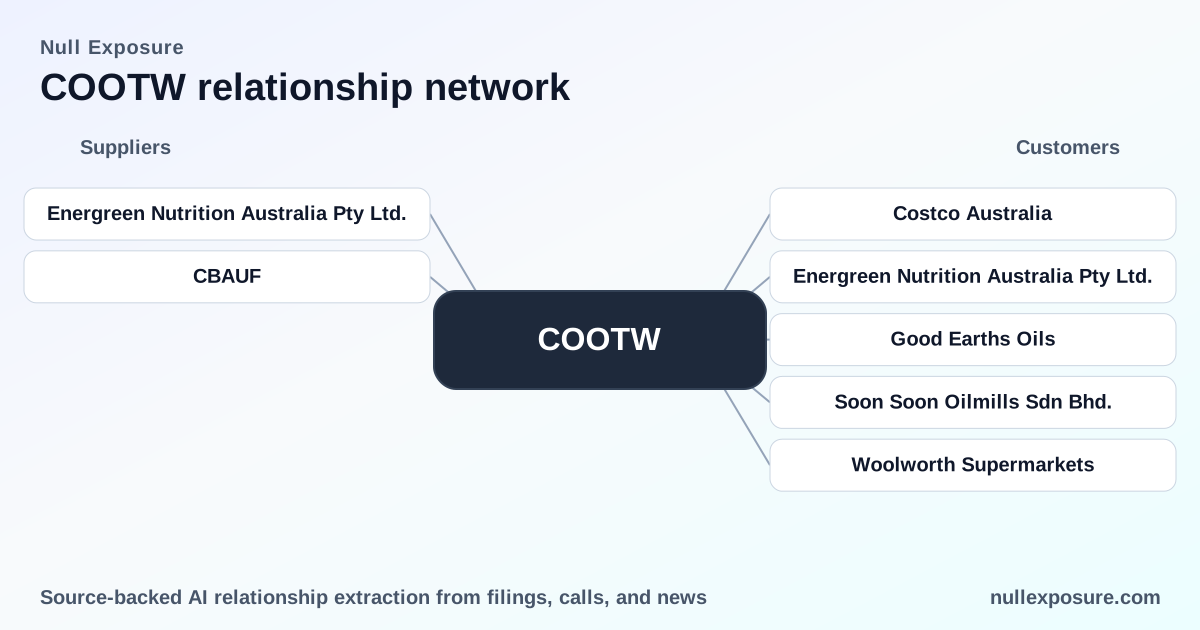
Costco Australia
Australian Oilseeds secured supply contracts to supply 15 Costco Australia stores, which drove a shift from wholesale to retail sales in FY2024; the FY2024 10‑K also notes the Costco Australia supply contract has been extended to January 2025. According to the company's FY2024 10‑K (cootw-2024-06-30), this relationship is an example of large‑enterprise distribution that materially influences revenue composition.
Woolworth Supermarkets
The company reports contracts to supply 1,111 Woolworth Supermarkets national stores, a placement that materially expanded retail channel penetration and contributed to a year‑over‑year revenue mix shift. This detail is disclosed in the company's FY2024 10‑K filing.
Energreen Nutrition Australia Pty Ltd.
Energreen Nutrition Australia appears as a named commercial counterparty in the FY2024 filing with itemized amounts listed alongside the company name, indicating a significant commercial relationship reflected in FY2024 reporting. This reference is contained in the company's FY2024 10‑K.
Good Earths Oils
Good Earths Oils is listed in FY2024 disclosures with a reported figure, identifying it as a purchasing or receivable counterparty during the period and forming part of the customer concentration profile described in the annual report. See the FY2024 10‑K for the entry.
Soon Soon Oilmills Sdn Bhd.
Soon Soon Oilmills Sdn Bhd. is recorded in FY2024 disclosures with a smaller reported figure relative to major domestic accounts, indicating an international supplier or customer link noted in the 10‑K. The relationship is documented in the company's FY2024 annual filing.
What this customer map means for investors
Concentration is the dominant risk and opportunity vector. Large supermarket placements validate the product and support branded margin expansion, but the company’s top five customers account for nearly two‑thirds of sales and three customers hold the majority of receivables — this is a single‑sourced revenue profile in practical terms. Short‑term, rolling contracts give the business price and volume flexibility but create earnings volatility and renewal risk. Usage‑based tolling insulates some margin volatility by converting throughput into fee revenue, but tolling is secondary to product sales.
Financial signals from FY2024 provide a mixed picture:
- Revenue TTM: $41.7M with gross profit of $3.46M, showing product demand with modest gross margin.
- Operating and net performance: Operating margin is positive, but net profit margin is negative, and return on equity is substantially negative — indicating operating strength offset by non‑operating costs or capital structure pressures. These are company‑level facts from the FY2024 filing and suggest that operational scale and receivables management are immediate levers to reach net profitability.
What to watch next — catalysts and red flags
- Contract renewals and expansion with Costco and Woolworths. Retention or expansion of national grocery placements will materially reduce per‑unit distribution cost and increase branded margins.
- Accounts receivable concentration. Collection patterns and credit terms among the top three AR customers determine near‑term cash flow and working capital stress.
- Tolling throughput vs packaged sales mix. Growth in packaged retail sales improves margin profile; growth in tolling increases stable, usage‑based revenue.
- International sales growth. Broader global penetration would dilute concentration but introduces execution complexity.
For a focused view on how customer contracts and counterparty exposure affect valuation and credit profile, review the FY2024 10‑K and related investor materials on the company site. For convenient access to structured relationship intelligence and regular updates, visit https://nullexposure.com/.
Bottom line
Australian Oilseeds leverages major retail placements to pivot from bulk wholesale to branded retail, a strategic transition that increases margin potential but also concentrates counterparty exposure under short‑term rolling contracts. Investors should treat contract renewals with major supermarkets and accounts receivable dynamics as the principal operational levers that will determine whether this shift produces durable value or episodic volatility.