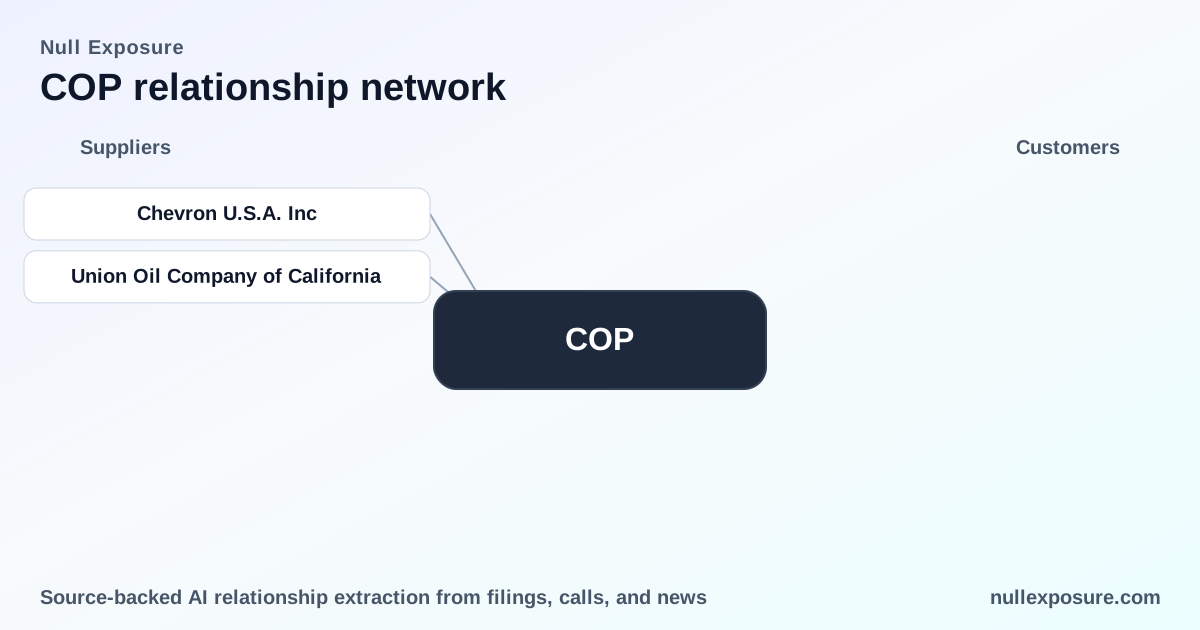
ConocoPhillips (COP): How customer relationships drive cash flow and constrain risk
ConocoPhillips is a global exploration and production company that monetizes hydrocarbons through a blend of long-term sales contracts, short-term and spot commodity sales, and occasional licensing of proprietary process technology. The core economics flow from production and marketing of crude oil, natural gas, NGLs and LNG; commercial arrangements range from multi‑year LNG SPAs that stabilize cash flow to spot sales that directly expose earnings to price swings. Investors should focus on the mix of contract tenors, counterparty types and concentration signals that determine revenue stability and downside risk. For further context on commercial relationships and data-driven monitoring, visit https://nullexposure.com/.
How ConocoPhillips structures customer exposure — the operating model in plain English
ConocoPhillips operates as a seller of commodity production and as a limited licensor of certain process technologies. Revenue generation is driven by three commercial levers:
- Long-term contracted volumes (LNG SPAs and other forward sales) that lock in future deliveries and underpin project economics.
- Short-term and spot sales that capture prevailing market prices and drive margin volatility.
- Strategic licensing and technology agreements that generate ancillary, fee-like revenue and improve partner economics.
Company disclosures show a hybrid contracting posture: the company runs both long-term obligations (contractual gas and oil delivery commitments through 2034) and short-term/spot sales. Counterparties include large enterprises and government-affiliated buyers across global markets, with a meaningful Asia‑Pacific footprint for LNG. A single pipeline buyer in the Lower 48 accounted for roughly 12% of consolidated sales in 2024, a concentration that elevates commercial risk and negotiating leverage. According to company filings, ConocoPhillips also licenses the Optimized Cascade® process technology to customers to maximize LNG plant efficiency, establishing a secondary commercial channel and intellectual property exposure.
What the relationships captured in the record show
Entergy Texas (ETI‑P) — a power buyer reference in ConocoPhillips’ wholesale activity
A WTAW news item (first seen March 9, 2026) references Entergy Texas’ wholesale purchasing strategy and cites a 100‑megawatt contract attributed to ConocoPhillips alongside other supply agreements. This instance illustrates ConocoPhillips’ occasional role as a power/commodity supplier into regional wholesale markets and underscores episodic commercial arrangements that can be short‑dated or event‑driven. Source: WTAW report (March 9, 2026).
W&T Offshore (WTI) — asset divestiture that changes buyer/operator dynamics
An industry report (first seen March 10, 2026) documents W&T Offshore’s acquisition of a 75% working interest and operatorship of the Magnolia field from ConocoPhillips for $20 million. This transaction is a direct example of ConocoPhillips monetizing upstream assets and shifting future production and customer deliveries to a new operator and counterparty. Source: Oil & Gas industry coverage (March 10, 2026).
Commercial constraints and company‑level signals investors must weigh
The evidence in filings and public excerpts generates several actionable signals about ConocoPhillips’ commercial model:
-
Contract tenor is mixed but meaningful long‑term exposure exists. The company reports multi‑year LNG sales (for example, APLNG contracts and other SPAs) and contractual commitments for natural gas and crude deliveries that extend through 2034, which supports project valuation and debt capacity. Company disclosure language referencing contractual delivery obligations through 2034 makes long-term cash flow partially predictable.
-
Short‑term and spot sales drive near‑term earnings volatility. Commodity sales “are generally made at prevailing market prices at the time of sale,” which makes quarter‑to‑quarter revenue and margins sensitive to commodity price moves and volume scheduling.
-
Counterparties are large and heterogeneous, including government and state‑owned entities. The buyer mix includes local distribution companies, utilities, large industrials and state‑owned oil and gas companies, creating diversified demand channels but also regulatory and sovereign exposure in some markets.
-
Geographic reach is global with targeted APAC LNG demand. APLNG sales target Asia‑Pacific markets, and worldwide exploration, production and marketing activities create both diversification benefits and geopolitical/regulatory complexity.
-
Material concentration risk exists at the company level. The Lower 48 sales disclosure that a single pipeline company accounted for about $6.7 billion (roughly 12% of consolidated sales in 2024) is a material revenue concentration signal and a negotiation/operational dependency investors must monitor.
-
ConocoPhillips plays a licensor role on select technology. Licensing of the Optimized Cascade® process technology introduces a fee-like revenue stream and aligns the company with partners building LNG facilities, which alters counterparty dynamics beyond pure commodity sales.
Together, these constraints make ConocoPhillips a company with stable base cash flows from long‑dated contracts and project sales but with meaningful single‑counterparty concentration and spot exposure that will drive headline volatility when commodity markets shift.
Investment implications — what investors should focus on next
For investors and operators evaluating COP customer relationships, the practical implications are clear:
- Balance sheet and valuation hinge on the retained long‑term contracted volumes and the company’s ability to execute on delivery commitments through 2034; these underpin credit metrics and free cash flow guidance.
- Monitor the pipeline buyer relationship closely. A counterparty that represented ~12% of sales in 2024 is a single point of commercial leverage that could affect pricing, take‑or‑pay exposure and cash receipts.
- Track regional LNG demand (APAC) and SPA roll‑forwards. Long‑term SPAs support project pricing; any re‑pricing or non‑renewal in APAC markets would alter forward cash flow profiles.
- Treat licensing as a diversification rather than a core replacement for commodity economics. Technology licensing contributes incremental, lower‑volatility revenue but does not replace the economics of hydrocarbon sales.
Bold investors should weigh ConocoPhillips’ combination of contracted backbone and spot upside against concentration and geopolitical exposures revealed in company disclosures.
For a concise dashboard of customer relationships and real‑time flags tied to ConocoPhillips’ commercial disclosures, visit https://nullexposure.com/ to see how these signals are tracked and surfaced.
Bottom line
ConocoPhillips runs a hybrid commercial model: long‑dated LNG and supply contracts provide foundational cash flow while short‑term and spot sales deliver cyclical upside and downside. Material concentration in the Lower 48 and a global counterparty mix that includes government buyers are the principal operational constraints investors must price. The two relationship entries recorded here — Entergy Texas as a buyer reference and the W&T Offshore Magnolia transaction as a divestiture — are illustrative, not exhaustive, examples of how ConocoPhillips converts assets and production into customer receipts and negotiated obligations. Investors should prioritize contract tenor, counterparty concentration and regional SPA dynamics when modeling COP’s forward cash flows and downside scenarios.