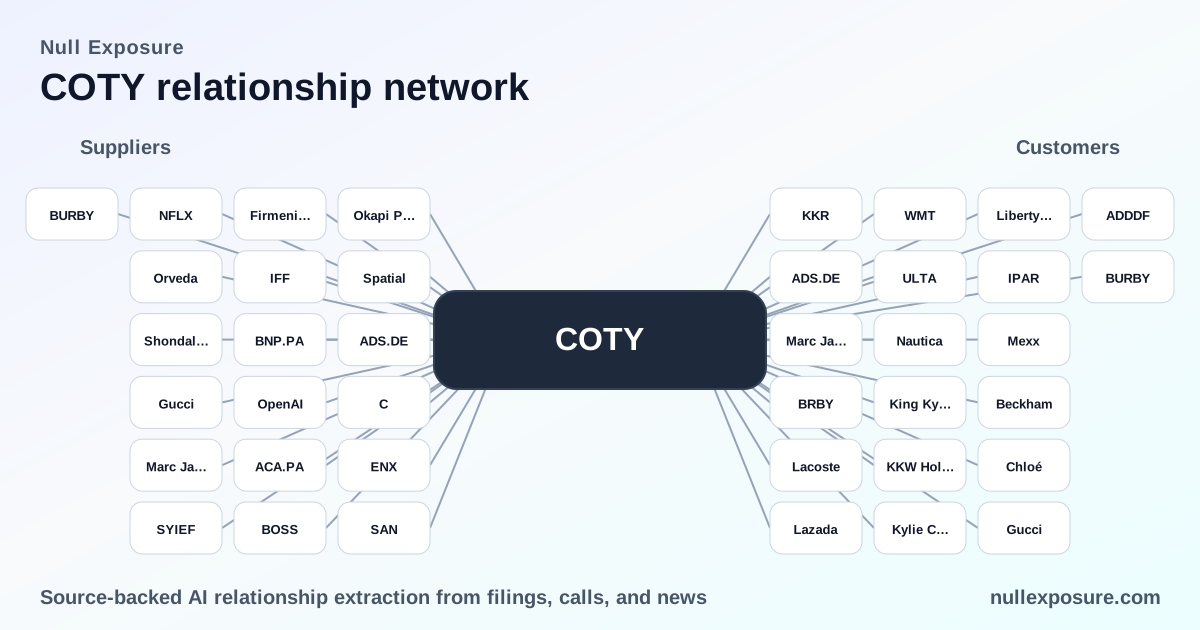
Coty Inc.: commercial relationships that shape a turnaround
Coty Inc. manufactures, markets and distributes branded beauty products—including prestige and mass fragrances, color cosmetics and skin & body—monetizing through global licensing, retail exclusives and wholesale distribution agreements that convert brand IP into recurring shelf revenue and licensing fees. Investors should value Coty as a licensing and distribution business whose near-term cash generation depends on selective brand commercialization, license renewals and asset sales that reduce leverage. For a concise view of Coty’s customer and partner footprint, see Null Exposure’s research hub: https://nullexposure.com/.
What to watch: how Coty turns brands into revenue
Coty’s operating model blends three commercial levers: long-term brand licenses with luxury houses, exclusive retail partnerships for fast-turn launches, and mass-market rollouts via major retailers and distributors. That mix creates diversified revenue channels but keeps the company exposed to licensing negotiations, retailer sell‑through dynamics and the execution risk of celebrity and entertainment tie‑ins.
- Coty markets and distributes in more than 123 countries, giving the company global scale but with geographic concentration in the United States, which is the only country contributing more than 10% of consolidated net revenues in recent years (fiscal 2023–2025).
- No single retailer accounted for more than 10% of global net revenues in fiscal 2025, signaling retailer immateriality at the company level, not absence of retail execution risk.
- Coty sells through third‑party distributors and direct retail channels and acts as both seller and licensor; the company also participates in share transactions with counterparties as a buyer in strategic financings.
If you want a structured feed of Coty partner news and relationship signals visit Null Exposure: https://nullexposure.com/.
Relationship roll call — concise, source‑backed takeaways
Below I list every relationship item captured in the results. Each line is a plain-English synopsis with the cited source.
Ulta Beauty (ULTA) — Bridgerton exclusive, FY2026
Coty tested a Bridgerton-themed fragrance collection sold exclusively at Ulta in the U.S. to measure speed of converting pop-culture interest into prestige sell‑through. Source: Sahm Capital news on the Bridgerton tie‑in (Feb 6, 2026).
KKR — buyer of Wella stake, FY2025
Coty sold its remaining 25.8% stake in Wella to KKR-managed accounts and affiliates, a transaction reported as freeing cash to accelerate debt reduction. Source: Sahm Capital report on the Wella sale (Dec 19, 2025).
KKR & Co. Inc. — buyer (duplicate entry), FY2025
Repeated coverage confirms KKR acquired Coty’s remaining Wella stake as part of Coty’s capital‑structure strategy. Source: Sahm Capital (Dec 19, 2025).
adidas (ADS.DE) — long‑term license renewal, FY2023
Coty renewed a long-term licensing agreement with adidas, sustaining a strategic partnership across fragrance and personal-care extensions. Source: Coty press release noting the Aug 18, 2023 renewal.
Marc Jacobs — license expansion and extension, FY2023
Coty expanded and extended its long‑term license with Marc Jacobs to continue commercializing the brand’s beauty products. Source: Coty press release (Aug 21, 2023).
Burberry (BRBY) — Burberry Goddess blockbuster, FY2024
Burberry Goddess became Coty’s largest launch ever and was the top female fragrance innovation across several markets, driving significant reported revenue expansion in FY24. Source: Coty FY24 report (FY2024 press release).
Lacoste — license divestiture impact, FY2024
Coty divested the Lacoste license, a change that produced a small negative revenue impact (reported as approximately 4% in a quarter) as part of portfolio rationalization. Source: Coty FY24 reporting.
Lazada — Chloé flagship in Southeast Asia, FY2022
Coty opened an official Chloé Fragrances flagship on Lazada, extending the brand’s e‑commerce footprint in Southeast Asia. Source: Global Cosmetics News (report on Lazada partnership).
Walmart (WMT) — exclusive rollout of Origen, FY2025
The Origen consumer fragrance launched exclusively on Walmart.com in the U.S. in July 2025 with in‑store availability to follow, exemplifying Coty’s mass-retailer strategy. Source: Premium Beauty News (July 2025).
ULTA (duplicate entry) — Bridgerton exclusive (duplicate), FY2026
Duplicate item reiterating Coty’s Ulta-exclusive Bridgerton collection to validate prestige sell‑through testing. Source: Sahm Capital (Feb 6, 2026).
KKW Holdings, LLC — partner exposure, FY2024
Coty’s filings flag business and regulatory risks tied to relationships with KKW Holdings and the broader Kim Kardashian brand ecosystem. Source: Coty FY24 report (public filing commentary).
King Kylie LLC — franchise risk disclosure, FY2024
Coty disclosed risks associated with its relationship with King Kylie LLC (Kylie Jenner), including trademark protection and regulatory impacts on direct‑selling models. Source: Coty FY24 filing.
Kylie Cosmetics — global retail expansion, FY2024
Coty reported ongoing global openings for Kylie Cosmetics, with the brand resonating across India, Singapore, Middle East and South Africa. Source: Coty FY24 report.
Nautica — mass fragrance performance, FY2024
Nautica contributed to strong double‑digit growth in Coty’s mass fragrance segment during Q1 performance reporting. Source: Coty Q1 FY24 results.
Gucci — niche penetration in prestige collections, FY2024
Coty described low single‑digit penetration in ultra‑premium collections including Gucci Alchemist’s Garden, positioning it as a niche but strategic prestige asset. Source: WWD feature on Coty Paris operations.
adidas — new adidas Vibes expansion, FY2025
Following the successful adidas Vibes launch, Coty expanded the line with additional styles and product formats. Source: Coty product announcement (FY2025).
Mexx — mass fragrance contributor, FY2024
Mexx was named among the mass fragrance brands fueling Coty’s double‑digit reported net revenue growth in Q1. Source: Coty Q1 FY24 report.
Beckham — mass fragrance contributor, FY2024
Beckham fragrances were cited alongside other mass brands that outperformed the market in Q1. Source: Coty Q1 FY24 report.
Chloé — prestige collection mention, FY2024
Coty highlighted Chloé Atelier des Fleurs within its small‑penetration luxury collection strategy for prestige positioning. Source: WWD coverage of Coty Paris.
Interparfums Inc. (IPAR) — potential acquirer of luxury licenses, FY2025–FY2026
Reports indicate Interparfums expressed interest in Coty’s high‑end fragrance brands (Burberry, Hugo Boss) amid strategic sale discussions. Source: Business of Fashion (report citing WWD) and Interparfums’ earnings commentary (FY2025/6 transcripts).
Liberty London — flagship debut, FY2024
Coty opened a flagship at Liberty London and planned a New York boutique stocking both its fragrances and Orveda, cementing retail visibility for luxury lines. Source: WWD feature (FY2024).
IPAR (duplicate entries) — license transfer commentary, FY2026
Interparfums executives noted previous license transfers from Coty—illustrating an ongoing pattern of brand divestitures or licensing moves. Source: The Globe and Mail / Interparfums Q4 transcript (FY2026).
Burberry (duplicate entries) — continued Burberry growth, FY2024
Additional Coty disclosures underscore Burberry Goddess’s outsized contribution to prestige revenue growth during FY24. Source: Coty FY24 statements and WWD reporting.
ADDDF / adidas (ticker mapping variation) — mass channel performance, FY2024
Alternate symbol entries reflect the same adidas‑led tailwinds in Coty’s mass fragrances during Q1 FY24. Source: Coty Q1 FY24 release.
BURBY (ticker variant for Burberry) — prestige growth, FY2024
Ticker variants reinforce Burberry’s role in driving quarter‑over‑quarter prestige growth for Coty. Source: WWD and Coty reporting.
Company‑level constraints and what they imply for investors
- Global footprint with U.S. concentration. Coty sells in 123+ countries, but the United States is a singularly important market (the only country exceeding 10% of net revenues in FY2023–FY2025). That combination drives both scale benefits and country‑specific exposure to U.S. retail cycles.
- Retailer immateriality at the top line; execution still critical. No retailer exceeded 10% of global net revenues in FY2025, which reduces single‑buyer concentration risk but preserves dependence on multiple retail partners and third‑party distributors for execution.
- Role diversity — seller, licensor, distributor and occasional equity counterparty. Coty functions as manufacturer/licensor and also sells through distributors; filings show it has engaged in share transactions with counterparties, indicating complex capital and commercial interplays.
- Maturity and strategic flexibility. Ongoing license transfers and strategic asset sales (e.g., Wella stake) are evidence of an active portfolio‑management strategy designed to deleverage and re‑focus on high‑margin prestige and scalable mass opportunities.
Bottom line for investors
Coty’s commercial map is broad and strategically active: luxury licenses, retail exclusives and mass partnerships all contribute to revenue while strategic asset sales provide immediate balance‑sheet relief. Evaluate Coty on execution risk for new launches (celebrity and entertainment tie‑ins), license renewal dynamics and the company’s ability to sustain sell‑through across both prestige and mass channels. For a continuous feed of relationship signals and deeper coverage, visit Null Exposure: https://nullexposure.com/.