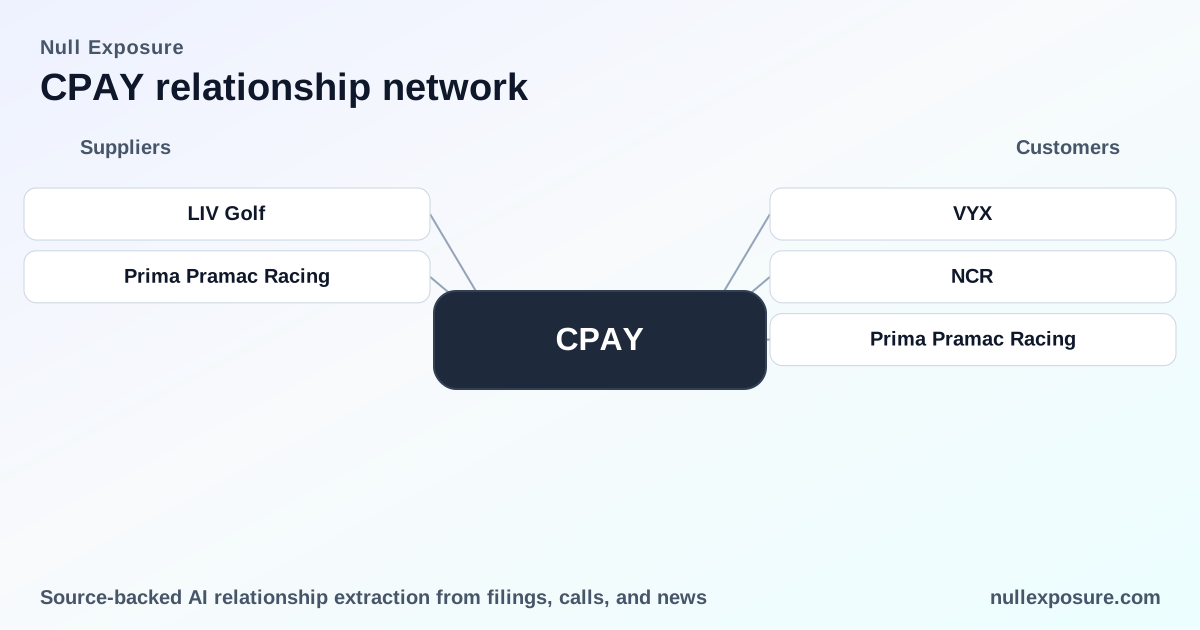
Corpay Inc (CPAY): Customer Relationships Signal Payments Depth and Commercial Distribution
Corpay operates a diversified corporate payments platform that monetizes through transaction fees, FX spreads in cross-border flows, card program economics, and recurring service revenue from treasury and payment-management products. For investors, the critical read on recent relationship activity is that Corpay is executing a mix of distribution partnerships (fuel and point-of-sale integrations), selective divestitures of non-core consumer assets, and brand partnerships that extend FX visibility — all consistent with a payments company shifting scale toward higher-margin commercial flows. Explore Corpay’s customer ties and related signals below. For deeper coverage, visit https://nullexposure.com/.
Why these relationships matter to returns and risk
Corpay’s growth thesis rests on three durable advantages: distribution scale (cards and merchant channels), FX and cross-border capabilities, and recurring payment flows from business clients. The recent items in the relationship feed reinforce those advantages: partnerships that expand acceptance (fuel POS), asset rationalization to sharpen product focus (sale of PayByPhone), and marketing/FX brand placements that increase enterprise visibility. Together they imply a deliberate tilt toward commercial distribution and repeatable revenue, improving predictability and unit economics for investors.
Recent customer and partner activity — every reported relationship, explained
-
NCR Voyix / VYX (Investing.com, FY2025) NCR Voyix agreed to integrate Corpay’s fleet card payments into its point-of-sale systems for U.S. fuel stations, expanding Corpay acceptance across merchant POS infrastructure and widening fleet payment distribution. According to Investing.com (reported May 4, 2026), this is a strategic distribution extension for fleet customers via established POS footprints.
-
Lightyear Capital acquiring PayByPhone from Corpay (FinTech Futures, FY2026) Corpay sold its parking payments business PayByPhone to Lightyear Capital, signaling portfolio pruning to focus on core commercial payments and FX/treasury services. FinTech Futures reported the transaction on May 2, 2026, framing it as a divestiture of a consumer-facing asset to a specialist investor.
-
NCR Voyix (Sahm Capital commentary, FY2025) Sahm Capital covered the NCR Voyix partnership and emphasized that integration of Corpay payment acceptance aims at commercial fuel transactions, reinforcing the company’s push into fleet and fuel verticals through embedded POS relationships. The note (first seen March 9, 2026) highlights expected rollout timing in 2026.
-
VYX duplicate entry (Sahm Capital, FY2025) A second Sahm Capital mention reiterates that VYX is partnering with Corpay to bring new payment acceptance options to its POS systems for commercial fuel, underlining repeat coverage by market observers. The repetition confirms market attention to the same commercial-distribution initiative (March 9, 2026).
-
NCR Voyix Corporation (Simply Wall St coverage, FY2025) Simply Wall St reported that Corpay’s integration with NCR Voyix targets more than 18,000 U.S. fuel stations supported by Voyix’s cloud-native POS, with rollout projected in 2026, representing a sizable potential expansion of acceptance. The coverage (March 9, 2026) stresses scale of the POS footprint and timing.
-
NCR (Simply Wall St duplicated reference, FY2025) A separate Simply Wall St record cites the same program-level facts about NCR’s deployment of Corpay payment acceptance across its supported fuel stations, reinforcing that the partnership is system-level with a major POS vendor. The March 9, 2026 mention repeats the distribution narrative tied to NCR’s installed base.
-
Prima Pramac Racing (MarketScreener, FY2025) Corpay Cross-Border was named Official Commercial FX Partner of Prima Pramac Racing, a brand and visibility play that increases FX product awareness among international audiences. MarketScreener noted the partnership in February 2026 as part of Corpay’s promotional and client-facing FX initiatives.
What these relationships collectively tell investors
- Distribution-first strategy: Multiple entries around NCR Voyix and VYX show Corpay is prioritizing embedded acceptance and merchant distribution for fleet and fuel payments — a high-frequency, enterprise-driven payment vertical that supports recurring volumes.
- Portfolio focus: The PayByPhone sale to Lightyear Capital signals exiting lower-margin or consumer businesses to concentrate capital and product effort on corporate payments and FX.
- Brand and FX positioning: The Prima Pramac Racing partnership is not core revenue-driving but improves FX brand recognition in international markets, which supports cross-border lead generation.
Constraints and operating-model signals investors should weigh
The company-level disclosures and evidence reveal the following operational characteristics — these are firm-level signals, not assigned to any single partner unless explicitly named in the excerpt.
- Contracting posture and tenor: Corpay handles a mix of spot FX and short-duration derivatives; its cross-border revenue largely comes from currency exchanges at spot rates, while forward and option contracts for clients generally have terms under one year, indicating short contract horizons and rolling revenue.
- Revenue predictability: The business includes recurring volume-driven revenue and subscription-style contracts, producing predictable cash flows from commercial customers and program management.
- Counterparty mix and concentration: Customers span businesses, merchants, consumers, governments, and mid-market firms, with a material emphasis on business clients, which drives steadier volumes and higher materiality of commercial relationships.
- Geographic footprint: Operations are concentrated in North America, LATAM (notably Brazil), and EMEA (UK), with about 81% of activity in those three regions — investors should model regionally differentiated FX and regulatory risk accordingly.
- Role and criticality: Corpay functions primarily as a service provider and platform operator, active across millions of payments, which makes its services operationally critical to many clients.
- Maturity and segment focus: The company sits in the services/financial-technology segment, with mature product lines in corporate payments and expanding embedded acceptance for verticals like fuel and fleet.
Investment implications and risk summary
- Upside drivers: Expanded merchant acceptance at scale (NCR/Voyix) and higher-margin cross-border flows increase lifetime value per customer and reduce customer-acquisition cost via partnerships. Corpay’s strong margins and analyst consensus (multiple buy/strong-buy ratings) support the monetization thesis.
- Key risks: Concentration in a few geographies and dependence on short-term FX transactions imply sensitivity to currency volatility and regional regulatory changes; divesting consumer assets improves focus but reduces revenue diversification.
- Operational considerations: Execution of large platform partnerships (18,000 fuel stations cited) is integration-intensive; success will depend on on-time rollout and merchant adoption rates.
For investors tracking client traction and distribution momentum, these relationship signals are material to revenue mix and margin trajectories. If you want a consolidated view of Corpay’s partner network and how each tie impacts revenue and risk, review our coverage at https://nullexposure.com/.
Bold takeaway: Corpay is converting distribution partnerships into predictable, higher-margin commercial flows while trimming non-core consumer assets — a structural move that strengthens its enterprise payments positioning.