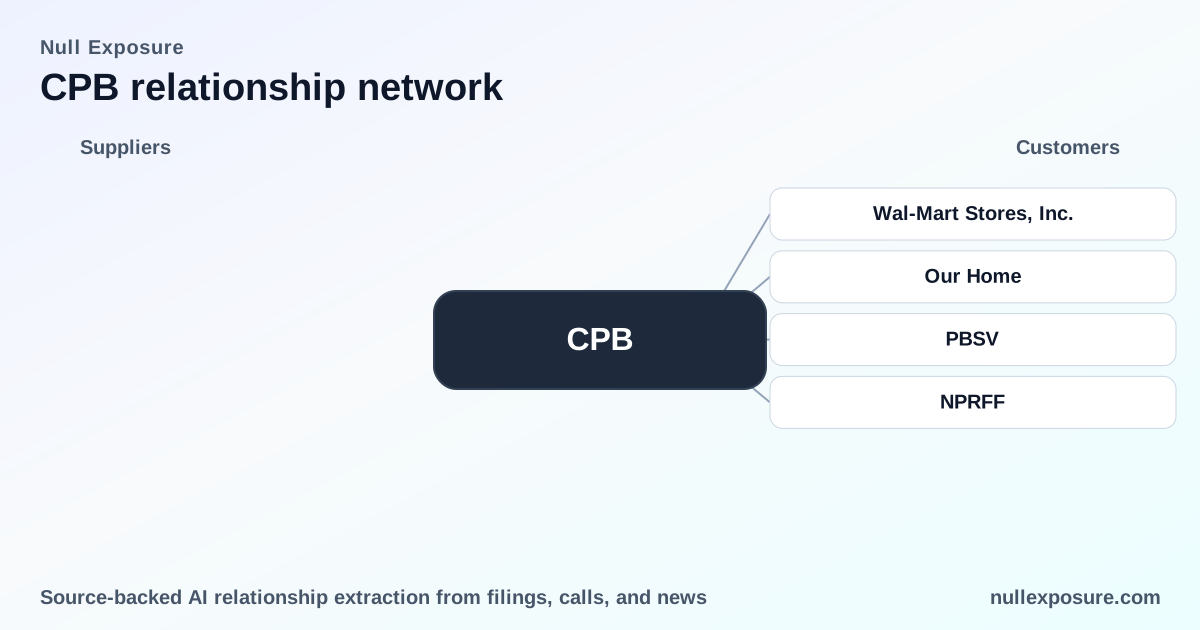
Campbell Soup’s customer map: concentrated retail exposure, predictable margins, and distribution risk
Campbell Soup Company sells branded processed foods and snacks primarily through large retail and foodservice channels; the business monetizes by placing shelf-stable and convenience-focused products with national grocers, mass merchandisers, club and convenience chains, and e-commerce partners, collecting margin on branded volume and incremental licensing or divestiture proceeds when portfolios are reshaped. For investors, the key read is simple: Campbell’s cash flow profile is anchored to a small set of large retail customers and a North American footprint, which delivers stable margin but concentrates commercial and pricing risk.
Learn more about how we catalogue customer exposures at Null Exposure: https://nullexposure.com/
One-line investor thesis and operating snapshot
Campbell’s is a mature packaged-food operator generating roughly $10.0 billion in revenue (TTM) with EBITDA near $1.75 billion and a highly retailer-dependent go-to-market model. The company’s monetization levers are volume through national retail partners, category pricing and cost management, and selective brand divestitures; these dynamics create stable, cash-generative operations but meaningful counterparty concentration and channel risk.
What the record shows about named customers and mentions
Below I run through every customer-related mention found in the consolidated results and explain the relevance to Campbell’s commercial footprint.
-
Wal‑Mart Stores, Inc. — Campbell’s single largest retail customer, accounting for approximately 21% of consolidated net sales in FY2025 and roughly the same share in 2024 and 2023; Wal‑Mart plus four other large customers together make up about 47% of net sales, underscoring revenue concentration in a handful of retail partners. According to Campbell’s FY2025 10‑K, these relationships drive material volume and negotiating leverage for the retailer. (Campbell Soup FY2025 10‑K)
-
Our Home — A news report noted that “Our Home” purchased the Pop Secret popcorn brand from Campbell Soup last week, reflecting Campbell’s ongoing portfolio management and occasional brand divestitures that monetize non-core assets and reshape customer assortment dynamics for snack categories. (FoodDive, March 2026)
-
PBS — A March 2026 article about federal funding changes referenced the Corporation for Public Broadcasting (CPB) and downstream impacts to PBS; this mention relates to the governmental CPB acronym and is not a Campbell Soup customer relationship. This item is noise for Campbell’s customer analysis but can create ticker-based false positives in news feeds. (CBIZ Insights, March 2026)
-
PBSV — The same CBIZ piece also surfaced under the PBSV identifier, repeating the public‑broadcasting funding story; again, this is unrelated to Campbell Soup’s commercial customers and reflects a naming overlap in news sources. (CBIZ Insights, March 2026)
-
NPR — The CBIZ coverage that discussed rescinded federal advance appropriations for FY2026–FY2027 cited impacts to PBS and NPR; like the other items, this is tied to Corporation for Public Broadcasting policy and is not evidence of a supply or customer relationship involving Campbell Soup. (CBIZ Insights, March 2026)
How these signals form a coherent operating model picture
The relationship data and company disclosures converge on several operational characteristics that matter for credit and equity analysis:
-
Contracting posture and channel power: Campbell sells through national retailers and mass merchants, which implies the company is typically a supplier negotiating slotting, promotional funding, and price with a handful of dominant buyers. The FY2025 10‑K shows Wal‑Mart alone is ~21% of sales, which translates into concentrated bargaining exposure. (Campbell Soup FY2025 10‑K)
-
Concentration and criticality: With the top five customers accounting for about 47% of net sales, revenue concentration is a persistent strategic constraint — beneficial for scale economics but a single large buyer shift could materially affect sales and margins. This is a company‑level signal drawn from the consolidated disclosure. (Campbell Soup FY2025 10‑K)
-
Geographic maturity and footprint: Campbell is North American‑centric, with roughly 95% of net sales tied to U.S. operations and a defined Meals & Beverages presence in the U.S. and Canada; the business also operates in Latin America within snacking and meals retail, but those markets are smaller in scale. This shapes currency, logistics, and promotional risk profiles. (Campbell Soup FY2025 10‑K)
-
Reseller and distribution model: The firm relies on resale through grocery chains, mass discounters, club stores and e‑commerce channels rather than direct‑to‑consumer subscription models; that channel structure increases dependence on retailer assortment decisions and promotional calendars — and amplifies the importance of category management. (Campbell Soup FY2025 10‑K)
-
Returns and buyer behavior: Campbell records a returns reserve that historically amounts to less than 2% of net sales, indicating a relatively contained level of product return exposure but still an operational input to working capital and gross margin. (Campbell Soup FY2025 10‑K)
-
Spend concentration signal (Wal‑Mart): The disclosure that Wal‑Mart represented ~21% of net sales implies a >$100 million annual spend relationship by a conservative estimate, which places this counterparty well within the “systemically material buyer” band for Campbell. (Campbell Soup FY2025 10‑K)
Risk checklist and monitoring priorities for investors and operators
Investors and commercial operators should track a short list of high‑leverage indicators:
- Retail pricing and promotional intensity from Walmart and other top-five accounts (affects gross margins).
- Customer concentration trends: any movement away from the largest five buyers or changing share per retailer will materially alter revenue stability.
- Category portfolio actions such as the Pop Secret sale, which can change channel penetration and margin mix. (FoodDive, March 2026)
- Geographic exposure shifts, especially growth initiatives in Latin America versus the entrenched North American base.
- Noise from ticker/name overlap: public‑policy or media stories referencing “CPB” (Corporation for Public Broadcasting) can generate irrelevant headlines that skew automated sentiment — distinguish these from Campbell’s operational news. (CBIZ Insights, March 2026)
For a deeper, systematic perspective on counterparty concentration and who really drives Campbell’s shelf presence, visit Null Exposure: https://nullexposure.com/
Bottom line
Campbell Soup’s revenue engine is predictable but concentrated: large retail partners deliver scale and margin, while contract and channel dynamics concentrate commercial risk. The company’s North American focus, reseller distribution model, and occasional portfolio pruning (brand sales) create a stable cash profile with discrete vulnerabilities around a handful of counterparties and retailer negotiation cycles. Investors should weigh stable free cash generation and dividend yield against high counterparty concentration and retailer bargaining power when sizing investments or assessing strategic downside scenarios.