Crinetics Pharmaceuticals (CRNX) — customer relationships that shape near-term commercialization
Crinetics develops and commercializes therapies for rare endocrine diseases, monetizing through royalties, license fees, milestone payments and product sales tied to its lead asset paltusotine (branded PALSONIFY). The company operates as an IP owner and active licensor while also acting as a principal seller and manufacturer in certain partner arrangements, converting R&D value into near-term cash via upfront payments and milestone realizations. For investors evaluating customer counterparty risk and revenue durability, the partner footprint—particularly in Japan and emerging product sales in the U.S.—is the central commercial signal. Visit https://nullexposure.com/ for a structured view of these partner exposures.
What matters up front: a concise investment thesis
Crinetics’ value capture is hybrid: product revenue from the U.S. commercial launch plus licensed revenue streams from territory partners. The mix drives both upside (high-margin royalties and milestones) and risk (concentration and program-stage dependencies). As PALSONIFY moves into global markets, partner contracts and manufacturing responsibilities determine near-term cash flow recognition and operational obligations.
Customer relationships — every partner documented
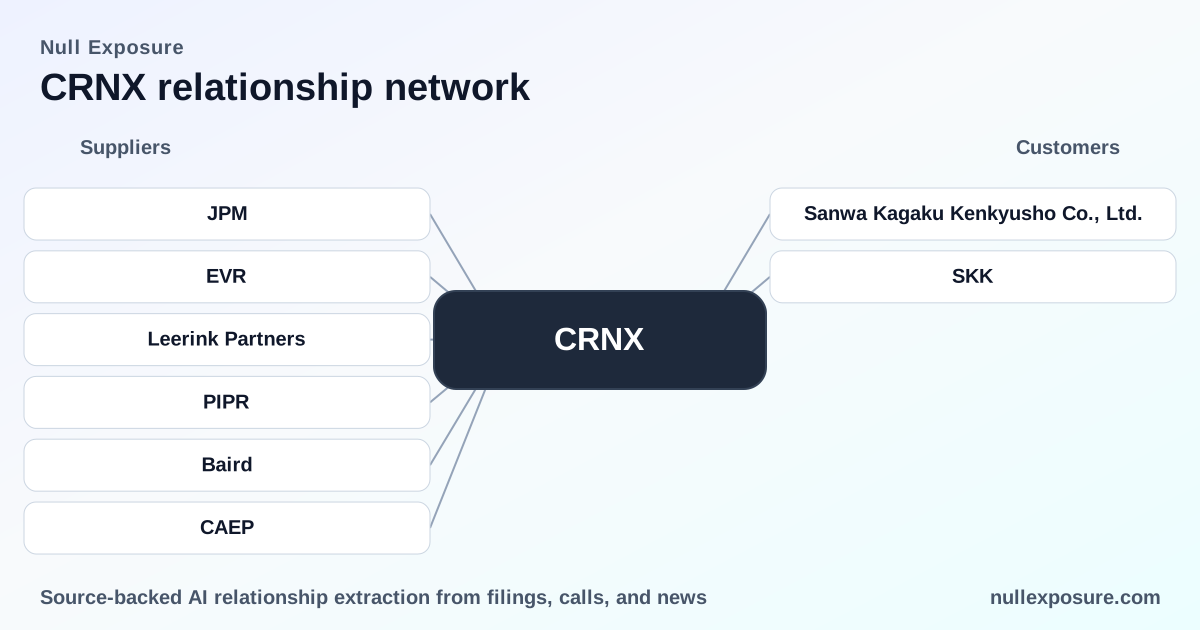
Sanwa Kagaku Kenkyusho Co., Ltd.
- Crinetics granted Sanwa an exclusive license to develop and commercialize paltusotine in Japan, and the company considers Sanwa a customer under that agreement. According to Crinetics’ 2024 Form 10‑K, the license grants Sanwa rights to data from certain paltusotine studies and defines the commercial arrangement. (Source: Crinetics 2024 Form 10‑K)
SKK (as referenced in revenue reporting)
- Crinetics reported recognizing $800,000 in licensing revenue from its Japanese partner SKK in Q4 2025, reflecting active monetization under the Japan license concurrent with U.S. product launch revenues. (Source: Q4 2025 earnings call transcript published on InsiderMonkey)
Sanwa Kagaku Kenkyusho Co., Ltd (SKK) — press confirmation
- A company press release around regulatory developments noted the partnership with Sanwa (SKK) to develop and commercialize PALSONIFY in Japan and referenced regulatory engagements such as orphan drug designation actions. (Source: Crinetics press release via GlobeNewswire, April 27, 2026)
Contracting posture and commercial mechanics
- Licensing is the dominant contract type for international expansion. Company filings indicate revenue recognition from license agreements and collaborations rather than broad product sales historically. This structure converts clinical data and regulatory progress into upfront and milestone payments.
- Crinetics positions itself as both licensor and commercial principal. The 10‑K describes the company granting exclusive development/commercial rights to Sanwa while also retaining manufacturing obligations under a clinical supply agreement, and reporting revenue on a gross basis when acting as the principal. (Source: Crinetics 2024 Form 10‑K)
What the constraints tell us about business model characteristics
- Contracting posture: License-driven with milestone monetization. Company-level disclosures emphasize recognition of license and collaboration revenue as a primary source of non-product cash flows.
- Concentration: Geographic concentration in the U.S. for assets and revenue base is explicit in filings; international deals (Japan) are strategic extensions rather than core revenue diversity as of the most recent disclosures. (Source: Crinetics 2024 Form 10‑K)
- Role and criticality: Crinetics acts as licensor and manufacturer in at least one partner arrangement—Sanwa—meaning the company retains operational obligations tied to supply and data delivery, increasing execution risk but preserving margin capture on partner-dependent revenues. (Source: 2024 Form 10‑K excerpts naming Sanwa)
- Maturity and spend profile: Active, mid‑sized license monetization — filings describe upfront payments in the low‑tens of millions and milestone structures topping mid‑tens of millions, with at least one $1.0 million milestone achieved in 2024 and the initial upfront payment in the ~$13.0 million range reported historically. This positions the relationship in the $10m–$100m spend band for contracted value. (Source: company disclosures summarized in relationship constraints)
Operational implications and risk factors investors should weigh
- Revenue concentration and nascent product sales. Product revenue in the U.S. is emerging (Crinetics disclosed $5.4M of U.S. net product revenue in Q4 2025) while licensed revenue from Japan contributed $0.8M in the same period; both streams are small relative to market cap and R&D burn. (Source: Q4 2025 earnings call transcript on InsiderMonkey)
- Execution risk tied to manufacturing and supply obligations. The clinical supply agreement with Sanwa requires Crinetics to deliver materials, creating manufacturing and logistics exposure that can affect margins and timelines. (Source: Crinetics 2024 Form 10‑K)
- Counterparty concentration in Japan. The Sanwa/SKK relationship is the primary documented international license; regulatory outcomes and commercial adoption in Japan will materially influence non‑U.S. revenue trajectories. (Source: GlobeNewswire press release, April 2026)
How these relationships drive valuation and near-term cash flow
- Upfront and milestone receipts de‑risk discrete R&D outcomes by converting regulatory progress into cash; accordingly, successful milestone realization and product uptake in the U.S. will be the dominant determinants of revenue trajectory over the next 12–24 months.
- The combination of principal product sales and licensing revenue creates a two‑layer monetization profile: product commercialization upside plus predictable, contractually‑defined license payments. Investors should model both streams separately and stress-test partner execution.
Key takeaways for allocators and operators
- Sanwa/SKK is a strategic, revenue‑bearing partner in Japan with defined license rights and an active clinical supply arrangement; this translates into upfront and milestone economics and operational commitments. (Source: Crinetics 2024 Form 10‑K; GlobeNewswire April 2026)
- Near-term revenue is still modest but diversified between U.S. product sales and partner license receipts; Q4 2025 demonstrated both channels delivering cash. (Source: Q4 2025 earnings call transcript on InsiderMonkey)
- Operational load remains nontrivial because Crinetics serves as manufacturer/seller in partner deals, exposing the company to supply chain and delivery risk that investors must price into cash flow forecasts. (Source: Crinetics 2024 Form 10‑K)
For a structured, comparative view of partner counterparty exposure across biotech issuers, visit https://nullexposure.com/ to see how Crinetics’ commercial relationships stack against peer licensing and supply arrangements.
Bottom line
Crinetics monetizes its lead asset through a hybrid model of U.S. product sales and international licensing; Sanwa/SKK is the principal documented customer relationship outside the U.S., carrying both revenue upside and operational obligations. Investors should value milestone schedules and supply performance as primary drivers of short‑term cash flow while continuing to monitor product uptake metrics in the U.S. and regulatory developments in partner territories.