Cirrus Logic (CRUS): A concentrated supplier whose fortunes track Apple
Cirrus Logic is a fabless semiconductor supplier that designs high-precision, low-power mixed-signal audio and sensor-related integrated circuits and sells them primarily to the world’s leading electronics manufacturers. The company monetizes through product sales under short-term purchase orders and direct/indirect commercial arrangements, with a highly concentrated revenue base driven by a single end customer. For investors, CRUS is best thought of as a high-margin, hardware IP play whose upside and downside are substantially governed by the rhythm of one platform partner and its manufacturing decisions. For a transaction-level exposure map, visit https://nullexposure.com/.
The dominant commercial fact: Apple is the revenue engine
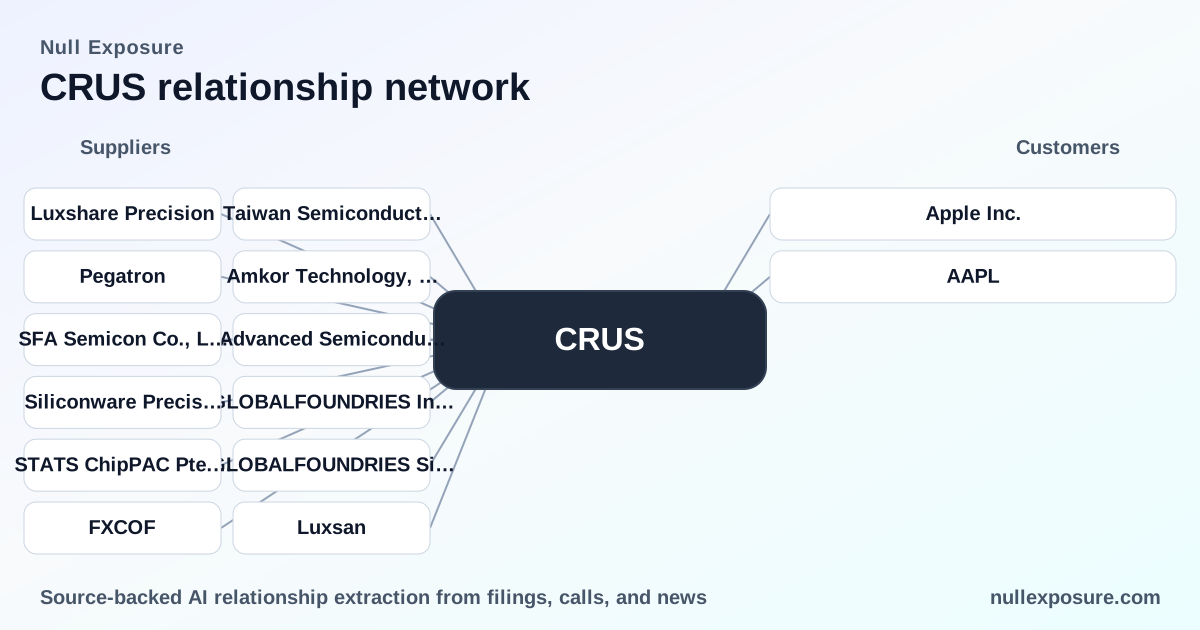
Cirrus Logic’s FY2025 disclosure states Apple accounted for approximately 89% of net sales in FY2025, up from 87% in FY2024 and 83% in FY2023 — a defining commercial relationship for CRUS. That concentration converts small shifts in Apple demand or sourcing into large moves in CRUS revenue and stock performance; conversely, any formal deepening of the Apple relationship (design wins, expanded roles in manufacturing) creates immediate upside to company forecasts. According to multiple media reports in May 2026, Apple added Cirrus Logic to an expanded US manufacturing program and listed the company among partners developing mixed‑signal solutions for advanced applications such as Face ID, which positions CRUS to access higher‑value system content in future device cycles.
Bold takeaway: CRUS’s revenue profile is functionally equivalent to being an Apple supply‑chain bet with proprietary IP that justifies premium margins.
Complete list of reported customer relationship entries (each source covered)
-
Cirrus Logic’s FY2025 Form 10‑K reports that Apple Inc. represented ~89% of total net sales in FY2025 (87% in FY2024; 83% in FY2023), reflecting multi‑year revenue concentration through contract manufacturers. This is the statutory disclosure that defines CRUS’s customer concentration. (Cirrus Logic FY2025 10‑K)
-
A March 9, 2026 Intellectia news piece noted Cirrus Logic’s stock surged 33% over six months and claimed 94% of revenue derived from Apple, framing the dependence as an explanation for recent share price appreciation. (Intellectia / March 9, 2026)
-
The same Intellectia item was republished with Apple identified and reiterated the point that Apple accounts for the lion’s share of CRUS revenue, underscoring market commentary linking concentration to stock moves. (Intellectia / March 9, 2026)
-
A Simply Wall St item (first seen May 2, 2026) reported that Cirrus Logic was named a key partner in Apple’s expanded U.S. Manufacturing Program tied to a $400 million investment, highlighting potential strategic benefits from on‑shore manufacturing partnerships. (Simply Wall St / May 2026)
-
A StockTwits news article on May 2, 2026 stated that Apple announced it is working with Cirrus Logic to develop mixed‑signal solutions for a range of applications, positioning CRUS as a partner on next‑generation component work. (StockTwits / May 2, 2026)
-
Manufacturing Dive (May 2, 2026) reported Apple’s collaboration with Cirrus Logic would enable development of mixed‑signal solutions including integrated circuits for Face ID systems, linking CRUS to a high‑value smartphone subsystem. (Manufacturing Dive / May 2, 2026)
-
A second StockTwits entry (May 2, 2026) reiterated that CRUS will develop mixed‑signal solutions for Apple, including advanced ICs for Face ID, further amplifying market discussion about product roadmap alignment with Apple. (StockTwits / May 2, 2026)
-
Finviz aggregated Reuters coverage that Apple included Cirrus Logic among partners added to a $400 million U.S. manufacturing program, a third‑party confirmation of the program inclusion reported in other outlets. (Finviz / Reuters coverage / May 2, 2026)
-
TradingView relayed a Zacks note (May 2, 2026) stating Apple is collaborating with Cirrus Logic to establish new semiconductor process technologies, indicating a potentially deeper engineering partnership beyond simple supply. (TradingView / Zacks / May 2, 2026)
-
An additional Intellectia‑sourced/news sentiment entry reiterated the stock surge and the revenue dependency statistic in a March 2026 report that connected executive insider selling coverage to the Apple concentration narrative. (Intellectia / March 9, 2026)
Each item above is reported in public filings or financial and trade press between FY2025 disclosure and May 2026, and collectively they document both the material revenue concentration and recent strategic engagement between Cirrus Logic and Apple.
What the company-level constraints tell investors about CRUS’s operating model
The disclosures produce a consistent set of operating signals:
-
Contracting posture — short-term purchase orders: Sales are executed primarily under short-term purchase orders with original terms of one year or less. That results in limited revenue visibility beyond the current cycle and a need for continuous design wins and supply allocation. This is a structural constraint on forecasting and elevates near‑term execution risk relative to long-term contract models.
-
Counterparty profile — large enterprise customers: CRUS sells into the world’s leading electronics manufacturers, which gives customers significant negotiating leverage relative to a single-vendor supplier despite CRUS’s proprietary components.
-
Geography — global with APAC concentration: Net sales are international by a wide margin (roughly 99% of net sales in FY2025 were international), with China constituting the largest single country total reported. This creates exposure to regional manufacturing patterns, trade policy, and supply‑chain disruptions.
-
Concentration and materiality — critical revenue dependency: The top ten end customers accounted for ~96% of net sales in FY2025; Apple alone represents an outsized share. This concentration is a double‑edged sword: it drives scale and profitability when content rises, and it amplifies downside when platform demand shifts.
-
Role and product maturity — seller of proprietary hardware IP: Cirrus Logic positions itself as the seller of largely proprietary analog/mixed-signal components that are not generally available from second sources, which supports pricing and margin resilience but also ties CRUS to the product roadmaps of its largest customers.
-
Segment focus — hardware and mixed‑signal audio/sensor ICs: The business is firmly hardware‑centric, emphasizing audio products and related mixed‑signal solutions rather than software or recurring licensing revenue.
Collectively, these constraints frame CRUS as a highly concentrated, short‑duration revenue supplier with proprietary product advantage but limited bargaining power versus megacustomers and material geopolitical/manufacturing exposure.
Investment implications: what investors should watch next
-
Concentration risk is the single largest factor: Monitor Apple content per device disclosures, contract manufacturer allocations, and any public statements from Apple about sourcing; small changes translate into large revenue swings.
-
Upward catalyst from Apple manufacturing program: Inclusion in Apple’s U.S. manufacturing program and participation in Face ID and mixed‑signal work are explicit growth pathways that increase per‑device content and long‑term strategic value.
-
Revenue visibility is limited: Expect quarter‑to‑quarter volatility driven by product cycles and short‑term purchase orders; management guidance cadence and channel inventory disclosures are essential for near‑term modeling.
-
Geopolitical and supply‑chain overlays matter: Manufacturing footprint shifts, U.S.–China policy, and contract manufacturer decisions have direct P&L implications.
-
Margin resilience offsets some concentration: Proprietary analog/mixed‑signal IP supports elevated gross margins and operating leverage when volumes trend up.
For a concise exposure profile and to track customer concentration over time, see https://nullexposure.com/.
Cirrus Logic’s stock is a focused commodity‑grade hardware exposure with premium IP economics — a high‑reward, high‑concentration supplier thesis that requires active monitoring of Apple’s sourcing and manufacturing decisions.