CervoMed (CRVO): Commercial pathway and investor relationships that shape near‑term valuation
CervoMed is a Boston‑based, clinical‑stage biotechnology company developing therapies for neurodegenerative diseases and monetizing through phased clinical development, targeted licensing/commercialization of lead assets and equity financings to fund development. The company’s value today is driven less by product sales and more by its clinical progress, government/charitable trial partnerships and the willingness of institutional investors to fund dilutive private placements. For a quick look at relationship mapping and implications, visit https://nullexposure.com/.
Executive summary: what matters to investors now
CervoMed operates as a development‑stage therapeutic sponsor: it supplies investigational drug product to trials, pursues regulatory paths in North America and Europe, and closes private placements to fund operations. Limited revenue ($4.01M TTM) and a market capitalization of roughly $34.3M imply that investor sentiment and financing access are the dominant short‑term drivers of equity value. Clinical partnerships that reduce cash burn or de‑risk endpoints carry outsized valuation impact; so do lead investor commitments that validate future financings.
How CervoMed actually makes progress and money
CervoMed’s model is straightforward: advance neflamapimod (and other programs) through clinical development, supply drug product to collaborative trials, and commercialize in the markets where approvals occur—primarily North America and Europe. Until regulatory approval, the company functions chiefly as a clinical supplier and licensor of intellectual property, dependent on capital markets for funding and on trial partnerships for operational execution. This contracting posture creates concentrated counterparty exposure and high dependency on institutional investor cycles.
Investor and financing relationships — who’s backing the company
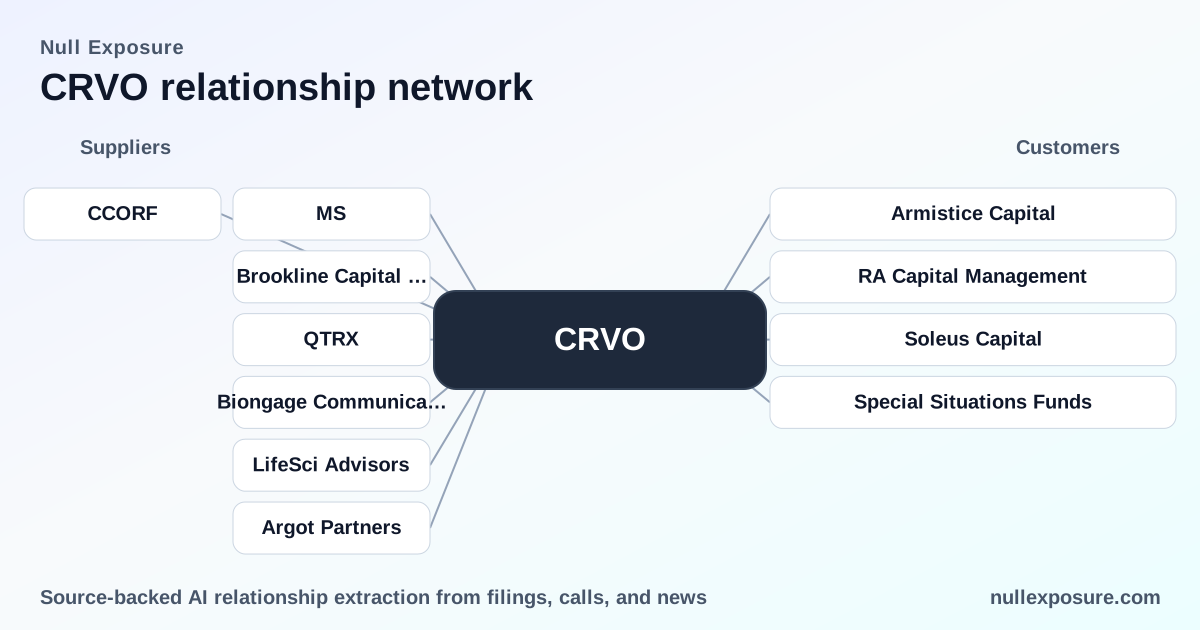
- RA Capital Management — Led a $149.4 million private placement that materially expanded institutional backing for CervoMed’s development plan. According to a CityBiz Boston report (March 9, 2026), RA Capital led the financing round and served as the anchor for new institutional participation.
- Armistice Capital — Participated as a new institutional investor in the private placement, signaling additional hedge‑fund and special‑situations interest; cited in the same CityBiz Boston financing report (March 9, 2026).
- Soleus Capital — Joined the private placement alongside other new institutional investors, indicating broader alternative‑credit and private capital support for the company’s near‑term funding needs (CityBiz Boston, March 9, 2026).
- Special Situations Funds — Listed as participating in the financing round, representing opportunistic or distressed‑strategy capital that underwrote the company’s equity issuance (CityBiz Boston, March 9, 2026).
- EXPERTS‑ALS — Designated as the clinical trial conductor for a UK‑funded study, with CervoMed supplying drug product, which converts CervoMed from sponsor‑only into an operational supplier role for a government‑funded trial (CervoMed press release on GlobeNewswire, March 17, 2026).
Each relationship above is either a source of funding (institutional investors) or of operational execution (EXPERTS‑ALS). The investor group led by RA Capital establishes a financing runway; the EXPERTS‑ALS collaboration reduces trial execution risk and positions CervoMed as a supplier to a coordinated, UK‑funded clinical effort.
What the constraints tell us about the business model
The available constraints point to three company‑level signals:
- Geography: North America and Europe are explicit commercialization priorities, which constrains regulatory strategy, payer engagement and launch planning to those markets rather than broader global rollouts.
- Relationship role: CervoMed is positioned as a seller of drug product in trials and, conditional on approval, a commercial supplier, indicating contracting terms and manufacturing readiness are material to execution.
These signals translate into practical implications: contracting posture is transactional and supplier‑oriented; customer concentration risk is inherent because a small number of trials and institutional investors drive cash flow and validation; and maturity is early — clinical proof points and financing outcomes determine de‑risking cadence.
Why these relationships matter for valuation and risk
- Financing concentration: A $149.4M private placement anchored by RA Capital materially changes the capital structure and dilutes existing holders while extending runway, so investor appetite for follow‑on financings will determine survival to meaningful readouts (CityBiz Boston, March 9, 2026).
- Trial execution criticality: Supplying drug product to a UK government/charity‑funded trial (EXPERTS‑ALS) converts trial timelines into operational deadlines; manufacturing, chain‑of‑custody and regulatory compliance are now first‑order risks (GlobeNewswire press release, March 17, 2026).
- Counterparty mix: Presence of special‑situations and hedge fund investors signals a financing strategy that tolerates complexity and potential volatility, but also concentrates governance influence among a small set of institutional participants (CityBiz Boston, March 9, 2026).
Quick read on financial posture and governance
CervoMed reported roughly $4.01M revenue TTM against a market capitalization of about $34.3M. Operating losses are substantial and dilution through private placements is the operational norm, making investor support and access to capital the primary short‑term catalyst or risk. Insider ownership at ~33% indicates management alignment with shareholders, while institutional ownership near 15% highlights that public institutional engagement is meaningful but not dominating.
Practical takeaways for investors and operators
- If you are an investor, assess the durability of the RA Capital‑led financing and the timetable for EXPERTS‑ALS trial milestones; both determine the company’s liquidity horizon and binary outcome potential. Visit https://nullexposure.com/ for deeper relationship mapping and tracking.
- If you are an operator or prospective partner, focus diligence on CervoMed’s supplier contracts, manufacturing QMS and commercial readiness in North America/Europe because those are the execution‑critical items that shift the company from development stage to commercial stage.
Final assessment
CervoMed is a classic development‑stage biotech whose immediate value hinges on two axes: (1) institutional financing that supports trial progression, and (2) successful operational execution as a drug supplier to externally funded clinical programs. The RA Capital‑led financing group and the EXPERTS‑ALS partnership are therefore the headline relationships to monitor for both upside and downside risk over the next 12–24 months.
For an interactive view of these relationships and ongoing updates, explore https://nullexposure.com/.