Corvus Pharmaceuticals (CRVS): Partnership-led commercialization with concentrated China exposure
Corvus Pharmaceuticals is a clinical-stage immuno-oncology developer that monetizes primarily through out‑licensing, regional partnerships, and equity stakes in collaborators, rather than product sales. The company advances clinical assets, then transfers development and commercialization risk to partners in target territories in exchange for upfronts, equity, milestone payments and future royalties; operational support and drug supply obligations accompany those deals, creating both strategic leverage and counterparty concentration. For primary research on counterparties and customer relationships, see https://nullexposure.com/.
How Corvus structures customer relationships and what that implies for investors
Corvus runs a partnership-first operating model: it retains core development programs in-house to de‑risk science, then licenses regional rights to third parties who fund local development and commercialization. This contracting posture reduces near‑term cash burn but concentrates commercial outcomes in the hands of a few partners. Corvus carries no product revenue to date and remains a clinical-stage enterprise, so commercial milestones and royalties are the principal monetization vectors. The company’s balance between equity ownership in partners and operational commitments (clinical drug supply, support services) creates a hybrid model that transfers capital requirements while preserving upside through contingent payments and equity appreciation.
Key operating characteristics:
- Contracting posture: Out‑licensing and license‑plus‑equity arrangements to regional partners.
- Concentration: Material dependence on single-partner deals for large markets (notably Greater China).
- Criticality: Corvus’ obligation to supply clinical drug and operational support makes these relationships operationally critical.
- Maturity: Clinical‑stage company with development upside but no commercial revenues; monetization is event‑driven (milestones/royalties).
Explore customer-level exposures and counterparties at https://nullexposure.com/ for deal-level impact analysis.
The counterparty list investors should know
Below are the relationships surfaced in the coverage set, with plain-English summaries and source context.
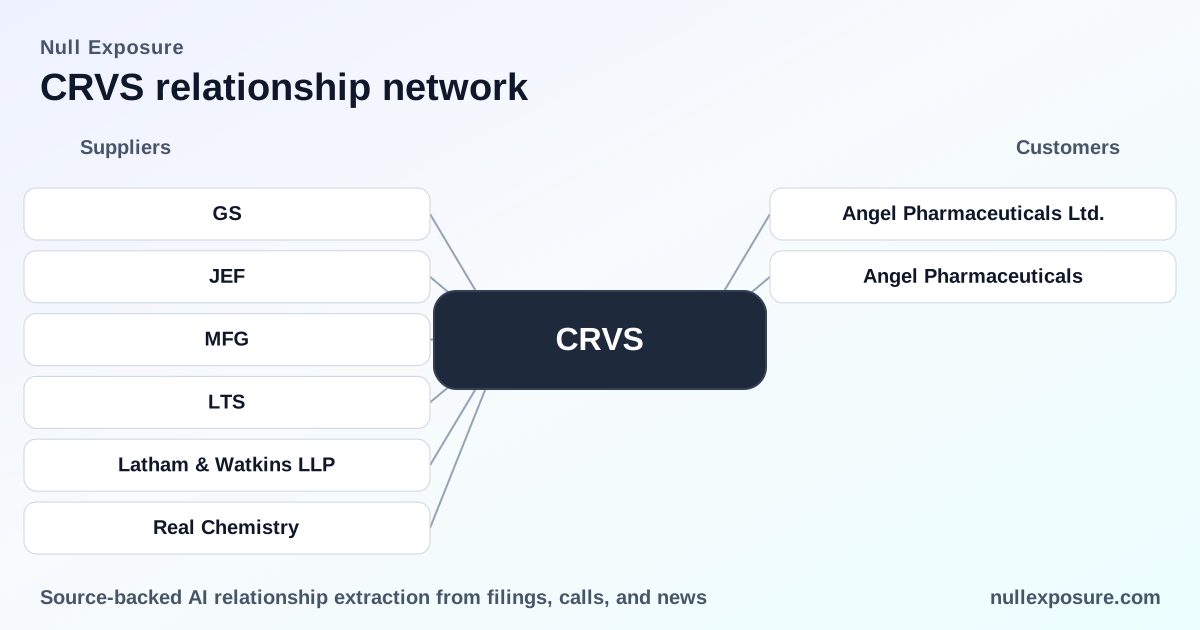
Angel Pharmaceuticals Ltd. — Greater China license for soquelitinib
Corvus licensed rights to Angel Pharmaceuticals Ltd. to develop, manufacture and commercialize soquelitinib in Greater China, and Angel承担s all development expenses in that territory. This structure transfers development cash needs to Angel while preserving Corvus’ upside through the license economics. (Source: StockTitan news report, March 9, 2026.)
Angel Pharmaceuticals — expanded Greater China and additional program rights
A related announcement confirmed Angel Pharmaceuticals obtained rights to three Corvus clinical-stage candidates — soquelitinib, ciforadenant and mupadolimab — for Greater China, and global rights to Corvus’ BTK inhibitor preclinical programs, setting Angel as the primary commercialization partner in that region. This broader licensing footprint deepens Corvus’ exposure to a single regional partner for multiple late-stage assets. (Source: StockTitan business update, March 9, 2026.)
- Company disclosure context: Corvus holds a 49.7% ownership stake in Angel and, under intellectual property licensing agreements, provides operational support and clinical drug supplies to Angel, per company filings; this makes Angel both a strategic partner and a partly consolidated affiliate in practical terms (company filing, FY2025).
AU (AngloGold Ashanti) — a non-core mention in mining M&A context
An AngloGold Ashanti transcript referenced a party named “Corvus” among entities involved in land acquisitions in Nevada; this is a name mention in a mining context rather than evidence of a pharmaceutical customer relationship for Corvus Pharmaceuticals. The reference does not confirm an active CRVS commercial or clinical partnership. (Source: InsiderMonkey transcript of AngloGold Ashanti Q4 FY2025 earnings call, published March 2026.)
What the relationships signal about revenues, risk and leverage
-
Revenue model: Corvus currently records no product revenue; monetization is expected through licensing upfronts, milestone receipts, royalties and potential equity gains from its stake in Angel. This keeps the balance sheet insulated from near‑term revenue volatility but concentrates future valuation on partner execution and regulatory outcomes. (Company financials, latest quarter FY2025.)
-
Concentration risk: The Angel licensing package consolidates Corvus’ China exposure with a single counterparty across multiple assets, creating country‑specific concentration that links a material portion of Corvus’ near‑term commercial upside to Angel’s execution and China regulatory pathways.
-
Operational dependency: The company’s obligation to provide clinical drug supply and operational support to Angel makes the relationship operationally critical; manufacturing or supply disruptions could directly impact partner trials and milestone timing.
-
Strategic leverage: Owning a near‑majority stake in Angel (49.7%) aligns economic incentives and gives Corvus exposure to Angel’s commercial upside beyond pure license economics, while also exposing Corvus’ equity value to Angel’s standalone performance.
Investment implications and risk frame
-
Upside scenario: Successful development and regulatory approvals in Greater China could generate material milestone and royalty streams, and the equity stake in Angel amplifies upside if that partner achieves commercialization scale. Analysts currently rate the stock positively — the consensus target price sits above current trading levels — reflecting event-driven valuation drivers (analyst coverage summary, latest consensus).
-
Downside scenario: Execution risk at Angel (clinical, manufacturing, regulatory), geopolitical and regulatory complexity in China, and concentration from a single regional partner are primary downside vectors. Operational commitments to supply and support increase the company’s exposure to partner timelines and potential manufacturing costs.
-
Near-term catalyst calendar: Watch for partner-reported development milestones from Angel on soquelitinib, ciforadenant and mupadolimab, and any filings that quantify milestone schedules or revised commercialization economics.
Bottom line
Corvus operates a capital-efficient, partnership-first commercial strategy that transfers near‑term development costs to regional partners while preserving upside via license economics and equity ownership. The Angel relationship is the dominant counterparty exposure and simultaneously Corvus’ clearest path to monetization in Greater China — and its largest concentration risk. Investors should evaluate partner execution, supply-chain resilience, and China regulatory timelines as the primary drivers of upside and downside.
For a concise view of counterparties, filings, and relationship-level signals, visit https://nullexposure.com/.