Champions Oncology (CSBR): Customer Relationships That Drive Recurring Science Revenue
Champions Oncology sells preclinical oncology research services and a complementary SaaS analytics product, monetizing through a mix of one-off research engagements and annual subscriptions to its Lumin Bioinformatics platform, while licensing access to its proprietary PDX (patient-derived xenograft) model data. The business converts laboratory and model intellectual property into repeatable revenue streams from pharmaceutical and biotech customers worldwide. For a concise view of how these customer dynamics affect valuation and operating risk, visit https://nullexposure.com/.
The business model in plain terms
Champions operates primarily as a service provider to biopharma clients, delivering PDX-based research programs priced typically around $125k, with an increasing share of engagements in the $250k–$500k range. The company also sells annual subscriptions to Lumin, its bioinformatics software that packages results from its research services, and licenses access to its PDX molecular atlas and living model bank. These three monetization levers—research services, SaaS subscriptions, and licensing—create a blended revenue mix with recurring elements and sizeable per-customer spend when programs scale.
Quick snapshot investors should keep top of mind
- Revenue (TTM): $57.945M; gross profit $26.584M, showing meaningful margin at the gross level but negative operating margins.
- Profitability: operating and net margins are negative and EPS is negative on a TTM basis (latest quarter 2026-01-31).
- Customer economics: typical study sizes put Champions in the mid-six-figure client engagement band when programs expand beyond base studies.
- Ownership: insiders and institutions hold a substantial portion of shares, underscoring concentrated insider interest in execution.
What the customer relationships actually look like
Champions runs a two-pronged commercial model centered on bespoke research projects and recurring data/software access:
- Service-led sales: bespoke PDX studies sold to pharma/biotech as fee-for-service research. This is the company’s core revenue engine.
- SaaS subscriptions: annual licensing of Lumin Bioinformatics that embeds outcomes of research services into a searchable, analytical platform.
- Licensing of model data: discrete licensing agreements grant third parties access to PDX molecular atlas assets for discovery and target validation.
These arrangements position Champions as a critical upstream vendor to drug discovery workflows, with clients spread across North America, EMEA and APAC and a high rate of repeat business from roughly 500 different pharma and biotech customers over the last decade (company statements).
Operating constraints and commercial signals investors must price
These are company-level signals—characteristics of Champions’ operating model that affect revenue durability and concentration risk:
- Contracting posture: licensing + subscription + services. Champions sells access to model data under licensing agreements, operates an annual subscription model for Lumin, and executes one-off study contracts as a service provider, creating multiple revenue touchpoints tied to the same IP base (company filings).
- Geographic reach is global. The client base spans North America, Europe and Asia, which diversifies geographic risk but exposes the company to multi-jurisdictional regulatory and reimbursement dynamics (company filings).
- Materiality of the service business. Research services represent the primary revenue source and have grown at a reported average of ~12% annually since 2019, making the services segment central to near-term cash generation (company disclosures).
- Spend concentration per engagement. Typical study pricing places customer economic commitment in the $125k to $500k range, which creates meaningful revenue per account and raises the strategic importance of each large study win.
- Relationship role and stage. Champions acts as a service provider with a high rate of repeat business, and the company reports a broad active customer base of roughly 500 unique pharma/biotech clients over ten years (company statements).
- Segment duality and maturity. The company runs both a services segment (more mature, project-based) and a software segment (subscription-based, with recurring revenue characteristics), indicating a shift toward monetizable recurring streams but ongoing dependency on service volume.
Customer relationship detail: Corellia AI
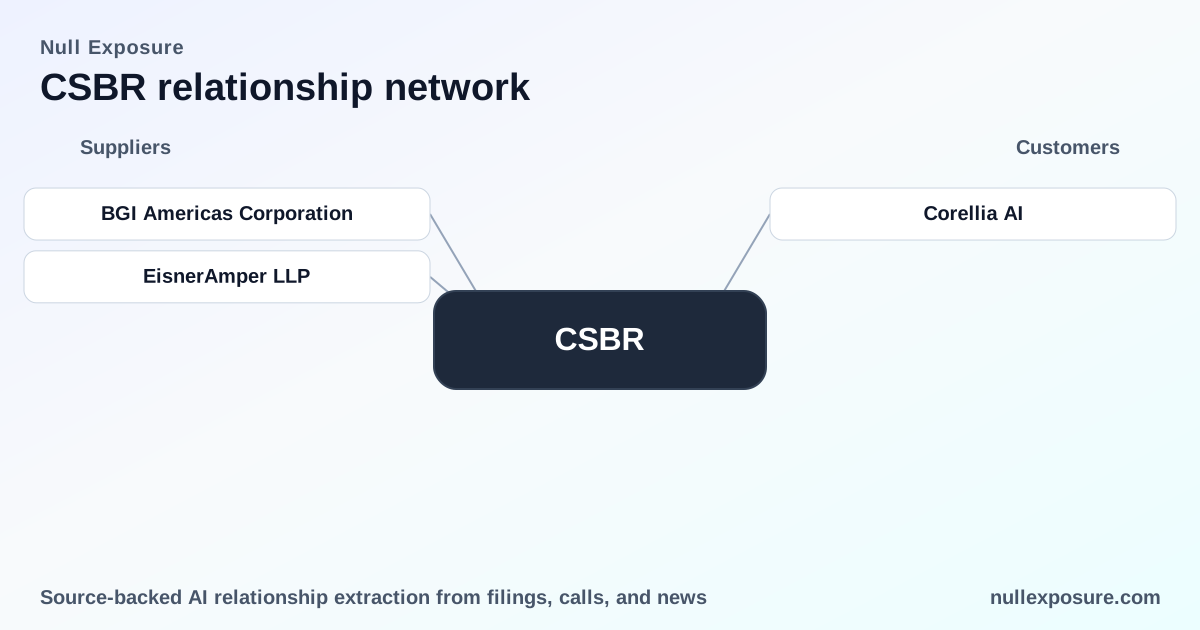
Corellia AI is the only named external customer relationship surfaced in recent coverage. Champions will provide Corellia access to its PDX Molecular Atlas and living bank of PDX models to support Corellia’s target and therapeutic discovery efforts, aligning Champions’ model IP with an AI-driven discovery platform. This arrangement is presented as a data-and-model licensing use of Champions’ core assets. A Yahoo Finance release covering Champions’ announcement in March 2026 describes the collaboration and the role of Champions’ PDX resources in Corellia’s proprietary discovery workflow (Yahoo Finance, March 2026).
Why that relationship matters to investors and operators
- Strategic fit: Licensing PDX assets to an AI discovery firm converts static lab assets into recurring, strategic partnerships and broadens the potential commercial sinks for Champions’ IP.
- Revenue path: Licensing deals like Corellia’s are consistent with Champions’ stated channel strategy to monetize its PDX atlas beyond single studies, improving revenue predictability when bundled with subscription access to Lumin.
- Risk profile: Licensing revenue is valuable for margin and scaling, but it increases dependence on protecting proprietary model data and maintaining data quality and regulatory compliance across geographies.
Valuation and operational implications
Investors should weigh the following when assessing CSBR:
- Durability of revenue: The combination of repeatable study work and annual Lumin subscriptions creates a hybrid revenue base that reduces volatility versus pure services-only competitors. Recurring revenue upside is real, but still tied to the pace of new study wins and customer expansion.
- Concentration risk: Individual study sizes ($125k–$500k) create meaningful per-customer impact on quarterly results; the company’s growth depends on retaining and upselling a finite set of biopharma partners.
- Margin leverage: Licensing and SaaS should improve gross-margin mix over time; however, current operating margins remain negative and require scale and higher SaaS penetration to meaningfully move toward profitability.
- Geographic diversification: Serving NA, EMEA and APAC moderates single-region shocks but requires operational discipline on regulatory and data-sharing compliance.
For a deeper read on how customer contract types and licensing arrangements influence valuation sensitivity for life-science service providers, check https://nullexposure.com/ for proprietary frameworks and comparative analysis.
Bottom line — what investors and operators should take away
- Champions monetizes a unique PDX IP base through services, subscriptions, and licensing; each channel enhances revenue diversity but requires different go-to-market and delivery capabilities.
- Corellia AI represents a clear execution of a licensing strategy that turns model assets into strategic discovery partnerships. (Yahoo Finance, March 2026.)
- Primary risks are study concentration, ongoing negative operating margins, and the operational complexity of scaling SaaS across global clients.
- Primary strengths are a deep IP moat (PDX bank), repeat client relationships, and visible pathways to grow higher-margin recurring revenue.
Strong execution on expanding Lumin subscriptions and protecting licensing economics will determine whether Champions converts its scientific lead into a stable, SaaS-augmented biotech services franchise.