CSRE Customer Map: What Telit’s 2013 GNSS Tie Says About Business Risk and Revenue Quality
CSRE operates by developing and commercializing location and wireless silicon/firmware solutions and monetizes through product sales and licensing to module manufacturers and OEMs that embed its GNSS and connectivity IP into end devices. Customer relationships are product-driven, typically one-step removed (chip/solution supplier → module maker → OEM), and revenue quality tracks the cadence of module launches and multi-year design cycles. For a closer view of customer-level linkages and what they imply for investors, see our firm overview at https://nullexposure.com/.
A single documented customer tie — simple but instructive
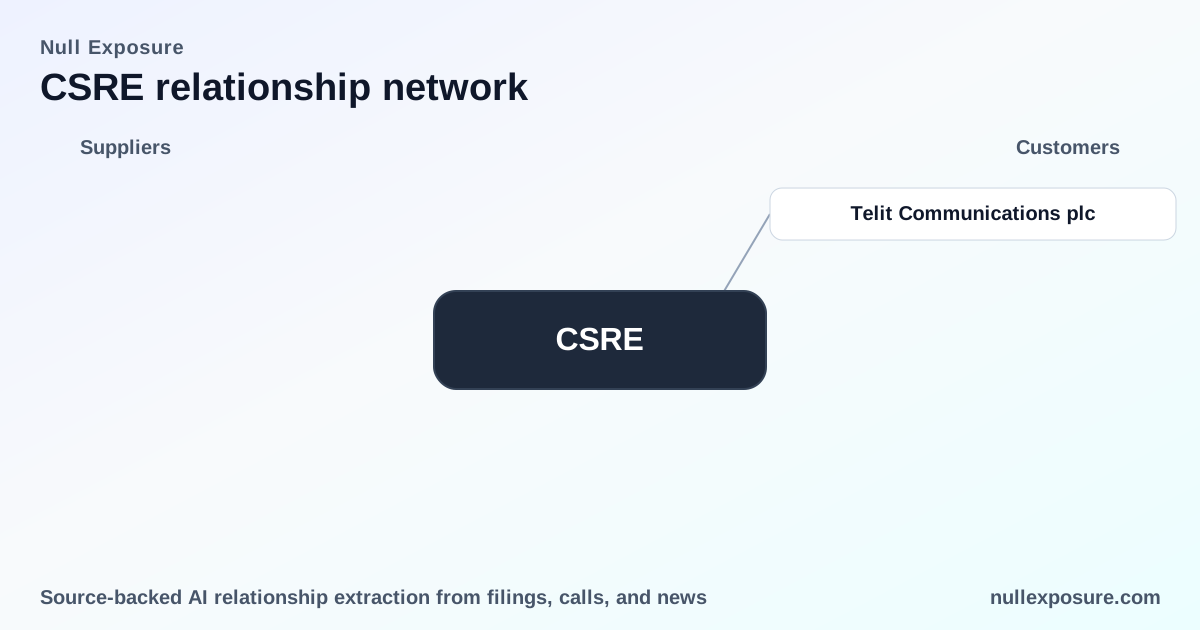
The active record in this customer-scope extract shows one concrete commercial relationship: Telit Communications plc incorporated CSRE’s GNSS solution into a module product. This example illustrates CSRE’s go-to-market model: supply specialized silicon/firmware that module vendors design into products showcased at industry events and sold to downstream customers.
Key takeaway: one visible module supplier reference is consistent with a supplier role to OEMs and module houses rather than direct-to-consumer revenue streams.
Telit Communications plc — what the record says and why it matters
Telit used CSRE’s SirfstarV 5e GNSS location solution in its Jupiter SE868-V2 module, which Telit launched at CTIA Wireless 2013. The relationship is documented in a contemporaneous industry report covering product introductions at CTIA in FY2013, noting the Jupiter SE868-V2’s use of CSRE’s GNSS solution.
According to GPS World coverage of the CTIA Wireless 2013 product rollouts, Telit’s Jupiter SE868-V2 module included the SirfstarV 5e GNSS solution from CSRE, positioning Telit’s offering for precise location-enabled applications (GPS World, FY2013).
Why this specific tie matters for investors: module adoption is a validation step in CSRE’s monetization funnel — design wins with established module vendors like Telit typically produce multi-year revenue streams if the module reaches production scale. Conversely, a single historical reference highlights the need to verify current commercial breadth and renewal patterns.
What this relationship implies about CSRE’s operating model
- Contracting posture: CSRE operates in a supplier role to module OEMs, implying negotiated commercial terms tied to product lifecycles and design wins rather than transactional retail sales. This structure creates a pipeline effect — revenue realization depends on successful module commercialization and downstream OEM orders.
- Customer concentration: The available record is narrowly scoped and shows a single named module partner; this signals potential concentration risk at the customer/vendor tier unless offset by a broader, undocumented base of module or OEM customers.
- Criticality to customers: By supplying core GNSS capabilities, CSRE’s technology is potentially mission-critical to module function, which supports pricing leverage and sticky business when integration is deep; however, criticality also raises substitution risk if customers migrate to alternative silicon or integrated solutions.
- Maturity of relationships: The cited relationship dates to FY2013 and represents a historical design win. Without contemporaneous confirmation in this extract, treat the record as an indicator of product-market fit at that time rather than proof of ongoing revenue contribution.
These operating-model signals are company-level observations derived from the current customer-scope record rather than tied to any other named relationship.
Portfolio risks and what to check next
Given the single documented customer link, investors should prioritise verification of the following to assess revenue durability and downside exposure:
- Breadth of design wins: Confirm how many module vendors and OEMs currently use CSRE solutions and whether Telit remains an active customer beyond the 2013 product cycle.
- Product lifecycle status: Determine whether the SirfstarV 5e line remains in production or has successor products generating recurring revenues and service/maintenance streams.
- Contract terms and pricing: Assess whether CSRE’s commercial model is unit-based, license-based, or involves ongoing royalties; this materially affects revenue predictability.
- Competitive dynamics: Map competing GNSS suppliers and silicon integrators to understand substitution risk and margin pressure.
For a structured look at customer relationships and their implications across a broader set of counterparties, visit our research hub at https://nullexposure.com/.
Investor implications and action points
- Short-term: Treat this disclosed Telit tie as evidence of historical market acceptance but not definitive proof of sustained revenue without corroborating, current commercial disclosures.
- Medium-term: Prioritize management commentary, recent filings, or customer confirmations that demonstrate active production shipments or multi-year supply contracts with module vendors and OEMs.
- Long-term: Monitor how CSRE’s roadmap (successor GNSS products, integration with connectivity stacks) translates into design pipelines across multiple module houses to reduce concentration and increase revenue visibility.
Conclusion — clear signals, clear next steps
The documented Telit relationship provides a useful single data point: CSRE sells GNSS solutions that have been integrated into module products, which is a monetization profile that generates durable upside when multiple design wins convert to production. However, the narrowness of the record requires active verification of current customer breadth, contract structures, and product lifecycle status before drawing firm conclusions about revenue quality or concentration risk.
If you want a focused customer relationship briefing or tracker for CSRE and comparable suppliers, our platform consolidates and updates these signals for investor due diligence: https://nullexposure.com/.