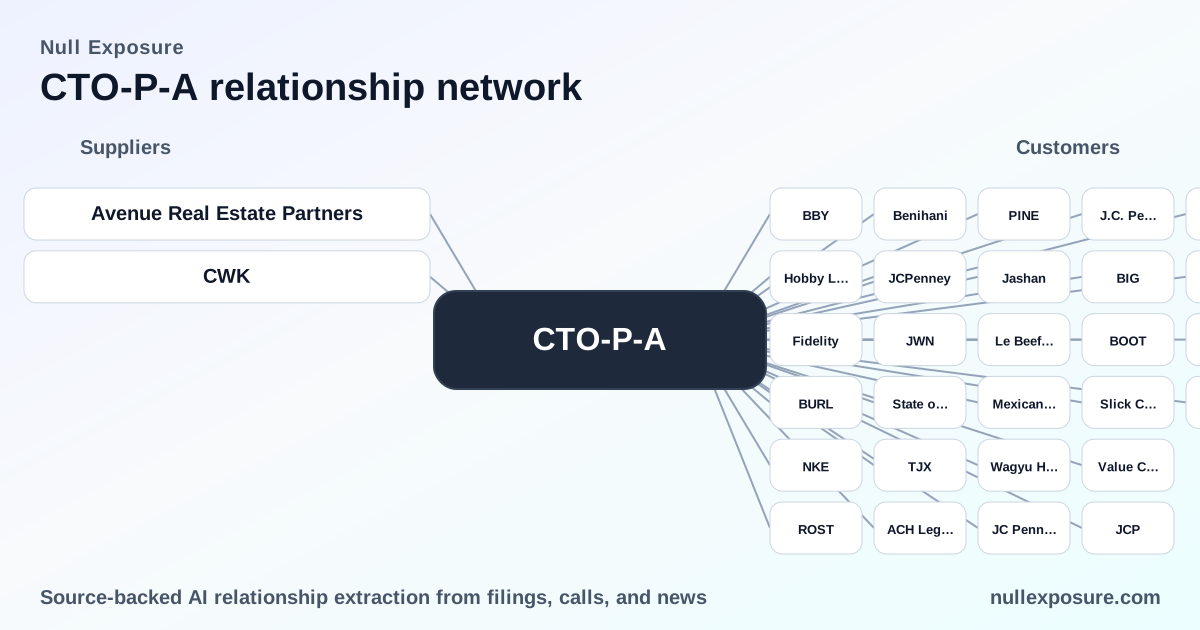
CTO-P-A: Tenant and Customer Map for Investors and Operators
CTO-P-A represents preferred equity exposure to CTO Realty Growth’s operating platform, which drives cash flow through ownership and active management of open‑air shopping centers and selective office assets. The company monetizes via property rents, strategic acquisitions/dispositions and a fee‑based management business that runs Alpine Income Property Trust (PINE) — a mix of recurring rental income and management fees that underpins preferred security coverage. For a quick platform view visit https://nullexposure.com/.
Why the customer map matters for preferred holders
CTO’s credit and dividend durability depends on the composition of its tenant base and the stability of its externally managed REIT relationships. Anchor tenants and long‑term government leases reduce volatility; high concentrations of non‑investment grade tenants, theater exposure or short-term lease roll risk increase it. The relationship evidence below offers a direct read on those risk vectors.
The relationship ledger — who CTO is doing business with
Below are the customer and tenant relationships found in public press and earnings transcripts. Each entry is a concise, plain‑English note tying the counterparty to CTO and a source citation.
-
Best Buy (BBY) — Best Buy is an anchor tenant at Palms Crossing, the 399,000 sq. ft. open‑air retail center CTO acquired for $81.6 million; the property is reported 98% leased. — GlobeNewswire (Mar 2, 2026) / Investing.com (May 2026).
-
Burlington Coat Factory / Burlington (BURL) — Burlington is an anchor tenant at both Palms Crossing and Pompano Citi Centre, making it a recurring large‑box tenant in CTO’s recently acquired assets. — GlobeNewswire (Mar 2, 2026); The Real Deal (Dec 19, 2025).
-
Nike (NKE) — Nike is listed among Palms Crossing anchors and contributes to the property’s high occupancy profile following CTO’s acquisition. — GlobeNewswire (Mar 2, 2026).
-
Hobby Lobby — Hobby Lobby serves as an anchor at Palms Crossing and is included in acquisition disclosures highlighting tenant mix. — GlobeNewswire (Mar 2, 2026).
-
Barnes & Noble (BNED / 2BN0.FRK) — Barnes & Noble is another anchor at Palms Crossing, cited in the 98% leased disclosure for the McAllen, TX property. — GlobeNewswire (Mar 2, 2026).
-
Fidelity — Fidelity was formerly occupying roughly half of CTO’s 212,000 sq. ft. Albuquerque office property; its partial vacancy materially affected same‑property NOI. — GlobeNewswire (Feb 19, 2026).
-
State of New Mexico — CTO re‑leased the portion of the Albuquerque building vacated by Fidelity to the State of New Mexico on a ten‑year initial term, restoring the property to 100% leased to two investment‑grade tenants. — Earnings call transcript / Benzinga (Apr 2026).
-
Alpine Income Property Trust, Inc. (PINE) — CTO externally manages Alpine Income Property Trust and owns a meaningful stake in the publicly traded net‑lease REIT, generating fee revenue and alignment with owned/managed portfolios. — Investing.com (Mar 2026); GlobeNewswire (Apr 28, 2026).
-
Ross Dress for Less (ROST) — Ross is an anchor tenant at Pompano City Center, one of CTO’s South Florida acquisitions. — The Real Deal (Dec 19, 2025); earnings call transcript (Mar 2026).
-
TJ Maxx / The TJX Companies (TJX) — TJX is an anchor at Pompano City Center and appears across CTO’s asset base as a large‑format discount apparel tenant. — The Real Deal (Dec 19, 2025).
-
Nordstrom Rack (JWN) — Nordstrom Rack anchors Pompano City Center and contributes to the center’s reported occupancy metrics. — The Real Deal (Dec 19, 2025).
-
J.C. Penney / JCPenney (JCP) — J.C. Penney is an anchor at Pompano City Center; transcripts also reference JCPenney as a material tenant in specific centers. — The Real Deal (Dec 19, 2025); GlobeNewswire (Dec 18, 2025).
-
Williams‑Sonoma / Pottery Barn Kids (WSM) — CTO signed a lease with Williams‑Sonoma (including Pottery Barn Kids) to fill a previously vacant space, evidence of active re‑tenanting. — Benzinga (Apr 2026).
-
ACH Legacy North TX LLC — Identified in Collin County records as the buyer in a transaction referenced alongside CTO’s portfolio activity (Shops at Legacy North sale context). — Dallas News (Dec 23, 2025).
-
Benihani — Named among restaurant tenants at Shops at Legacy North, showing CTO’s exposure to smaller food & beverage operators in shopping‑center assets. — Dallas News (Dec 23, 2025).
-
Jashan — Restaurant tenant at Shops at Legacy North; an example of smaller F&B operators contributing non‑anchor rent. — Dallas News (Dec 23, 2025).
-
Le Beef Steak & Frites — Listed as a tenant at Shops at Legacy North, representing specialty dining tenancy. — Dallas News (Dec 23, 2025).
-
Mexican Sugar — Restaurant tenant at Shops at Legacy North, part of local tenant mix. — Dallas News (Dec 23, 2025).
-
Wagyu House — Included among the restaurant tenants at Shops at Legacy North. — Dallas News (Dec 23, 2025).
-
Big Lots (BIG) — CTO consolidated former Big Lots space into a single new lease that combined multiple shop and expansion areas, reflecting active asset optimization. — Earnings call transcript / The Globe and Mail (Mar 2026).
-
Boot Barn (BOOT) — Two Boot Barn openings (Rockwell and Price) were completed and contributed to quarter performance as quick openings. — Earnings call transcript / InsiderMonkey (Mar 2026).
-
Slick City — CTO moved Slick City into the Carolina Pavilion late in the year, evidencing smaller regional tenant plays. — InsiderMonkey (Mar 2026).
-
Value City — CTO is in active negotiations for Value City space at Carolina Pavilion, a targeted re‑tenanting opportunity. — The Globe and Mail (Mar 2026).
-
Ravana — Mentioned in credit/loan context (Ravana loan activity) during the earnings Q&A, showing CTO’s exposure to borrower relationships in its loan portfolio. — The Globe and Mail (Mar 2026).
-
Waters (WAT) — Cited in Q&A about loan extensions and repayment expectations, a signal of creditor and counterparty monitoring. — The Globe and Mail (Mar 2026).
-
FDMIF — Founders / FDMIF referenced alongside loan extension discussions in the earnings transcript, indicating active credit monitoring and structured finance relationships. — The Globe and Mail (Mar 2026).
-
Founders — Referenced with Ravana and loan extension topics in investor Q&A; part of CTO’s financing/credit conversation. — The Globe and Mail (Mar 2026).
-
AMC (AMC) — CTO reduced theater exposure to two locations described as high‑performing, reflecting active portfolio trimming of discretionary tenants. — Benzinga (Apr 2026).
-
Cooper’s Hawk — CTO signed a lease for Cooper’s Hawk at Ashley Park in the Atlanta market, showing premium F&B demand in certain trade areas. — Benzinga (Apr 2026).
-
Swig — CTO signed a lease with Swig for a drive‑thru beverage concept at Marketplace in Orlando, highlighting small‑format drive‑thru leasing activity. — Benzinga (Apr 2026).
-
Barnes and Noble (alternate listings) — Repeatedly cited across press releases and call transcripts as an anchor at Palms Crossing. — GlobeNewswire (Mar 2, 2026); Benzinga (Apr 2026).
(If you need a downloadable matrix that ties each tenant to the specific property acquisition or lease date, visit https://nullexposure.com/ for the full mapping.)
What these relationships imply about CTO’s operating model and constraints
No explicit external constraints were provided in the source materials; instead, the relationship set itself signals the company’s operating characteristics:
-
Contracting posture: CTO executes long‑term anchor leases and multi‑year government tenancy (State of New Mexico), while also employing short‑term, opportunistic re‑tenanting for small shops — a mixed contracting posture that balances stability with active asset management.
-
Concentration: The portfolio shows reliance on large discount and big‑box anchors (Burlington, Best Buy, TJX, Nordstrom Rack) which provide occupancy stability; this creates tenant concentration risk at large‑format retail but reduces roll volatility at the center level.
-
Criticality: Investment‑grade or government leases (Fidelity previously; State of New Mexico now) are highly critical to NOI at specific office assets, while specialty F&B and small retailers are lower individual ticket risk but collectively important to foot traffic.
-
Maturity: The operating model is mature on the fee/management side (external management of PINE) and active on the acquisitions/re‑tenanting side, indicating a hybrid platform that blends recurring fees and transactional returns.
Investment takeaways
- Anchors and government leases provide a defensive income layer for preferred holders, but concentration in big‑box retail requires monitoring of sector disruption metrics.
- The externally managed PINE relationship diversifies revenue into fee income, improving cash flow resilience if property NOI temporarily softens.
- Active re‑tenanting and targeted dispositions demonstrate operational upside, but exposure to discretionary categories (theaters, F&B) demands closer watch on consumer trends.
For a deeper tenant‑by‑property matrix and alerts on material tenant events tied to CTO‑P‑A, check our gateway at https://nullexposure.com/.