Citius Pharmaceuticals (CTXR): Distribution-led commercialization, partner risk, and a concentrated go‑to‑market
Citius Pharmaceuticals commercializes specialty critical‑care and oncology products through a subsidiary, Citius Oncology, and monetizes primarily by selling finished product (notably LYMPHIR™) into the U.S. market and through exclusive regional distribution agreements abroad. The company combines internal supply and shared services with third‑party distributors to extend reach; revenue depends on partner execution, named‑patient/managed access channels in Europe, and the pace of clinician adoption. For a concise view of the customer and distribution relationships that will determine near‑term cash generation, see NullExposure’s coverage at https://nullexposure.com/.
What investors need to know up front
Citius transitioned to a commercial company with the December 2025 launch of LYMPHIR and is now executing a distributor‑led international expansion. The operating model is partnerships first, centralized operations second — finished product is supplied by Citius, while market access and distribution in many territories are delegated to local partners. That structure accelerates rollout but concentrates execution risk in a small number of counterparty relationships.
- Cash and funding are critical: Citius Oncology currently draws on corporate support and capital raises to fund operations, creating a direct linkage between partner commercialization success and corporate liquidity.
- Commercial focus is concentrated: Management is targeting a narrow set of prescribing specialists (hematologists, oncologists, dermatologist‑oncologists) and KOLs, which concentrates both revenue upside and adoption risk.
- For more context on how partner performance feeds valuation models, visit https://nullexposure.com/.
Operating characteristics: how to read the constraints
The available company disclosures and press releases create a clear set of operating signals investors should weight in any model:
- Contracting posture — centralized services with a subsidiary operating arm. Citius Pharma provides executive, operational and administrative support to Citius Oncology under a shared services agreement, signaling a centralized decision and cost structure for early commercialization.
- Concentration — narrow prescriber target set. Management has explicitly focused commercial efforts on a concentrated group of specialists and key opinion leaders, implying that adoption hinges on targeted, high‑value sale cycles rather than broad primary care uptake.
- Criticality and maturity — commercial stage but still nascent revenue. The company declared itself commercial in December 2025 with LYMPHIR’s U.S. launch; this is an early revenue phase that magnifies the importance of each distribution win.
- Spend / internal funding posture — material intra‑company allocation. The company reports an allocated quarterly expense to Citius Oncology of approximately $1,006,000, indicating a non‑trivial ongoing internal funding commitment to support the subsidiary’s rollout and operations.
Partnerships and customer relationships to watch
Below are every relationship recorded in recent public filings and press coverage, with a concise plain‑English takeaway and source reference.
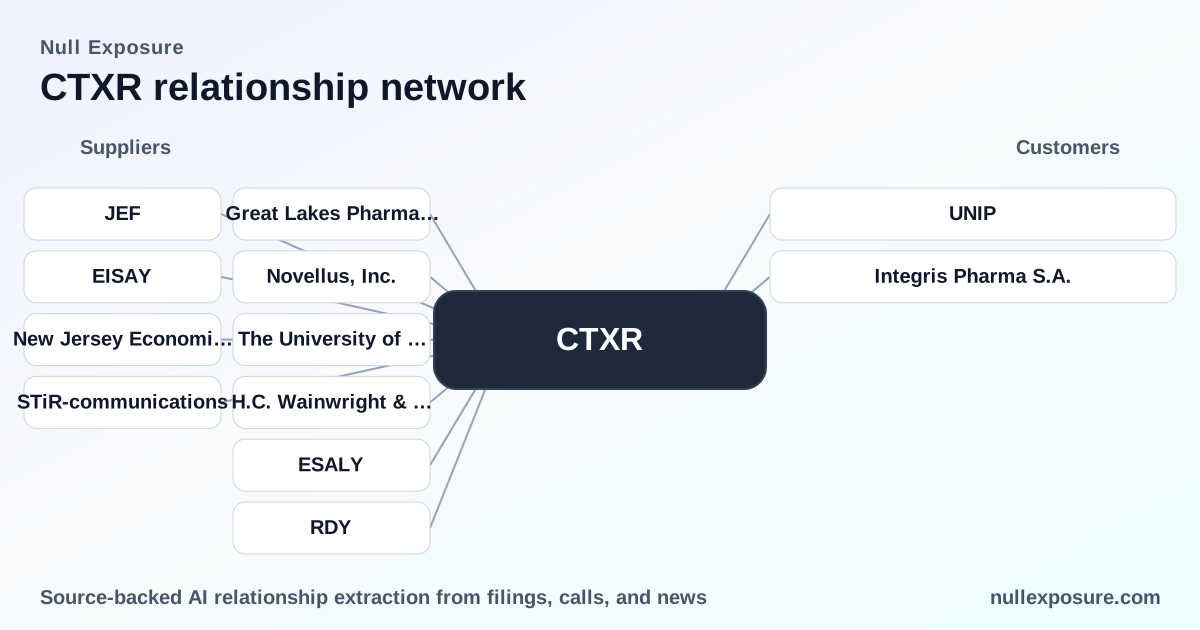
UNIP (inferred symbol UNIP)
Citius Oncology entered an exclusive distribution agreement with Uniphar to support access to LYMPHIR in designated territories across Western and Eastern Europe; Citius will supply finished product and provide ongoing support under the contract. According to a PR Newswire release dated March 9, 2026, the arrangement covers country‑specific managed access programs where local law permits.
Uniphar (same PR Newswire entry)
Uniphar will serve as the exclusive regional distribution partner for LYMPHIR in the specified European territories, positioning Uniphar as the primary European channel for early commercial adoption under managed access protocols. This is described in the same PR Newswire announcement on March 9, 2026.
Integris Pharma S.A.
Citius announced a distribution agreement with Integris Pharma S.A. to initiate named‑patient access programs in Greece, Cyprus and other Southern European and Balkan countries as part of the LYMPHIR launch. This was described in a company announcement about the U.S. commercial launch of LYMPHIR reported on March 9, 2026 via PR Newswire.
CTOR (Citius Oncology)
A summary of Citius Oncology’s filings indicates the subsidiary expects to continue relying on funding from Citius Pharma and equity financings to support operations through March 2026, underscoring the parent's role as the immediate financial backstop for commercialization spend. This was noted in a TradingView synopsis referencing the SEC 10‑K (reported March 2026).
Uniphar (Finviz headline)
Market summaries picked up the Uniphar distribution news as a material commercial expansion for LYMPHIR, reinforcing market recognition that the European partnership is a strategic step for international reach; see the Finviz news item dated May 2, 2026.
Uniphar (Finviz commercial update)
A separate Finviz‑aggregated item on May 2, 2026 highlighted Citius Oncology’s commercial update on LYMPHIR launch activity and reiterated the Uniphar European distribution tie as a component of early adoption and clinical engagement.
How these relationships affect value and risk
These partner ties create a set of practical investment implications:
- Upside: Exclusive European distribution deals give Citius an immediate commercial channel without the full cost of building a local salesforce, accelerating revenue scale if partners execute. Uniphar’s exclusivity is the primary international revenue lever.
- Concentration risk: A small number of distributors and a focused prescriber target increase sensitivity to execution missteps; a single partner failure or regulatory restriction in a country can materially delay revenues.
- Cash flow sensitivity: The business is in the earliest phase of monetization and continues to require internal funding — the company’s quarterly allocated expense to Citius Oncology (~$1,006,000) and reliance on parent funding through at least March 2026 are concrete cash‑flow constraints that tighten the timeline for partner‑driven revenue to offset burn.
- Commercial complexity: Reliance on named‑patient and managed access programs in Europe limits immediate broad market uptake and requires considerable regulatory and medical affairs support from both Citius and its distributors.
Bottom line and what to monitor next
Citius’s near‑term valuation trajectory is hinged on three measurable items: ** LYMPHIR adoption trends in the U.S., execution of Uniphar/Integris distribution in Europe, and the company’s cash runway given continued intra‑company support.** Investors should track shipment volumes to partners, named‑patient enrollment rates, and any edits to the shared services or funding profile disclosed in SEC filings.
For investors and operators who want an organized view of counterparty relationships and commercial exposure, explore NullExposure’s relationship coverage at https://nullexposure.com/. Monitoring partner performance quarterly will be decisive in converting the current launch into durable revenue.