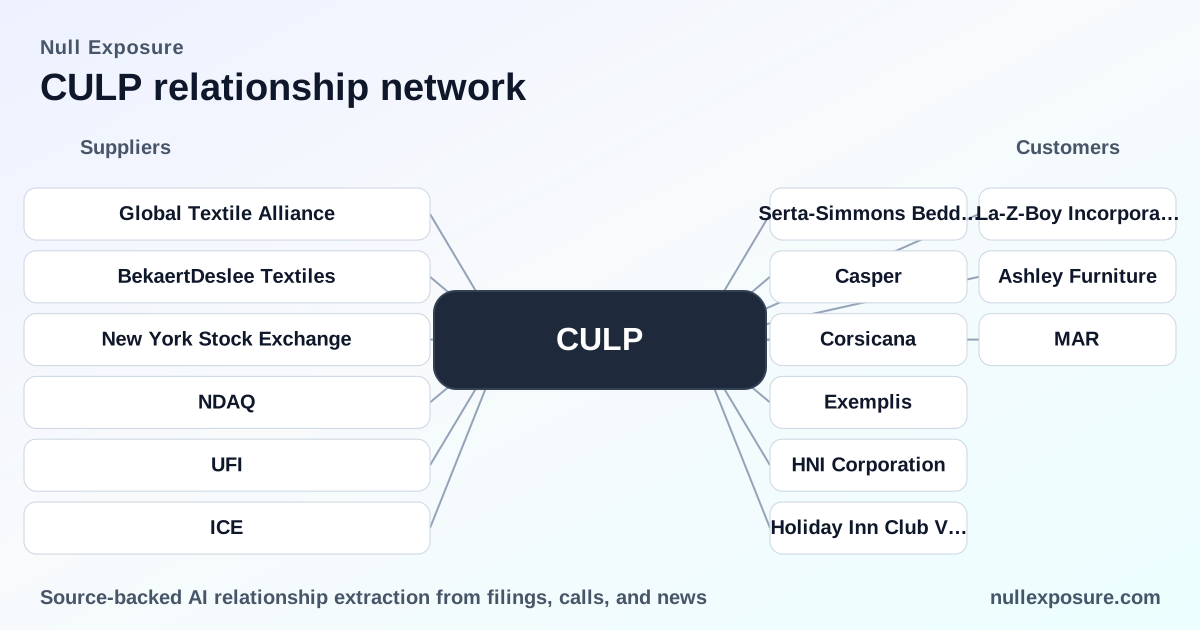
Culp, Inc. (CULP) — customer map and investment implications
Culp manufactures and sells mattress and upholstery fabrics, sewn covers, and cut-and-sew kits primarily to bedding, residential and commercial furniture, and hospitality customers; it monetizes through product sales, make-to-order manufacturing, and value-added services (measuring and installation) via subsidiaries. Revenue concentration is meaningful: single customers generated double-digit percentages of consolidated sales in FY2025, while the company operates a primarily short-term, make-to-order commercial posture that drives volatility in backlog and earnings. For a concise hub of Culp customer intelligence, see NullExposure: https://nullexposure.com/.
The business model in one paragraph
Culp is a vertically integrated textile manufacturer and supplier that sells finished mattress and upholstery fabrics and related sewn components to large mattress makers, furniture companies, and hospitality chains. The company’s go-to-market combines just-in-time mattress fabric shipments, make-to-order upholstery production, and on-site services through a subsidiary, which creates a mix of recurring production revenue and project-based services. Profitability is sensitive to order timing, raw material input costs, and concentration among a handful of large buyers.
What the customer list signals to investors
The customer list reported in Culp’s FY2025 Form 10‑K shows a blend of mattress market leaders, national furniture brands, and hospitality accounts. Two customers accounted for roughly 11–13% of consolidated net sales individually, implying both dependence and pricing leverage with large buyers. The contract posture—short lead times and make-to-order production—means revenue is responsive to customer order cycles, not long-term fixed-bookings, increasing top-line cyclicality. Geographic exposure is predominantly North America but includes APAC and a global sales footprint, which diversifies end markets but keeps concentration risk at the account level.
Detailed customer relationships reported in FY2025
Below are every customer relationship listed in Culp’s FY2025 10‑K, each summarized in plain English with source attribution.
Serta‑Simmons Bedding (SSB)
Serta‑Simmons Bedding was Culp’s largest customer in the mattress fabrics segment, accounting for approximately 13% of consolidated sales in fiscal 2025, highlighting material reliance on a single bedding OEM. According to Culp’s FY2025 Form 10‑K (filed April 27, 2025), SSB is the top mattress-fabrics buyer.
Casper
Casper is listed among major mattress fabric customers and represents Culp’s exposure to direct-to-consumer mattress brands in addition to legacy OEMs. The FY2025 10‑K names Casper among leading bedding manufacturers purchasing mattress fabrics.
Corsicana
Corsicana is listed as a significant mattress fabric customer, signaling Culp’s penetration into mid‑market bed manufacturers. Culp’s FY2025 Form 10‑K includes Corsicana in its mattress customer roster.
Exemplis
Exemplis is cited among major customers for Culp’s commercial upholstery fabrics, reflecting relationships into contract and commercial furniture channels. The FY2025 10‑K identifies Exemplis as a purchaser of upholstery fabrics for commercial furniture.
HNI Corporation
HNI Corporation is named as a major buyer of Culp’s commercial upholstery fabrics, indicating direct ties to office and contract furniture supply chains. The FY2025 Form 10‑K lists HNI among key commercial furniture customers.
Holiday Inn Club Vacations
Holiday Inn Club Vacations appears as a named customer for commercial/hospitality fabrics, showing Culp’s penetration into hospitality interior programs. The FY2025 10‑K includes Holiday Inn Club Vacations in the commercial fabric customer list.
La‑Z‑Boy Incorporated
La‑Z‑Boy was the largest customer in the upholstery fabrics segment, accounting for approximately 11% of consolidated sales in fiscal 2025, which underscores concentration risk in residential furniture. Culp disclosed this in its FY2025 Form 10‑K (filed April 27, 2025).
Ashley Furniture
Ashley Furniture is included among major mattress fabric customers and represents strategic scale exposure to a top furniture retailer and manufacturer. The FY2025 10‑K lists Ashley Furniture in the mattress fabrics customer group.
Marriott
Marriott is named among customers for commercial and hospitality fabrics, reflecting corporate and branded-hotel procurement relationships. Culp’s FY2025 10‑K includes Marriott in its list of commercial/hospitality customers.
MAR (duplicate entry for Marriott)
The filing also lists MAR with an inferred symbol of MAR, which references Marriott International; this is a duplicate mention of the same hospitality relationship recorded in the FY2025 10‑K (filed April 27, 2025).
Operating constraints and what they imply for investors
Culp’s FY2025 disclosures convey several structural constraints that define how customer risk translates to financial risk:
- Contracting posture — short term and make-to-order. The company discloses that mattress fabric sales are largely just‑in‑time and upholstery fabrics are marketed on a make‑to‑order basis, which reduces backlog predictability and ties near‑term revenue to order flows rather than long-term contracts.
- Geographic mix — North America dominant, APAC present, global reach. Culp reports the United States accounted for the majority of revenue, with measurable sales in North America ex‑USA and the Far East/Asia, supporting diversification but keeping operational exposure rooted in NA markets.
- Concentration — material single-customer risk. Two customers in FY2025 accounted for roughly 11% and 13% of consolidated net sales, creating high account-level materiality that can influence price negotiations and working capital.
- Role and capability — manufacturer with service capabilities. Culp is primarily a manufacturer and seller of fabrics and components, and it also provides related services (measuring and installation) via subsidiaries, adding a service revenue stream that increases customer stickiness but also operational complexity.
- Segment maturity — core products with cyclical demand. Mattress and upholstery fabrics are core manufactured products serving mature bedding, furniture, and hospitality markets; demand cycles track housing, consumer spending, and hospitality capex.
These constraints combine to make Culp a volume- and timing-sensitive manufacturing business with concentrated customer accounts and limited long-term contractual insulation.
Investment implications: risks and upside
Culp’s exposure to large OEM customers and make-to-order production creates a double-edged profile. On the upside, large anchor customers provide scale and repeat business that support gross margins when volumes normalize. On the downside, high customer concentration and short-term contracts translate to revenue volatility and meaningful counterparty risk, which has reflected in negative margins and rolling quarterly revenue declines reported in FY2025.
Key investor considerations:
- Working capital and cash flow management are essential given just‑in‑time shipments.
- Loss or volume reduction from any 11–13% customer would materially pressure sales and margins.
- Geographic diversification cushions but does not eliminate North America demand sensitivity.
For detailed customer mapping and additional issuer intelligence, visit NullExposure: https://nullexposure.com/.
Bottom line — what to watch next
Monitor order patterns with Serta‑Simmons and La‑Z‑Boy, raw material cost trends, and any shifts from make‑to‑order to longer-term supply agreements. Customer concentration and short contract tenors are the two defining investment risks for Culp, and any movement toward longer-term commitments or broader customer diversification will materially improve the company’s risk profile.