CVD Equipment (CVV): Customer relationships driving a capital-equipment pivot into silicon carbide
CVD Equipment Corporation designs and manufactures capital equipment for materials and coatings — notably CVD and PVT systems — and monetizes through system sales, multi-year system contracts recognized over time, aftermarket service, and selective licensing of IP. Recent customer wins in silicon carbide research and a strategic divestiture of its Stainless Design Concepts (SDC) division convert backlog and non-core assets into cash while concentrating the company on high-margin, hardware-driven growth opportunities. For a concise view of customer signals, see more at https://nullexposure.com/.
Why the Stony Brook order matters: a clear inbound for silicon carbide demand
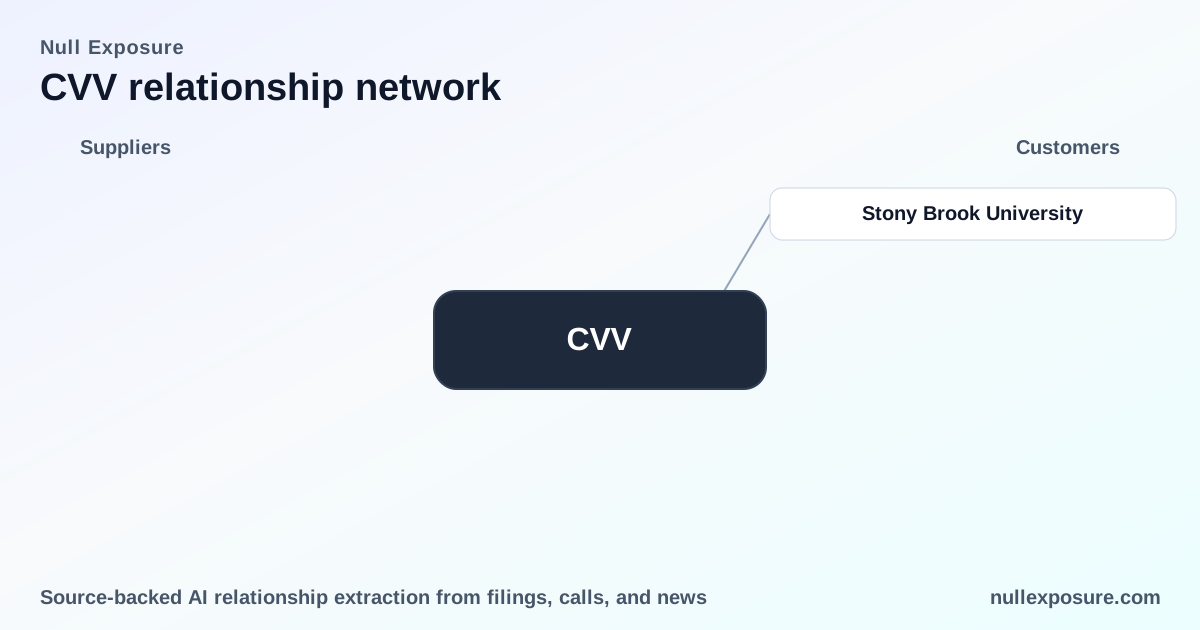
CVD announced an order for two PVT150 Physical Vapor Transport systems from Stony Brook University to support the onsemi Silicon Carbide Crystal Growth Center, giving the company direct exposure to the silicon-carbide wafer supply chain and academic/industry research partnerships. According to a company press release reported on Yahoo Finance in March 2026, the order is positioned as part of SBU’s new semiconductor research center (FY2025). Subsequent reporting and the company’s Q4 commentary reaffirm that these units drove demand in the quarter and contributed materially to system orders in late 2025 (earnings call transcript coverage, Q4 2025 / FY2026 commentary).
- Stony Brook University — CVD received an order for two PVT150 systems for the onsemi Silicon Carbide Crystal Growth Center (press release reported March 2026 on Yahoo Finance; also referenced in company earnings commentary in May 2026).
Takeaway: this is a product-specific win (PVT150) that validates the company’s pitch into the silicon-carbide market and supports near-term revenue recognition out of backlog.
Atlas Copco deal: monetizing non-core assets and simplifying the revenue base
CVD entered into a definitive agreement to sell its Stainless Design Concepts (SDC) division to Atlas Copco Group for approximately $16.9 million in cash, a transaction disclosed as part of CVD’s strategic review and announced in March 2026. CityBiz and business wire reports covering the March 2026 announcement confirm the purchase price and that the sale transfers SDC assets to Atlas Copco as part of CVD’s effort to focus on core systems businesses (reported FY2026).
- Atlas Copco Group — CVD agreed to sell the SDC division to Atlas Copco for roughly $16.9 million in cash (announced March 2026; CityBiz and other press coverage).
Takeaway: the sale materially reshapes CVD’s business mix by removing a manufacturing division and injecting liquidity that can reduce balance-sheet risk or fund R&D and execution on PVT/CVD platform expansion.
Interpreting the customer data: what relationships tell investors about how CVV operates
CVD’s customer relationships and the accompanying constraints paint a consistent picture: capital-equipment vendor with long sales cycles, concentrated revenue, global end markets, and mixed counterparty types (research institutions and very large enterprises).
- Contracting posture and revenue recognition: CVD recognizes revenue on system projects “over time” using an input (cost-incurred) method and reports substantial backlog — the company disclosed approximately $17.4 million of remaining performance obligations at December 31, 2024 and unrecognized contract revenue of about $16.4 million expected to be substantially recognized within the next 12 months. This underscores a project-based, deliverable-driven contracting posture.
- Concentration and materiality: The company acknowledges customer concentration — one customer represented 29.5% of revenues in 2024 — a material counterparty risk that elevates the commercial sensitivity of renewal and replacement cycles.
- Counterparty mix and criticality: Sales are to commercial companies, universities, and research laboratories worldwide, which implies mixed buying criteria (research-grade validation and large-enterprise procurement) and increases the strategic value of institutional wins like Stony Brook.
- Product and segment focus: The business is fundamentally hardware and manufacturing oriented (CVD, PVT, gas control systems), supported by aftermarket and licensing — there is explicit evidence of licensing transactions for IP in past disposals, indicating a willingness to monetize non-core IP.
- Geography and scale: Revenue is largely North American with smaller EMEA and APAC footprints, but the product set is sold globally — this supports an exportable niche manufacturing model rather than a pure domestic services play.
- Relationship life cycle: Many relationships are active and mature (backlog, repeat orders), while a subset are in pilot stages for newer products (e.g., PVT200 trials noted in early 2024), showing a mix of recurring system revenue and product validation pipelines.
- Typical spend band: Customer-level contributions fall in the $1M–$10M range — consistent with capital-equipment purchases that materially impact a small-cap vendor’s topline.
Bold signal: CVD’s business model is highly dependent on a handful of midsize to large systems orders and on converting backlog over multi-quarter timelines, so single customer outcomes and timely execution of deliveries critically influence near-term results.
Risks and upside framed by customer flows
- Concentration risk is real: loss of a major customer would be materially disruptive, as the company itself has stated; investors should price in volatility tied to single large orders.
- Execution risk around delivery and service: long-term contracts imply performance and cost-control exposure; overrun risks compress margins and delay revenue recognition.
- Strategic clarity from the SDC sale: the ~$16.9M cash proceeds reduce balance-sheet pressure and sharpen management focus on core system platforms, which increases optionality for a product-led growth path into semiconductor materials.
- Market access via research hubs: wins like Stony Brook create reference customers in silicon-carbide growth — which is both revenue and signaling value for commercial buyers.
Valuation context and investor implications
CVD is a small-cap industrial with a market capitalization in the low tens of millions and trailing operating losses, but with meaningful backlog and a clear capital infusion from the SDC divestiture. The company’s shift toward silicon-carbide system sales and continued licensing activity create a two-pronged monetization strategy — hardware sales + targeted IP monetization — that justifies a watchful, event-driven approach to the equity. Analysts’ target-price signals and forward multiples will be highly sensitive to quarterly backlog conversion and the cadence of PVT/PVT200 adoption.
If you track supplier-customer funnels in industrials, monitor delivery schedules, backlog burn, and any repeat/system orders from commercial semiconductor manufacturers — those are the core drivers of re-rating.
For a concise, actionable overlay of CVV’s customer relationships and how they impact risk and opportunity, visit https://nullexposure.com/ for our structured investor briefs and relationship intelligence.