Chevron (CVX) — Customer Map and Commercial Takeaways for Investors
Chevron is a global integrated energy company that monetizes through upstream production (crude, natural gas, NGLs), downstream refining and marketing, chemicals and renewable fuels, and long‑term LNG and commodity sales. Its revenue profile blends contracted, recurring cash flows from long‑term offtakes with margin capture in refining and commodity trading, while spot sales provide tactical upside. For investors evaluating counterparty risk and portfolio exposure, Chevron’s customer relationships reflect a diversified geographic footprint, a mix of long‑term and spot commercial posture, and direct sales to sovereign and utility buyers that are strategic to cash generation. For a complete map of customer relationships and constraints, see https://nullexposure.com/.
Why customer relationships matter for Chevron’s valuation
Chevron’s business model is contract‑dependent: large capex projects and LNG ventures require long‑term offtake agreements to underwrite returns, while the downstream book relies on scale and distribution contracts to monetize refining margins. The company’s customer set therefore signals both revenue visibility and concentration risk:
- Long‑term offtake is a core revenue stabilizer. Evidence shows substantial binding commitments for LNG and gas volumes that provide predictable cash flows for project economics.
- Spot exposure supplements upside but increases earnings volatility. Chevron sells some equity LNG and other volumes into the Asian spot market when favorable.
- Geographic diversification reduces single‑market risk but creates multi‑jurisdictional political and contract complexity. North America and Asia Pacific are especially material marketing areas.
- Role diversity (manufacturer, seller, distributor) reinforces resilience. Chevron is a producer of hydrocarbons and renewable fuels, a global refiner and marketer, and a physical supplier to utilities and national buyers.
A mid‑cycle investor should weigh the benefit of long‑term contracted cash flows against execution and political risk in emerging markets, and the earnings sensitivity to spot price moves when volumes are sold opportunistically. Learn more about mapping counterparty exposures at https://nullexposure.com/.
How Chevron contracts and markets product — the firm‑level signals
Chevron’s corporate disclosures and public reporting generate a consistent set of company‑level operating signals:
- Contracting posture: Chevron runs a mixed commercial strategy. Most equity LNG from its Australian projects is sold under binding long‑term contracts, while a portion is offered to the Asian spot LNG market, giving the company both revenue certainty and market optionality. The company is also contractually committed to deliver material volumes of NGLs and natural gas in the U.S. across 2025–2027 (specific contractual figures appear in public filings).
- Geographic concentration and reach: Marketing activity is concentrated in North America and Asia Pacific but the company operates globally across EMEA, Africa and Australia, reducing single‑region concentration while increasing political and operational complexity.
- Commercial role and maturity: Chevron functions simultaneously as manufacturer, seller and distributor across upstream, downstream and renewables segments — a mature, integrated posture that supports cross‑segment margin capture and volume optimization.
- Stage and criticality: Customer relationships are predominantly active and commercially critical to project economics (e.g., long‑term offtake for LNG and supply agreements with utilities).
These signals should be integrated into valuation scenarios: long‑term contracted cash flows support lower discount rates for project cash flows, while spot exposure introduces cyclical sensitivity to returns.
Direct customer relationships investors should track
Below are the customer relationships identified in recent public reporting and news coverage; each entry includes a concise plain‑English summary and the source.
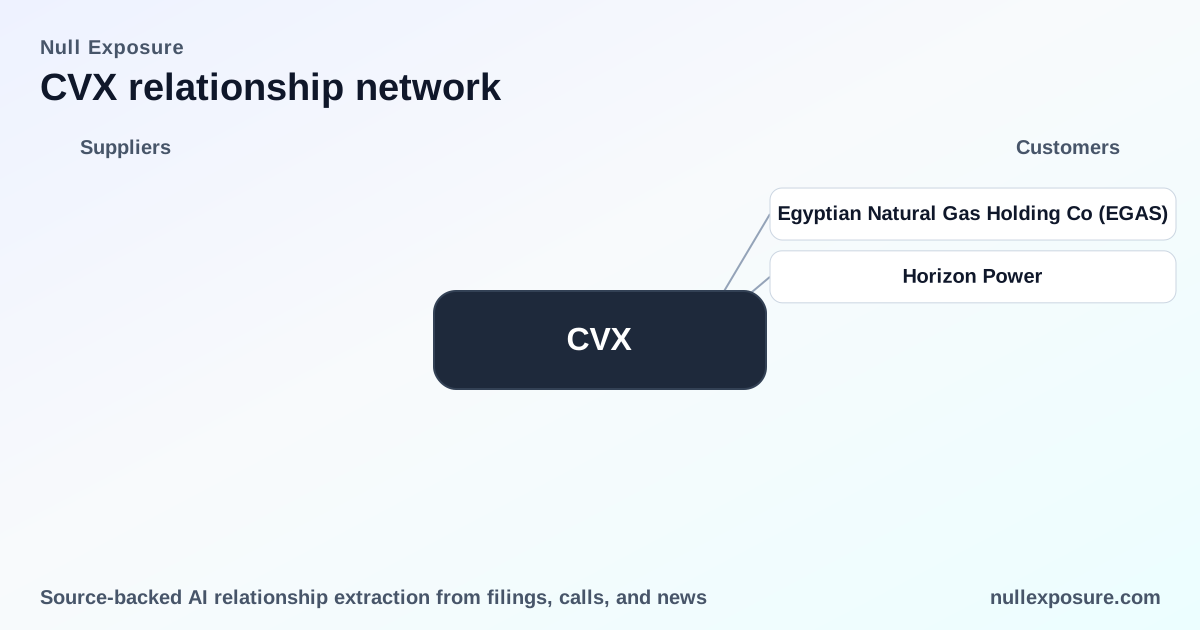
Egyptian Natural Gas Holding Co (EGAS)
Chevron and partners structure sales in markets with national buyers; EGAS is designated as the sole buyer under a memorandum of understanding for gas from the Aphrodite reservoir, with partners retaining an option to purchase quantities sold to EGAS as LNG. This arrangement converts project output into a concentrated counterparty exposure to a national utility purchaser. (Rigzone, March 9, 2026.)
Horizon Power (Western Australia)
Chevron signed a five‑year supply agreement to deliver roughly 14 petajoules of natural gas to Horizon Power, the utility serving Western Australia, providing a multi‑year contracted revenue stream tied to domestic power generation. This is an example of Chevron selling directly to a regulated utility under a medium‑term supply deal. (Rigzone wire, March 6, 2026.)
Canadian Natural Resources Limited (CNQ)
Canadian Natural increased production after acquiring Chevron Canada’s Alberta assets in late 2024; Chevron’s divestiture of Canadian upstream assets materially shifted volumes and commercial relationships, with Canadian Natural temporarily leveraging higher leverage to ingest the acquired assets and boost output. The transaction reallocated midstream and offtake exposures in Alberta and altered Chevron’s asset footprint in Canada. (Finviz news commentary, March 9, 2026; SimplyWall commentary on May 2, 2026 reporting the post‑2024 completion.)
Empire Petroleum / EP (regional distribution)
A 2018 industry report described Empire Petroleum’s acquisition of distribution contracts from Keeman, noting that those contracts strengthened Empire’s regional footprint and expanded its partnerships with major brands including Chevron, underlining Chevron’s downstream distribution relationships with regional marketers and distributors. This is indicative of Chevron’s market presence via branded distribution agreements. (Indian Chemical News, FY2018 reporting.)
Investment implications — what to watch and why it matters
- Revenue visibility versus counterparty concentration: Long‑term LNG and gas commitments provide predictability, but large national buyers or utilities (like EGAS and Horizon Power) concentrate counterparties for specific projects. Monitor contract tenure and buyer credit quality.
- Regional exposure is investment‑relevant: Asia Pacific and North America are core marketing regions, so regional demand trends and policy shifts (e.g., Asia LNG demand, North American gas flows) are principal drivers of margin and utilization.
- Operational and political risk across jurisdictions: Global operations diversify commercial risk but increase exposure to regulatory changes, nationalization risk and supply chain disruption. Project economics are contingent on stable long‑term contracts and onshore/offshore operating performance.
- Portfolio flexibility from mixed commercial posture: The hybrid model — binding long‑term sales with selective spot marketing — allows Chevron to lock in returns for capital projects while capturing upside during favorable pricing cycles.
Bottom line for investors
Chevron’s customer relationships reflect a mature, integrated commercial model that balances long‑term contracted revenue with selective spot exposure and broad geographic reach. For valuation and risk assessment, prioritize contract tenure, counterparty credit (sovereign vs. private utility), and regional demand trends. For an actionable counterparty map and to cross‑reference disclosed contract volumes and tenure across markets, visit https://nullexposure.com/.
Bold customer relationships and contractual commitments are central to Chevron’s project economics and share‑price sensitivity; investors should integrate disclosed long‑term offtakes, regional exposure and divestiture outcomes into scenario analyses and downside stress tests.