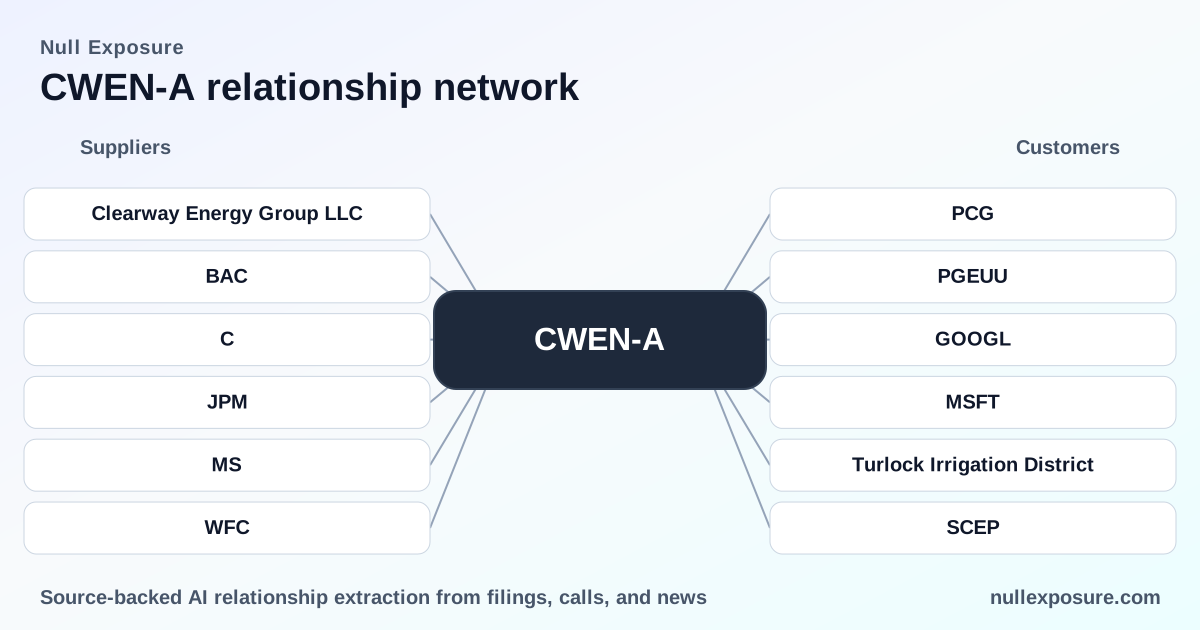
Clearway Energy (CWEN-A): Customer relationships that underpin long-term contracted cash flows
Clearway Energy operates as an owner and operator of renewable and flexible generation assets across North America and monetizes primarily by selling electricity and environmental attributes under long‑term power purchase agreements (PPAs) and tolling arrangements to utilities and large commercial counterparties. The business model delivers durable, contract‑backed cash flow with a weighted average remaining contract life of roughly 12 years in the renewables portfolio and concentrated exposure to a small set of large buyers that drive near‑term revenue. For a focused view of counterparties and implications for investors, see NullExposure’s customer insights at https://nullexposure.com/.
Quick read: what investors should take away
Clearway’s revenue base is contract‑centric (long‑term PPAs), geographically focused in North America, and concentrated around a handful of large utilities and technology companies. That structure supports predictability but introduces counterparty concentration risk—notably Southern California Edison and PG&E account for material shares of consolidated revenue. The company also executes multi‑year enterprise PPAs with technology sponsors, which materially extend the sponsor‑enabled growth runway.
How Clearway’s operating model informs risk and upside
Clearway’s commercial posture and business model characteristics are best read as company‑level signals:
- Contracting posture — Long‑term: The majority of revenues are generated from long‑dated contractual arrangements; the renewables segment has a weighted average remaining contract duration of about 12 years as of year‑end 2024. This delivers stable cash flows and creditable CAFD (cash available for distribution) visibility.
- Counterparty profile — Large counterparties: Contracts frequently run to utilities or investment‑grade commercial customers, reflecting an emphasis on creditworthy counterparties for major assets.
- Geography — North America focus: Investment and operations target the U.S. and Canada; the company intends to concentrate future investments in North America.
- Role and segment — Seller of energy and attributes: Clearway acts as the seller of electricity, capacity and renewable attributes (RECs), with sales split across core renewable generation and infrastructure ownership.
- Maturity and stage — Active, revenue generating assets: Many facilities are actively contracted; certain sites show staged contracting into the late 2020s as repowering or new PPAs come online.
These signals drive valuation considerations: high contract coverage supports valuation multiple premium for predictability, while top‑counterparty concentration and regulated utility exposure raise single‑counterparty risk that underwriters and bondholders will price accordingly. If you want a targeted feed of Clearway’s counterparties and contract timelines, visit https://nullexposure.com/.
Relationship round‑up — every counterparty mentioned in the source set
PG&E
PG&E is a material utility counterparty for Clearway; PG&E represented approximately 17% of consolidated revenue in the year ended December 31, 2024. According to Clearway’s FY2024 10‑K filing, PG&E is one of the company’s largest customers by revenue share. (Source: Clearway FY2024 10‑K disclosure, referenced in a TradingView SEC 10‑K summary.)
SCE (Southern California Edison)
Southern California Edison accounted for approximately 24% of consolidated revenue for the year ended December 31, 2024, making it Clearway’s single largest identified customer by share. This concentration is disclosed in the company’s FY2024 10‑K and reiterated in public summaries of the filing. (Source: Clearway FY2024 10‑K; TradingView coverage of Clearway’s SEC filing.)
SCEP
SCEP is reported in the merchant data as an identifier associated with Clearway’s large utility customer exposure and is tied to the same disclosure that lists SCE among the company’s largest customers, representing roughly one quarter of revenue in FY2024. Treat this entry as the same commercial exposure captured under the SCE designation in company reporting. (Source: Clearway FY2024 10‑K; TradingView summary.)
Google (GOOGL)
Clearway executed multiple 20‑year PPAs with Google covering projects in Missouri, Texas and West Virginia that total roughly 1.1–1.2 GW, announced January 15, 2026. Management highlighted on the 2025 Q4 earnings call that Google‑backed long‑term PPAs support investment at Swan and Catamount Energy Centers and extend Clearway’s sponsor‑enabled growth runway into 2028 and beyond. (Sources: Clearway 2025 Q4 earnings call; Investing News and MarketScreener coverage of Clearway Group PPA announcements.)
GOOGL (separate mention)
Market and press coverage independently recorded the same Google PPA portfolio transaction, noting that Clearway Group signed long‑term PPAs totaling nearly 1.2 GW across three states as part of the company’s 2025 commercial activity. This coverage mirrors the company’s public release and amplifies the scale of Google as an anchor commercial buyer for new build projects. (Source: MarketScreener press coverage and Clearway investor disclosures.)
Microsoft (MSFT)
Clearway reported a repowering project that is expected to sell power to Microsoft under a 20‑year PPA once repowering commercial operations are achieved in 2026–2027, making Microsoft a sponsor customer for that specific asset and supporting long‑duration contracted cash flow from the repowered facility. (Source: Clearway first‑quarter 2025 financial results press release distributed via GlobeNewswire / ManilaTimes.)
MSFT (separate mention)
News wire restatements of the first‑quarter 2025 results also referenced the Microsoft PPA for the repowered project, confirming the 20‑year commercial term aligned with the company’s asset repowering timeline and reinforcing Microsoft as a long‑term offtaker for that facility. (Source: GlobeNewswire / ManilaTimes first‑quarter 2025 results.)
Turlock Irrigation District
On April 29, 2025, Clearway closed the acquisition of the 137 MW Tuolumne Wind project from Turlock Irrigation District; the project includes a 15‑year PPA with Turlock (an investment‑grade regulated entity) with an initial contract term through 2040. This transaction represents a utility‑backed PPA tied to an acquired asset. (Source: Clearway Q1 2025 press materials distributed via GlobeNewswire / ManilaTimes.)
What investors should price in now
- Revenue visibility is high due to long‑dated contracts and a ~12‑year weighted remaining contract life for the renewables book. That supports dividend coverage and CAFD projections.
- Counterparty concentration is real: SCE and PG&E together represented roughly 40% of FY2024 consolidated revenue, which increases exposure to utility credit dynamics and regulatory economics in key service territories.
- Enterprise PPAs with Google and Microsoft materially diversify counterparties by credit type and anchor new capacity build, improving the growth runway without exposing the company to merchant tails on those projects.
- Geographic and asset concentration remains an underwriting consideration; Clearway’s North American focus simplifies regulatory scope but concentrates jurisdictional policy risk.
If you evaluate utility‑scale renewable owners for income and growth, Clearway’s contract profile delivers the predictability expected by long‑duration investors while requiring active monitoring of counterparty concentration and state/regional regulatory developments. For continual monitoring of customer exposures and contract timelines, visit https://nullexposure.com/.