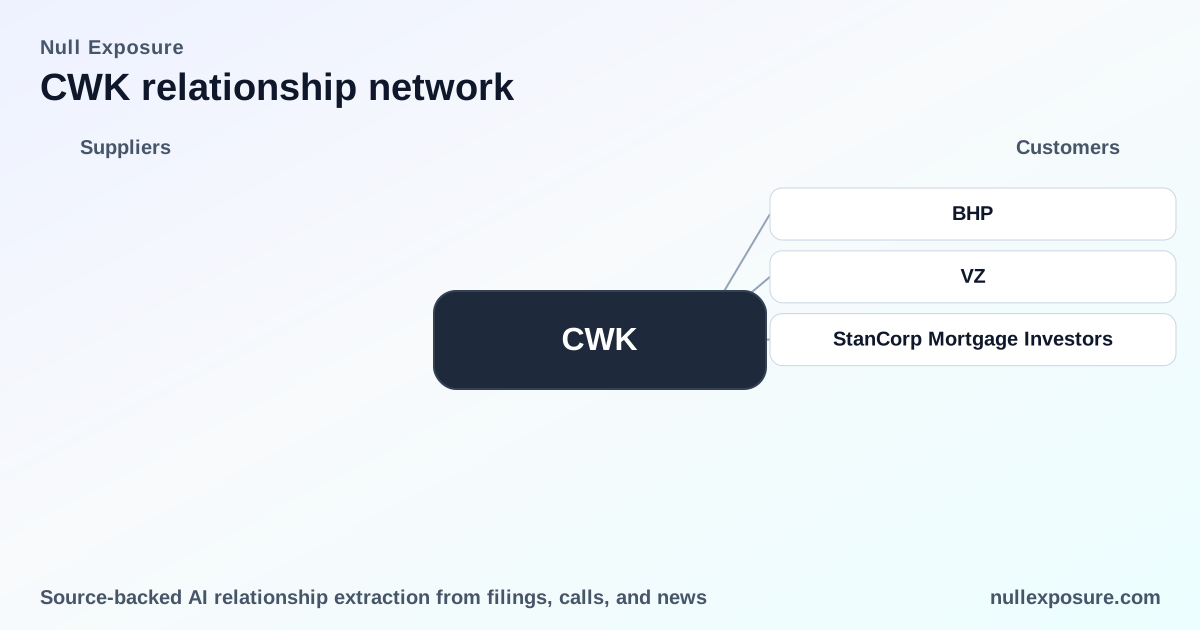
Cushman & Wakefield (CWK): customer relationships that move the revenue needle
Cushman & Wakefield monetizes a global services-heavy real estate platform by charging recurring fees for property, facilities and project management, plus transaction and leasing commissions for landlords and occupiers; the business combines multi-year service contracts with one-off capital-markets and leasing mandates to generate diversified fee revenue across geographies and asset classes. Investors should value CWK as a services and brokerage integrator whose profitability is driven by recurring Services revenue and episodic capital markets and leasing wins.
If you want a concise view of CWK’s client footprint and what specific mandates look like, visit https://nullexposure.com/ for broader relationship mapping and analytics.
How Cushman & Wakefield actually earns and scales commercial real estate fees
Cushman & Wakefield sells four principal offerings—Services (property/facilities/project management), Leasing, Capital Markets, and Valuation/Other—and executes value by combining global reach with local execution teams. Services are recurring and contractual, frequently multi-year with switching costs, while Leasing and Capital Markets produce transaction-driven spikes in revenue and margins. The company’s scale (nearly 400 offices and ~52,000 employees as of year-end 2024) enables it to compete for large multinational mandates that require global coordination. CWK reported roughly $10.3 billion revenue TTM, with Services contributing a majority of recurring receipts, underscoring a hybrid business model: steady contracted cashflows plus high-margin transactional upside.
Key operating-model signals investors need to know
- Contracting posture: CWK’s Services line is largely long-term and recurring, with fees often based on fixed recurring payments or percentage-of-cost structures—this produces predictable revenue streams and client lock-in. (Company commentary on service recognition, FY2024–FY2025).
- Counterparty mix: Clients range from large enterprises and sovereign/governmental bodies to non-profits and private owners, indicating broad addressability across tenant and owner use cases. (Company disclosures on client types).
- Geographic footprint and concentration: The Americas account for the lion’s share of revenue (about 74% of 2024 total revenue), with meaningful EMEA and APAC operations—CWK is positioned as a three-region global operator. (Segment disclosures, FY2024).
- Materiality and criticality: Services generated the bulk of recurring revenue (67% of total in 2024), making the Services franchise a critical business line to CWK’s financial stability.
- Relationship posture: The company acts primarily as a service provider and broker, and most client engagements are active, performance-driven contracts with repeated obligations over time.
For a structured perspective on customer relationships and to explore CWK contracts interactively, see https://nullexposure.com/.
Client relationships and recent mandates (complete coverage)
Below are the relationships surfaced in public reporting and news; each entry is a one- to two-sentence plain-English summary with the cited source.
-
VRE (Veris Residential): Cushman & Wakefield represented Veris Residential in the sale of the Harborside 8–9 land parcel to Panepinto Properties, a transaction reported in December 2025 and covered by ROI-NJ. (ROI-NJ, Dec 11, 2025 — https://www.roi-nj.com/2025/12/11/real_estate_development/veris-residential-completes-75m-sale-of-jersey-city-harborside-8-9-land-parcel/)
-
VNO-P-L (Vornado preferred shares reference): Cushman & Wakefield served as leasing agent for Vornado at Penn 2 in a deal involving MLS relocation, with coverage noting CWK’s role alongside JLL negotiators for the tenant. (ConnectCRE, FY2024 — https://www.connectcre.com/stories/mls-relocats-to-penn-2-with-126k-sf-lease/)
-
BHP: CWK’s Global Occupier Services team secured an off-market global contract extension with BHP, representing a continuation of a large multinational occupier relationship. (Yahoo Finance press release citing Cushman & Wakefield, FY2025 — https://finance.yahoo.com/news/cushman-wakefield-secures-global-contract-150000603.html)
-
CRCT (Cricut, Inc.): Cushman & Wakefield represented Cricut in extending the lease for its 128,000-square-foot corporate headquarters in South Jordan, Utah—a significant corporate-occupier renewal. (Utah Business press release, Apr 28, 2025 — https://www.utahbusiness.com/press-releases/2025/04/28/cushman-wakefield-represents-cricut-longer-term-lease-corporate-headquarters-south-jordan/)
-
VRE (Veris Residential — NYREJ coverage): Multiple outlets reported CWK’s representation of Veris Residential in the sale of Harborside parcels, confirming repeat engagement on the Jersey City campus. (NYREJ coverage, FY2025 — https://nyrej.com/veris-residential-completes-75-million-sale-of-harborside-89-land-parcel-to-panepinto-properties)
-
JW (Justworks): Cushman & Wakefield brokers Chris Helgesen and team handled leasing work for Justworks at 55 Water Street, as reported in 2019 coverage of that lease. (Commercial Observer, Jun 2019 — https://commercialobserver.com/2019/06/justworks-lease-55-water-street-new-water-street-corp/)
-
Verizon (VZ): Reports tied CWK to representing Verizon in a major New York City headquarters lease transaction, a high-profile occupier mandate that moved market sentiment in FY2025. (Finviz reporting and commentary, FY2025 — https://finviz.com/news/236445/why-is-cushman-wakefield-cwk-stock-rocketing-higher-today)
-
VRE (Veris — NJB Magazine): CWK co-brokered large Harborside asset sales with named team members, reflecting an ongoing relationship across multiple Harborside transactions (FY2023–FY2025). (NJB Magazine, FY2023 — https://njbmagazine.com/njb-news-now/veris-completes-420m-sale-of-harborside-1-2-3-in-jersey-city/)
-
MET-P-E (MetLife preferred? referenced): Patrick Murphy and Peyton Horn of Cushman & Wakefield represented MetLife in negotiating a 400,000-square-foot lease extension at 200 Park Avenue. (REBusiness Online, FY2024 — https://rebusinessonline.com/metlife-signs-400000-sf-office-lease-extension-at-200-park-avenue-in-manhattan/)
-
VRE (Re-NJ): Cushman & Wakefield arranged the sale of Harborside parcels to Panepinto Properties and was cited in local coverage chronicling the development plan and transaction specifics. (re-nj.com, FY2025 — https://re-nj.com/panepinto-closes-deal-for-harborside-parcels-in-jersey-city-advancing-long-awaited-plan-for-1257-unit-development/)
-
CTO-P-A (CTO Realty Growth): Cushman & Wakefield brokered the sale of Pompano Citi Centre in Broward County, a retail transaction reported in late 2025. (The Real Deal Miami, Dec 19, 2025 — https://therealdeal.com/miami/2025/12/19/cto-realty-growth-pays-65-million-for-broward-retail-center/)
-
VNO (Vornado Realty Trust): Vornado transactions show joint representation with CWK on tenant and landlord sides, with CWK team members named on several Penn 2 and 1290 Avenue of the Americas deals. (CityBiz and Commercial Observer coverage, FY2024–FY2026 — https://www.citybiz.co/article/607003/vornado-realty-trust-welcomes-five-iron-golf-to-1290-avenue-of-the-americas/)
-
SLG (SL Green Realty): CWK represented landlords on multiple leasing wins at 245 Park Avenue and other redeveloped assets, with the CWK leasing team publicly credited. (GlobeNewswire press release and ConnectCRE coverage, Mar 2026 — https://www.globenewswire.com/news-release/2026/03/02/3247280/0/en/SL-Green-Signs-Office-Leases-Totaling-490-000-Square-Feet-During-the-First-Two-Months-of-2026.html)
-
VRE (Quantis/other outlets): Additional outlets repeated CWK’s representation of Veris Residential in Harborside land sales, indicating multiple public confirmations of the mandate. (QuantisNow coverage, FY2025 — https://www.quantisnow.com/insight/veris-residential-completes-75-million-sale-of-harborside-89-land-6308796)
-
STOK (Stoke Therapeutics): The CWK team of Mitch Perez and colleagues represented Stoke in securing a 98,500-square-foot lease in Waltham, a biotech occupier transaction reported in early 2026. (Finviz news, FY2026 — https://finviz.com/news/288915/anchor-line-partners-supports-stoke-therapeutics-growth-by-securing-a-98500-square-foot-lease-in-waltham-ma)
-
IEP (Icahn Enterprises-related warehouse): Local reporting noted CWK listing agents and attempts to contact CWK brokers regarding a warehouse tied to investor Carl Icahn. (Chronicle Newspaper local coverage, FY2026 — https://www.chroniclenewspaper.com/news/local-news/warehouse-tied-to-investor-carl-icahn-FX5563241)
-
WDS (Woodside Energy): CWK won appointment to deliver integrated real estate solutions for Woodside Energy across 14 countries—its first Global Occupier Services client headquartered in Perth. (SimplyWall.St reporting of CWK company developments, FY2026 — https://simplywall.st/stocks/us/real-estate-management-and-development/nyse-cwk/cushman-wakefield)
-
VNO-P-L (Commercial Observer): CWK team members were again named as co-brokers with Vornado’s in-house group on a 1290 Avenue of the Americas lease. (Commercial Observer, Oct 2024 — https://commercialobserver.com/2024/10/five-iron-golf-lease-vornado-1290-avenue-of-the-americas/)
-
VRE (re-nj FY2022): Historical coverage shows CBRE and CWK co-broked Harborside parcels sales in earlier years, indicating a multi-year relationship between Veris and CWK teams. (re-nj.com, FY2022 — https://re-nj.com/harborside-5-and-6-listed-for-sale-as-veris-continues-to-prune-jersey-city-campus-cbre-says/)
-
American Sugar Refining: CWK was exclusively retained to market The Refinery District, a 33-acre waterfront development site in Yonkers—an example of CWK handling large-scale development marketing. (SimplyWall.St company highlights, FY2026 — https://simplywall.st/stocks/us/real-estate-management-and-development/nyse-cwk/cushman-wakefield)
-
VertiPorts by Atlantic: CWK was selected as preferred real estate advisor for vertiport site development across U.S. markets, signaling advisory work in urban air mobility infrastructure. (SimplyWall.St company highlights, FY2026 — https://simplywall.st/stocks/us/real-estate-management-and-development/nyse-cwk/cushman-wakefield)
-
SLG (ConnectCRE): Tradeweb’s long-term lease at 245 Park Avenue named CWK as landlord representation for SL Green, reinforcing CWK’s role on large Manhattan redevelopments. (ConnectCRE coverage, FY2026 — https://www.connectcre.com/stories/tradeweb-markets-inks-75k-sf-with-sl-green-at-245-park-ave/)
-
BHP (Cushman & Wakefield news): CWK issued its own release announcing the global contract extension with BHP on December 3, 2025. (Cushman & Wakefield press release, Dec 3, 2025 — https://www.cushmanwakefield.com/en/news/2025/10/independent-proxy-advisory-firm-glass-lewis-joins-iss)
-
BHP (shareholder redomiciliation release): CWK reiterated the BHP contract extension in corporate communications tied to other corporate governance updates. (Cushman & Wakefield press release, Oct 2025 — https://www.cushmanwakefield.com/en/news/2025/10/shareholders-approve-the-redomiciliation)
-
EZPW (EZCorp): CWK-affiliated brokers represented EZCorp in a headquarters consolidation lease in Rollingwood Center (historic transaction coverage from 2014 cited in later summaries). (Austin Statesman, Nov 20, 2014 — https://www.statesman.com/story/business/2014/11/20/ezcorp-to-consolidate-headquarters-at-rollingwood-center/10009715007/)
-
Verizon (IndexBox commentary): Market commentary tied CWK’s representation of Verizon in a major NYC headquarters deal to notable stock moves in FY2025. (IndexBox analysis, FY2025 — https://www.indexbox.io/blog/cushman-wakefield-stock-jumps-82-on-citi-upgrade/)
-
PCYO (Pure Cycle): Company commentary referenced engagements with Cushman & Wakefield as one of the largest brokers managing data center site activity. (InsiderMonkey transcript referencing Pure Cycle Q1 2026 commentary — https://www.insidermonkey.com/blog/pure-cycle-corporation-nasdaqpcyo-q1-2026-earnings-call-transcript-1673500/)
-
StanCorp Mortgage Investors (lawsuit): Public commentary and analyst write-ups cited a federal lawsuit filed by StanCorp Mortgage Investors alleging inflated multifamily appraisals by CWK—an operational and reputational risk highlighted in early 2026. (Sahm Capital commentary and analysis pieces, Jan–Feb 2026 — https://www.sahmcapital.com/news/content/assessing-cushman-wakefield-cwk-valuation-after-lawsuit-over-allegedly-inflated-multifamily-appraisals-2026-01-30)
What investors should take away
- Recurring Services revenue is the stabilizer; transaction mandates are the performance upside. CWK’s public mandates (BHP, Verizon, SL Green, Veris, etc.) illustrate a mix of long-term occupier mandates and high-profile brokerage wins that support both steady cashflow and episodic profitability.
- Concentration and criticality tilt positive for enterprise clients. The firm wins large multinational mandates that are hard to replicate, giving CWK pricing power on global mandates while keeping execution risk local.
- Operational and legal risk matters. The StanCorp litigation and other transactional disputes are earnings and reputation risks investors must monitor alongside deal-flow metrics.
For deeper relationship maps and tracking across CWK’s customer base, visit https://nullexposure.com/ to explore how these client engagements influence revenue cadence and risk exposure.