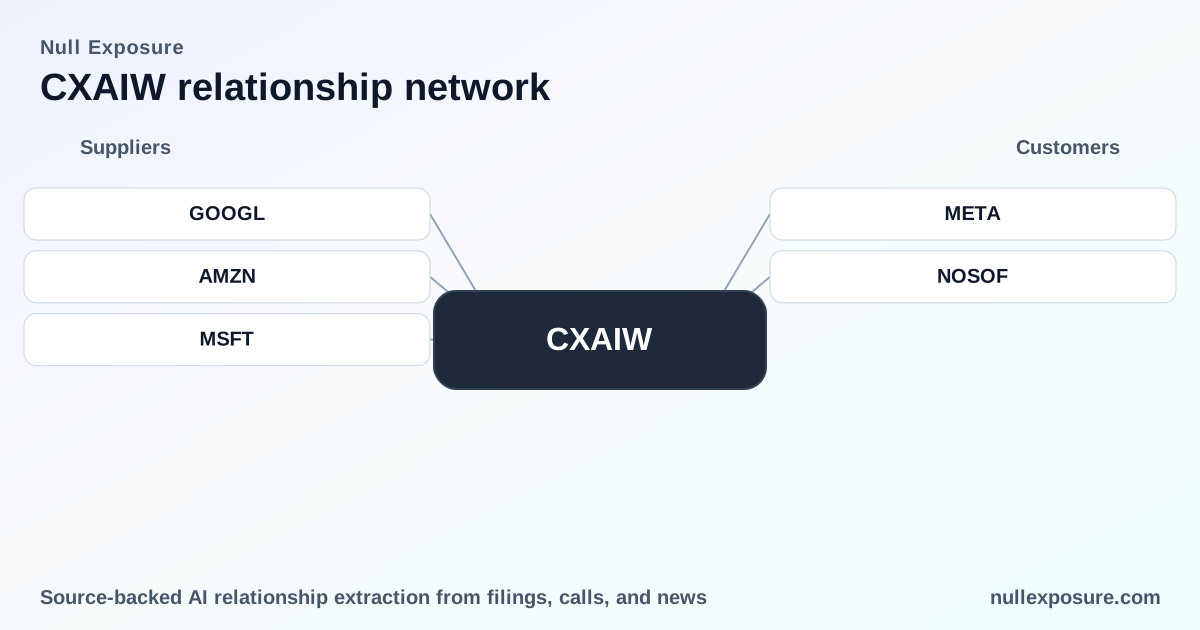
CXAIW — What CXApp’s customer relationships tell investors about growth and risk
CXApp operates and monetizes as an enterprise-focused, AI-led SaaS provider for employee and workplace experience: the company sells recurring cloud licenses, supplemented by one-time professional services and pass-through hardware, targeting Fortune 1000 customers with multi-year contracts. Revenue is predominately subscription-based, recognized ratably over service periods, which creates predictable cash flow but concentrates exposure to a small set of large customers. For a deeper look at legal and transaction context, visit https://nullexposure.com/.
Why customer signals matter for valuation and credit posture
CXApp’s commercial model drives a classic enterprise SaaS risk/reward profile. The company collects recurring license fees (reported as 87% of revenue derived from recurring subscriptions in corporate disclosures), adds implementation and professional services during onboarding, and occasionally passes through hardware (beacons) to clients. Contracting is structured as non-exclusive cloud-based licenses, typically multi-year, producing sticky revenue and expansion optionality when customers roll out to additional locations.
Company-level signals from filings and disclosures:
- Contracting posture: Predominantly subscription and cloud licensing with professional services; contracts are typically multi-year and revenue is recognized over time.
- Customer concentration: Top three customers account for roughly a quarter of revenue, indicating material customer concentration that amplifies downside risk if one large account is lost.
- Counterparty profile and geography: Customers skew toward large enterprise buyers, with global deployments but a clear U.S. revenue concentration.
- Segments and margins mix: Core software (SaaS) drives recurring revenue; professional services drive upfront implementation cash; hardware is treated as a pass-through.
- Relationship maturity and expansion: Contracts are active and time-based, and it is common for customers to expand deployments—supporting net retention upside.
These firm-level constraints define CXApp’s operating leverage and the practical cash conversion dynamics investors must price into valuation and credit assessments.
Learn more about how we surface and track customer signals at https://nullexposure.com/.
Documented customer relationships on the record
META — a strategic on-site engagement
CXApp referenced activity at Meta’s Menlo Park campus, noting the company was “at WORKTEC at the META headquarters in Menlo Park on October 9.” This indicates an on-site engagement or demonstration with a leading enterprise technology customer, consistent with CXApp’s focus on large, high-profile deployments. The mention comes from CXApp’s 2025 Q3 earnings call transcript (first noted March 2026).
Source: CXApp 2025Q3 earnings call (earnings_call; cited March 8, 2026).
Noro — announced strategic collaboration
CXApp described a “strategic collaboration” with a company called Noro in the 2025 Q3 earnings call, framing the partner as a “really cool company” and positioning the relationship as a recent announced collaboration. The language indicates partnership-level activity rather than a completed large-scale commercial deployment.
Source: CXApp 2025Q3 earnings call (earnings_call; cited March 8, 2026).
NOSOF — duplicate reference / inferred symbol for Noro
The record also contains an entry for NOSOF with the same excerpt and context as the Noro reference; NOSOF appears as an inferred trading symbol for that same collaboration. The duplication signals either a name/symbol mapping in disclosure processing or that the collaboration is being tracked under multiple identifiers.
Source: CXApp 2025Q3 earnings call (earnings_call; cited March 8, 2026).
What these relationships imply for near-term growth and risk
- Proof-of-concept to expansion runway: Engagements with enterprise majors like Meta provide high-visibility validation that supports CXApp’s sales narrative into other Fortune 1000 buyers. The company’s go-to-market targets large enterprise buyers and multi-location rollouts, so marquee client interactions accelerate enterprise credibility.
- Concentration risk is tangible and material: Company filings show the top three customers made up approximately 25% of gross revenue in 2024. Losing a major customer would have a material and adverse effect on operating results until replacement business is secured.
- Contractual stickiness with optionality: Multi-year SaaS licenses and recurring recognition produce predictable revenue, while implementation and expansion create pathways for upsell. Professional services drive short-term cash inflows but are not a substitute for recurring license stability.
- Global deployments with U.S. bias: CXApp operates globally across 50+ countries but the majority of revenue is U.S.-headquartered customers; this geography mix influences foreign market exposure and sales motion complexity.
How to read these signals for investment or operational decisions
- Prioritize customer concentration remediation. Given the top-three concentration, underwrite scenarios where a single large account reduces revenue materially for multiple quarters.
- Model a blended revenue cadence. Expect steady recurring recognition with lumpy professional services and hardware pass-throughs around onboarding events.
- Value marquee references as strategic sales assets. Engagements with enterprise leaders accelerate win rates but do not eliminate replacement risk for lost contracts.
- Monitor contract length and net retention. The company’s multi-year subscription posture plus reported expansion behaviors are the primary drivers of lifetime value; changes to churn or renewal economics should drive re-rating.
Bottom line: concentrated, subscription-first with enterprise upside and single-account leverage
CXApp’s customer signals define a subscription-first, enterprise-focused commercial model that offers predictable revenue growth if the company maintains account retention and expands seat/location penetration. Material customer concentration is the single largest operational risk and should factor into any valuation or credit analysis. For a concise view of customer exposure and related signals, visit https://nullexposure.com/.
Key takeaway: rewarded growth is conditional on retention and successful expansion within large accounts; a single major customer loss changes the risk profile materially.