Cyclerion Therapeutics: customer relationships driving a thin but high-leverage commercial profile
Cyclerion Therapeutics operates as a clinical-stage biotech that monetizes primarily through out-licensing, asset sales and milestone/royalty streams rather than product sales. The company converts internal sGC (soluble guanylate cyclase) programs into near-term cash by licensing candidates (notably praliciguat) to partners and selling assets (zagociguat, CY3018) while retaining upside via contingent milestones, royalties and equity stakes in buyers. For investors, value depends on a small set of partner relationships delivering step-function milestone payments and downstream royalties rather than broad commercial distribution of Cyclerion-branded products. For deeper relationship signal coverage, visit https://nullexposure.com/.
How Cyclerion structures customer/business counterparty exposure
Cyclerion’s operating model is deliberately partner-centric. The company pursues a hybrid commercial posture: asset monetization (one-off cash + equity) and exclusive licensing (upfronts, amendments, milestone upside and royalties). This creates a profile with several clear characteristics:
- Contracting posture: long-term, rights-forward. The Asset Purchase Agreement with a buyer created a multi-year non-compete and carved out worldwide rights, indicating Cyclerion trades near-term development/control for durable legal protections and concentrated counterparties.
- Concentration of economic exposure. Revenue and cash recognition are concentrated around a few counterparties and discrete events (option fees, amendment payments, milestone triggers), so single-partner outcomes materially move results.
- Revenue criticality and timing mismatch. Current GAAP revenue is modest, but the licensing architecture creates high optionality: relatively small fees today, large potential payouts later contingent on development and commercialization milestones.
- Maturity and activity. Relationships are active: license amendments and milestone receipts have occurred in the last 24 months, signaling that partner programs are progressing from diligence into clinical development.
These structure signals should frame investor assessment: Cyclerion’s balance sheet and valuation are tethered to a small number of partner-driven milestones and a strategic asset-sell posture rather than recurring product revenue.
Relationship roster: counterparties investors should evaluate
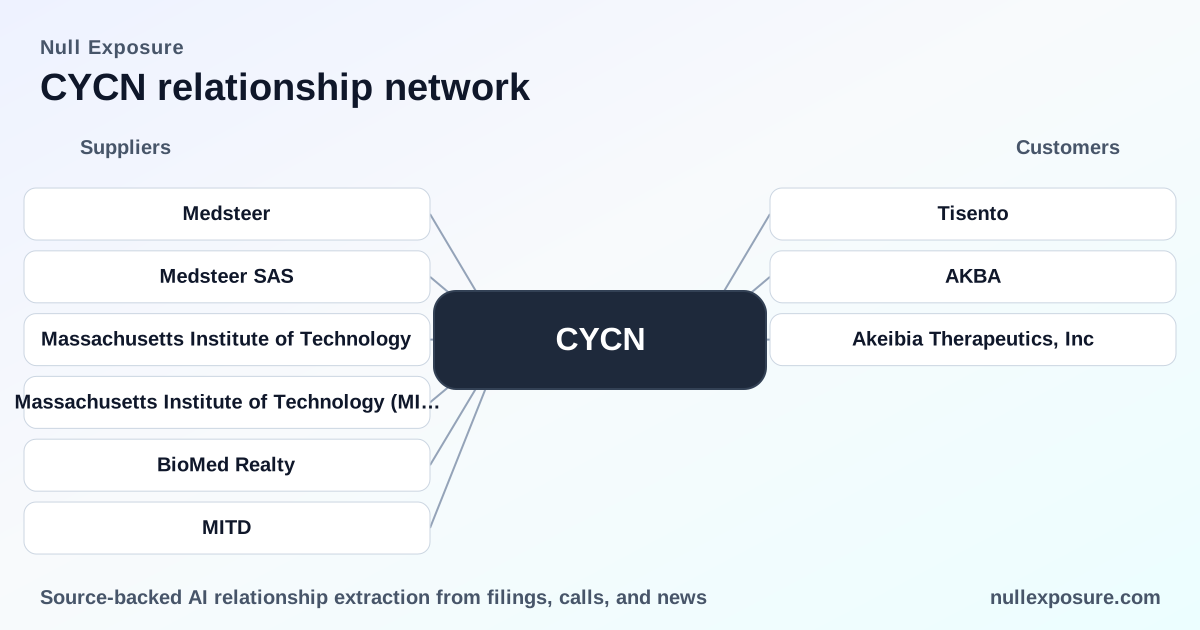
Tisento — buyer of zagociguat and CY3018
Cyclerion sold zagociguat and CY3018 to Tisento in 2023 under an Asset Purchase Agreement that included cash proceeds, expense reimbursements and a 10% equity stake in Tisento Parent, plus a non‑compete through July 2028 restricting Cyclerion from certain CNS sGC activities. Source: Cyclerion relaunch press release via GlobeNewswire (Sept 23, 2025).
Akebia (AKBA) — licensee for praliciguat (and amendment activity)
Cyclerion granted Akebia an exclusive worldwide license to praliciguat in June 2021 and subsequently amended that agreement (Dec 13, 2024) to include additional payments; Cyclerion recognized amendment revenue and later announced a $1.0M milestone payment tied to Akebia activity. Akebia has advanced praliciguat into Phase 2 development for kidney indications after reviewing the nonclinical package acquired from Cyclerion. Source: Akebia press release via GlobeNewswire (Jan 6, 2026) and related trading-press coverage (Dec 2025–Jan 2026).
Note on name variants in media: the results include multiple spellings and tickers (Akebia, AKBA, Akeibia/Akeibia Therapeutics, Inc); these all refer to the same license relationship centered on praliciguat in Cyclerion filings and partner announcements.
Transaction mechanics and the constraints they impose
Cyclerion’s contracts create asymmetric economic outcomes: small, near-term option/fee receipts versus large, contingent milestone pools and royalties.
- The Tisento asset sale was structured as an asset purchase with equity consideration and a broad non‑compete through July 2028, which constrains Cyclerion’s internal development in overlapping CNS sGC areas and materially shapes its go‑forward pipeline strategy (company-level signal drawn from the Asset Purchase Agreement text).
- The Akebia License Agreement is exclusive and worldwide, placing clinical development, manufacturing and commercialization responsibilities with the partner while Cyclerion retains upside via milestone and royalty mechanics; under the amended economics Cyclerion is eligible for up to $558.5 million in potential milestones plus tiered royalties, a major source of long-term optionality tied to Akebia’s execution.
- Multiple smaller engagements (option agreements) generate modest non‑recurring fees—for example, an option fee of $150,000 was recorded in August 2024—demonstrating Cyclerion’s willingness to monetize assets via staged diligence payments (company-level signal where the counterparty is unnamed).
Taken together, these contract features create high optionality and asymmetric upside but also single‑event concentration risk: partner trial failures or program reprioritization can sharply curtail anticipated milestone receipts.
What the relationships mean for valuation and risk
- Upside: The Akebia license provides a clear valuation lever—progression of praliciguat through clinical milestones and eventual commercial success unlocks significant contingent payments and royalties (the contract cites potential for hundreds of millions in milestones). Recent amendment payments and the December 2024/2025 receipts show that Akebia is actively funding the program.
- Near-term cash: Asset sale proceeds and equity in Tisento provided immediate liquidity and deferred upside via equity appreciation and potential success of the assets sold to Tisento.
- Risk concentration: Cyclerion’s top-line is tied to a small partner set; loss or underperformance of a major program (Akebia’s praliciguat) would materially reduce Cyclerion’s forward cash profile. Current financials show negative EBITDA and modest revenue, underscoring reliance on partner-sourced payments rather than recurring business.
- Contractual lock-in: The Tisento non-compete reduces Cyclerion’s addressable internal program choices in CNS sGC space until 2028, locking the company into a partner-driven roadmap for those pharmacologic classes.
Near-term catalysts and monitoring checklist
- Monitor Akebia clinical readouts and regulatory filings for praliciguat (FSGS and other indications): successful Phase 2 results would trigger downstream milestone and royalty upside.
- Track milestone payment cadence and amendment activity—recent amendment receipts and a December 2025 $1.0M milestone demonstrate real cash flow events tied to partner progress (Akebia press releases, Dec 2025–Jan 2026).
- Follow Tisento’s commercialization and development of the purchased assets and the market performance of its equity (Cyclerion holds 10% of Tisento Parent as part of the asset sale), since equity appreciation is a de‑risking lever for Cyclerion investors.
For a focused view on relationship signals and contract-level constraints, visit https://nullexposure.com/.
Bottom line
Cyclerion’s business is structured around selective monetization of R&D assets and concentrated partner licenses, creating a capital-efficient path to value capture that is highly dependent on a few counterparties advancing programs and triggering milestone flows. For investors and operators, due diligence should prioritize contract economics, milestone schedules, non‑compete limitations, and partner execution—those are the variables that will determine whether Cyclerion’s upside is realized or remains theoretical.