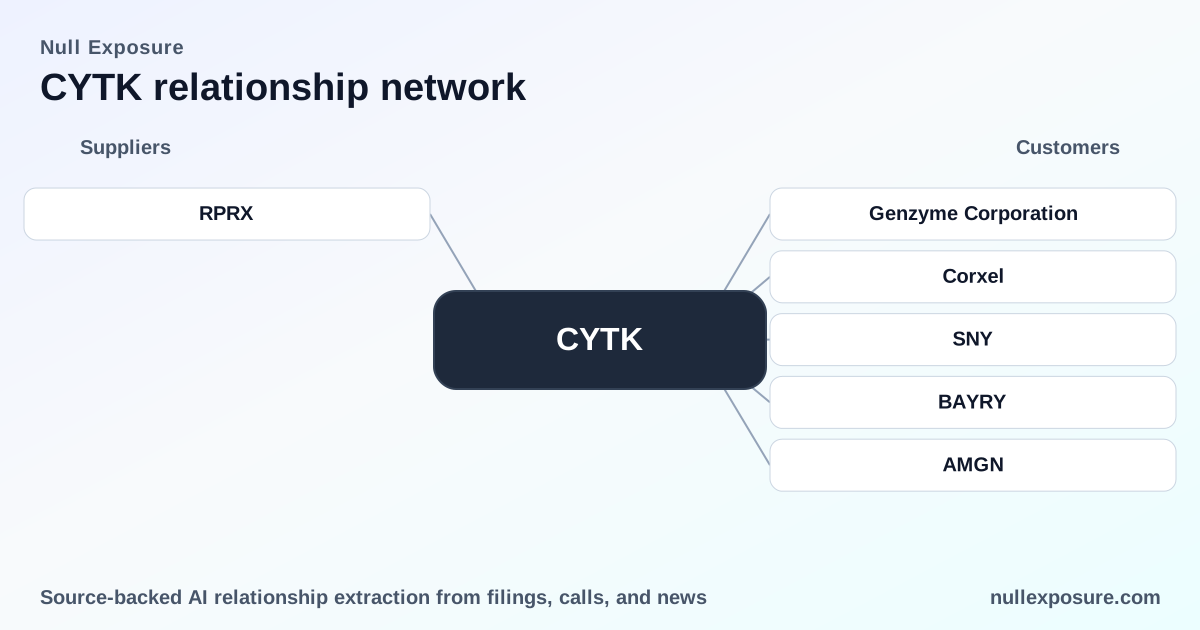
Cytokinetics’ partner map: commercialization partners, royalty financiers and what they mean for investors
Cytokinetics operates as a development-stage biopharma that discovers and licenses cardiac and muscle-targeted therapies, then monetizes through a mix of out‑licensed regional commercialization rights, milestone and milestone-driven revenue, and selective royalty financing. The company’s near-term P&L is now driven by regulatory and launch milestones tied to aficamten (Myqorzo) and by structured funding arrangements that monetize future royalties. For a concise tracker of counterparties and documentation, see https://nullexposure.com/.
How Cytokinetics runs the business: a concise operating thesis
Cytokinetics adopts a capital-efficient model: internal drug discovery and development through clinical inflection points, then transfer of commercial rights regionally to partners in exchange for upfronts, milestones and royalties. The company’s contracting posture is partner-centric—exclusive regional licenses and technology transfers are used to move products to market while limiting Cytokinetics’ direct commercial footprint. This model creates concentration in milestone timing and counterparty execution as the primary revenue risk drivers rather than volume-driven sales from an in‑house commercial engine.
According to the company’s FY2024 10‑K filing, Cytokinetics is building commercial capacity in the U.S. while planning for European launches, indicating parallel development of direct and partnered commercialization channels (FY2024 10‑K). For more on counterparties and source documents, visit https://nullexposure.com/.
Regional go‑to‑market constraints that shape revenue timing
- Cytokinetics is planning for a first potential U.S. commercial launch in 2025 and a potential European launch beginning in Germany in 2026, which implies staggered geographic revenue recognition and execution risk tied to staged approvals and local launches (FY2024 10‑K).
- The company is constructing U.S. marketing, sales and distribution infrastructure and has begun building similar capabilities in Europe, which signals partial internal commercialization maturity but continued reliance on licensees for broader geographies (FY2024 10‑K).
These are company-level constraints that shape how quickly milestone and royalty streams convert to recurring revenue.
Partner and counterparty map — what each relationship means for investors
Genzyme Corporation
Genzyme was assigned rights and obligations under Cytokinetics’ license and collaboration agreement when Corxel transferred its position; this signals that Sanofi-affiliated Genzyme now holds the formerly Corxel-controlled Greater China rights (Cytokinetics FY2024 10‑K). Source: Cytokinetics 2024 10‑K (FY2024).
Corxel
Cytokinetics originally granted Corxel an exclusive license to develop and commercialize aficamten in China and Taiwan under the July 2020 agreement, creating a geographically targeted licensing arrangement that was later assigned to Genzyme (Cytokinetics FY2024 10‑K). Source: Cytokinetics 2024 10‑K (FY2024).
Bayer (BAYRY)
Bayer is the partner for the Japanese market and is involved in technology transfer activities tied to regulatory milestones, which were cited as a contributor to revenue growth in FY2026 reporting (news coverage, March 2026). Source: MarketMinute / FinancialContent and Finviz reports (February–March 2026).
Sanofi (SNY)
Sanofi holds rights in Greater China via its affiliate activity, and regulatory milestones under the Sanofi licensing agreement contributed to Cytokinetics’ FY2026 revenue acceleration linked to Myqorzo validation (news coverage, March 2026). Source: MarketMinute / FinancialContent and Finviz reports (February–March 2026).
SNY (duplicate naming for Sanofi)
News-wire references also list Sanofi under the ticker SNY in coverage of aficamten’s market authorization and partner benefits, reflecting how financial outlets cite the parent company in global partner reporting (news coverage, March 2026). Source: MarketMinute / FinancialContent (February–March 2026).
BAYRY (duplicate naming for Bayer)
Financial coverage that cites Bayer under the OTC ticker BAYRY highlights the company’s role in the Japanese commercialization pathway and validates Cytokinetics’ partner-driven launch mechanics (news coverage, March 2026). Source: Finviz and MarketMinute reporting (March 2026).
Royalty Pharma (RPRX)
Royalty Pharma expanded its funding collaboration to include financing clinical trials of CK‑586 in exchange for a royalty, demonstrating Cytokinetics’ use of non-dilutive royalty financing to fund development (TradingView summary of Royalty Pharma disclosures, FY2025). Source: TradingView news (SEC 10‑Q reporting referenced, 2025).
AMGN / Amgen
Cytokinetics previously sold a portion of its right to receive royalties from Amgen on future net sales of omecamtiv mecarbil to Royalty Pharma for a one‑time, non‑refundable payment of $90 million under the RP OM RPA, which illustrates historical monetization of future royalty streams to raise near-term cash (Cytokinetics FY2024 10‑K). Source: Cytokinetics 2024 10‑K (FY2024).
(Note: several news items and filings reference the same partner under different naming conventions—Sanofi/SNY and Bayer/BAYRY are cited across multiple outlets. The summaries above reflect the underlying contractual roles.)
What these relationships tell investors about risk and runway
- Revenue concentration around milestone recognition is high. FY2026 revenues jumped materially on milestone and collaboration-related activity, rather than product sales, which underlines how partner execution and regulatory timing dictate near-term cash inflows (Finviz; MarketMinute, March 2026).
- Contracting posture is license-heavy and region-specific. Cytokinetics uses exclusive regional licenses and technology transfer work instead of broad, in-house commercialization, which reduces fixed cost but increases dependency on partner regulatory and distribution competency (FY2024 10‑K).
- Capital strategy mixes royalty sales and targeted funding. The sale of Omecamtiv mecarbil royalty rights to Royalty Pharma and the expansion of Royalty Pharma financing for CK‑586 show a deliberate use of royalty monetization to fund trials without equity dilution (FY2024 10‑K; TradingView, FY2025).
- Commercial maturity is transitional. The company is building U.S. commercial capabilities while maintaining partner-led launches in other regions; this hybrid approach creates timing and execution complexity across markets (FY2024 10‑K).
Investment implications and watchlist items
- Monitor partner milestone schedules and technology transfer progress for Sanofi (Greater China) and Bayer (Japan), since these milestones are the principal near-term revenue drivers. Sources: MarketMinute / Finviz (March 2026).
- Track Royalty Pharma disclosures and any further royalty financings, which directly affect Cytokinetics’ cash runway and future royalty upside. Source: TradingView / Royalty Pharma 10‑Q (FY2025).
- Confirm commercial build progress in the U.S. and Germany because internal sales infrastructure will determine how much future revenue Cytokinetics captures directly versus shares with licensees (FY2024 10‑K).
For an at-a-glance mapping of counterparties, documentation and extractable clauses relevant to credit and revenue modeling, visit https://nullexposure.com/ for the full repository of source links and filing excerpts.
Final take
Cytokinetics has shifted from pure development-stage risk to a partner-dependent commercialization profile where milestones, regional license assignments and royalty financing dominate near-term economics. For investors, the company’s upside is tied to regulatory approvals and partner execution, while downside is concentrated in timing and counterparty delivery rather than product-market adoption risk in isolation.