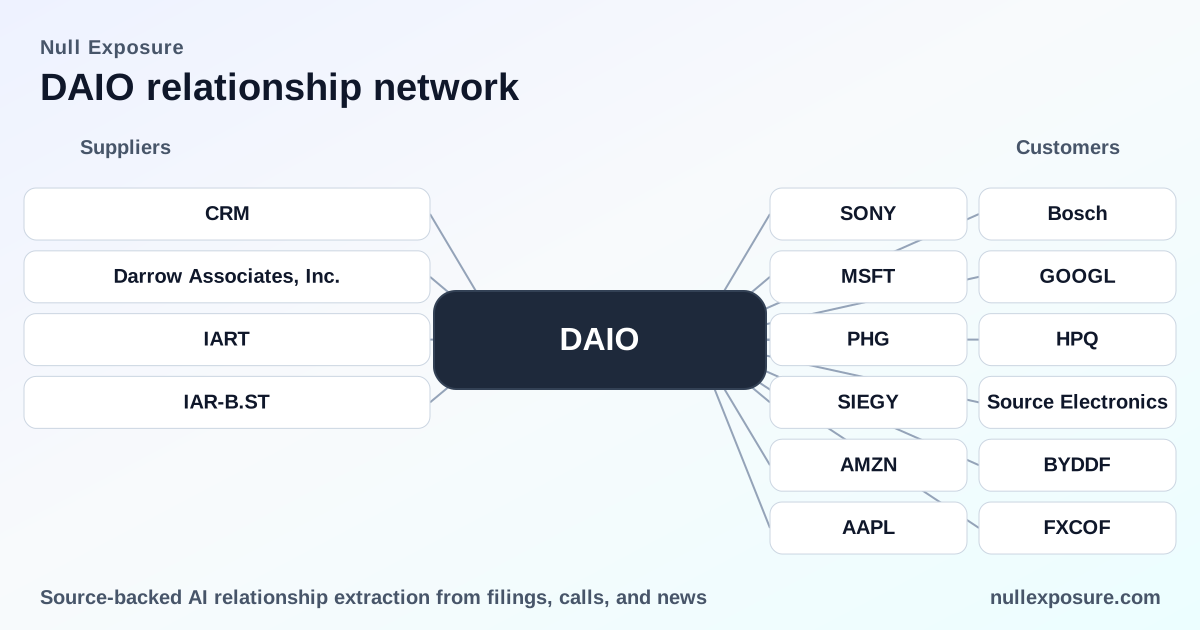
Data I/O (DAIO): customer roster, revenue model, and operational constraints that matter to investors
Data I/O designs and sells programming hardware, security software (SentriX®) and related services to electronic device manufacturers and their contract manufacturing partners, monetizing through equipment sales, software licenses and pay‑per‑part usage fees, plus installation, maintenance and support contracts. The business sits at the intersection of hardware sales and recurring software/service revenue, with a global customer base concentrated among large OEMs and EMS suppliers; investor focus should be on customer concentration, contract mix (license vs. usage vs. maintenance) and operational resilience given recent security events. For a concise vendor & customer signal view, visit https://nullexposure.com/.
What investors need to understand about DAIO’s commercial model
Data I/O’s revenue streams are multi-modal: capital sales for programming systems, licensed software (SentriX) and per‑part or maintenance revenue that flows more predictably over time. The company recognizes software maintenance and extended warranties ratably, which introduces subscription-like recurring revenue alongside transactional hardware sales. Management emphasizes a global installed base—Americas, EMEA and APAC all meaningfully contribute to sales—so revenue is internationally diversified but concentrated into a relatively small set of high‑volume customers.
Key operating characteristics that drive upside and risk:
- Contracting posture: A mix of one‑time equipment sales and recurring licensing / usage fees; SentriX is sold both as a license and on a pay‑per‑part basis.
- Counterparty profile: Customers are primarily large enterprises (OEMs and tier‑1 suppliers) and contract manufacturers, making each major account strategically important.
- Concentration & materiality: Management notes that some customers represent more than 10% of net sales in applicable years, so account churn or disruption is material to financials.
- Product maturity and criticality: Several hardware products have a large global installed base and are mature platforms, which supports recurring service revenue but also creates aftermarket dependency.
- Global footprint: Sales are reported across Americas, Europe and Asia, reflecting both direct and distributor channels.
For more context on signals that matter to procurement and risk teams, see the platform at https://nullexposure.com/.
Full roster of named customers and what each relationship signals
Bosch
Bosch is named on Data I/O’s customer list, indicating an OEM relationship consistent with the company’s focus on automotive and industrial electronics (SecurityWeek, March 9, 2026). This points to exposure to automotive electronics demand cycles.
Amazon (AMZN)
Amazon is repeatedly cited among Data I/O’s customers, corroborated by both SecurityWeek and CyberScoop coverage of Data I/O’s operational disruption; the name implies engagements with high‑volume, cloud and device supply chains (SecurityWeek, March 9, 2026; CyberScoop, May 2, 2026).
Apple (AAPL)
Apple is listed as a customer on Data I/O’s website and referenced in reporting on the firm’s outage, signaling that Data I/O serves demanding consumer electronics suppliers where quality and security requirements are elevated (SecurityWeek, March 9, 2026; CyberScoop, May 2, 2026).
Google (GOOGL)
Google appears in the same customer roster, which indicates exposure to large technology OEMs and potential demand for secure provisioning of devices and IoT hardware (SecurityWeek, March 9, 2026; CyberScoop, May 2, 2026).
HP (HPQ)
HP is included among Data I/O’s customers, reflecting relationships with established PC and printer OEMs that require high‑volume programming and after‑sales support (SecurityWeek, March 9, 2026).
Microsoft (MSFT)
Microsoft is named on the customer list, suggesting engagements with large enterprise and device programs that value secure provisioning and scale (SecurityWeek, March 9, 2026; CyberScoop, May 2, 2026).
Philips (PHG)
Philips’ presence on the customer list indicates ties into medical and consumer electronics segments, where device programming and lifecycle support are critical (SecurityWeek, March 9, 2026).
Siemens (SIEGY)
Siemens is cited as a Data I/O customer, aligning the company with industrial electronics and automation programs that require durable, field‑proven programming systems (SecurityWeek, March 9, 2026).
Sony
Sony’s inclusion on the customer roster confirms engagements with major consumer electronics manufacturers and reinforces exposure to high‑mix manufacturing lines (SecurityWeek, March 9, 2026).
Foxconn (FXCOF)
Foxconn appears on the list, indicating that Data I/O supplies contract manufacturers and EMS partners who program devices at scale—this underlines the company’s role inside global supply chains (SecurityWeek, March 9, 2026).
BYD (BYDDF)
During the Q4 2025 earnings call, management reported travel to China and meetings with “one of our largest customers who’s a big supplier to BYD,” signalling an indirect supply relationship into EV and battery supply chains via a tier‑supplier (DAIO 2025 Q4 earnings call, March 8, 2026).
Source Electronics
Quality Magazine’s coverage of Data I/O’s CEO transition notes that Source Electronics was a former Data I/O customer and that its CEO led Source through significant exits, illustrating long‑standing commercial ties within the programming and test ecosystem (Quality Magazine, March 2026).
How the customer list shapes the investment case
The named customers are blue‑chip OEMs and large EMS players, which supports premium pricing for secure programming solutions and steady service revenues. However, the business model has several investor‑relevant constraints:
- Contract mix creates lumpy revenue patterns. Equipment sales generate large, one‑off bookings while software licensing, pay‑per‑part and maintenance produce recurring revenue; that mix requires careful modeling of free cash flow timing.
- Material customer concentration. The company discloses customers representing over 10% of sales in certain years, which makes revenue and margin sensitive to individual account dynamics.
- Global distribution and channel dependency. International distributors are significant to reach OEMs worldwide; this expands addressable markets but adds counterparty and credit risk.
- Mature installed base with recurring service opportunity. Well‑installed hardware platforms support a stable aftermarket but limit upside from unit growth unless new product cycles accelerate adoption.
Risk checklist and monitoring priorities
- Monitor service restoration and remediation following reported ransomware incidents; operational disruption to programming services can ripple into large customers’ manufacturing schedules (SecurityWeek, March 9, 2026; CyberScoop, May 2, 2026).
- Track the split of revenue between hardware and recurring software/maintenance to assess margin improvement potential from higher‑margin software licensing and pay‑per‑part fees.
- Watch customer concentration disclosures in upcoming filings to evaluate revenue resiliency if a top account moderates purchases.
For investors and operators requiring a consolidated view of customer signals and vendor risk, NullExposure provides curated intelligence and alerting on these exact dynamics at https://nullexposure.com/.
Data I/O’s customer list confirms the company’s strategic placement inside high‑volume manufacturing ecosystems; that positioning generates both recurring revenue opportunities and concentrated counterparty risk—one must weigh the defensive service annuity potential against operational sensitivity to large OEM schedules and security incidents.