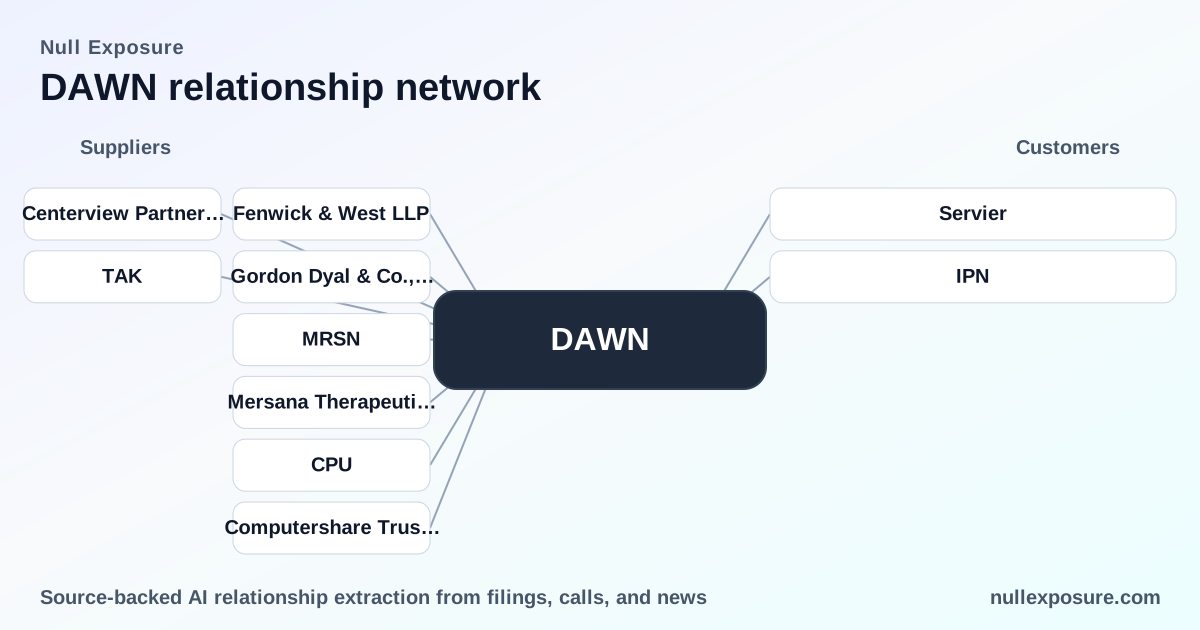
DAWN: Day One Biopharmaceuticals — commercial payload, license leverage, and a strategic exit
Day One Biopharmaceuticals operates as a commercial-stage oncology company that monetizes primarily through U.S. product sales of OJEMDA (tovorafenib) and through ex‑U.S. licensing revenue; the company realized material license receipts while maintaining a concentrated U.S. specialty-channel commercial footprint and was acquired by Servier in a cash transaction. This combination of high revenue concentration, an active commercial launch in North America, and a binding ex‑U.S. license creates a compact, high‑value business model that delivered a strategic sale. For ongoing investor diligence, see full coverage at NullExposure.
The investment thesis in one line
Day One converted R&D into a revenue-generating specialty oncology franchise (OJEMDA), captured substantial license economics outside the U.S., and exited via a definitive cash acquisition—delivering realized value to equity investors while transferring commercialization upside to a larger pharmaceutical owner.
Deal mechanics and market reaction
Servier agreed to acquire Day One in a cash deal at $21.50 per share, valuing the company at roughly $2.5 billion; the transaction and completion were widely reported in March–May 2026, and Servier subsequently announced completion of the acquisition. Benzinga and other market outlets covered the pricing and equity value when the deal terms were disclosed in early May 2026, and Servier’s own newsroom confirmed completion of the acquisition in May 2026. (Source: Benzinga, May 2, 2026; Servier newsroom, May 2026.)
How Day One made itself acquirable
Day One’s operating model combined a U.S. commercial launch with an exclusive global licensing strategy: the company sold OJEMDA through specialty pharmacy and distributor channels in the United States while licensing ex‑U.S. commercialization rights to a third party for upfront and milestone economics. This hybrid seller/licensee posture produced near-term revenue and created distinct valuation levers—direct U.S. sales growth and outsized license receipts outside the U.S. The company’s 2024–2025 results reflected both streams: net product revenue in the U.S. alongside significant license revenue from Ipsen.
Key counterparties and what they mean for value
Servier — buyer and acquirer
Servier completed the acquisition of Day One in 2026 for $21.50 per share, consolidating Day One’s rare-oncology asset into Servier’s portfolio and delivering a cash exit to Day One shareholders. This closing was reported across industry press and confirmed on Servier’s corporate news pages in May 2026. (Source: Servier newsroom, May 2026.)
Ipsen — exclusive ex‑U.S. licensee for tovorafenib
Day One licensed exclusive ex‑U.S. rights to Ipsen in July 2024 for tovorafenib, and Ipsen has been positioned to commercialize OJEMDA outside the United States; regulatory momentum in Europe (CHMP positive opinion) supported Ipsen’s pathway to ex‑U.S. launches. The license agreement generated material license revenue for Day One (reported license revenue for 2024) and underpinned the company’s international commercialization strategy. (Source: Day One disclosures and Q4 2025 earnings commentary; TradingView coverage of CHMP opinion, March 2026.)
XOMAP — an external 10‑K reference to royalty receivables
A FY2024 XOMAP 10‑K entry reported that $8.5 million of cost recovery was applied against remaining long‑term royalty receivables from the Viracta RPA, with $0.5 million recognized as income from purchased receivables; this result appears in cross‑company filings returned by searches and is a separate financial disclosure in XOMAP’s filings. This item is informative for comparative royalty accounting treatments but is not a Day One operational counterparty. (Source: XOMAP FY2024 10‑K, Dec 31, 2024.)
Commercial concentration, criticality, and operating constraints
- Concentrated U.S. revenue: Day One recorded $57.2 million of net product revenue in the U.S. in 2024 and stated that near‑term revenues are highly dependent on successful U.S. commercialization of OJEMDA. The company’s sales are routed through specialty pharmacy and specialty distributor contracts, concentrating channel risk. (Source: Day One financial release, Feb 2026.)
- Customer concentration is material and critical: For 2024, two individual customers represented 94.3% of total net product revenue (66.2% and 28.1%), a company-level signal that loss or disruption of either customer would materially harm revenue. (Source: Day One filings, FY2024 disclosures.)
- Licensing as a strategic contract type: The July 2024 Ipsen License Agreement granted Ipsen exclusive rights to commercialize tovorafenib outside the U.S., and Day One agreed to provide related R&D and manufacturing services—an arrangement that shifted geographic commercialization risk while delivering license revenue. Where an excerpt names Ipsen, that licensing constraint is explicitly tied to the Ipsen relationship. (Source: July 2024 Ipsen License Agreement disclosure; Day One filings.)
- Role and stage: Day One acted primarily as a seller in the U.S. market while maintaining an active, commercial-stage posture and a licensee/licensor role internationally; license revenue of $73.9 million (2024) underlines the mixed seller-licensee business model. (Source: Day One FY2024–2025 reporting.)
Strategic implications for investors and operators
- Value capture through exit: The Servier acquisition crystallizes Day One’s value, converting concentrated commercial and licensing flows into a negotiated cash multiple. This outcome validates a two‑pronged value-creation thesis—U.S. launch value plus ex‑U.S. licensing upside.
- Execution and buyer risk transferred: With Servier absorbing Day One, execution risk on U.S. commercialization and Ipsen’s ex‑U.S. plans are now within larger pharmaceutical organizations, reducing standalone execution exposure for former Day One investors but concentrating integration and portfolio allocation risk on the acquirer.
- Concentration remains a cautionary legacy: Historical revenue concentration underscores why Day One was an attractive acquisition target—high, predictable near-term flows that can be folded into a broader commercial engine—but it also explains the premium a strategic buyer would pay to internalize the asset and reduce counterparty dependency.
Bottom line and next steps
Day One built a compact, monetizable oncology franchise by pairing a focused U.S. commercial launch with an exclusive ex‑U.S. license, producing both product revenue and meaningful license economics that culminated in a cash exit to Servier. Key risks that informed valuation included customer concentration and geographic revenue concentration, while the Ipsen license represented a deliberate de‑risking and monetization of international upside.
For deeper, structured coverage of counterparties and contract-level signals across healthcare transactions, visit NullExposure for our investor-oriented relationship analytics and historical deal context.