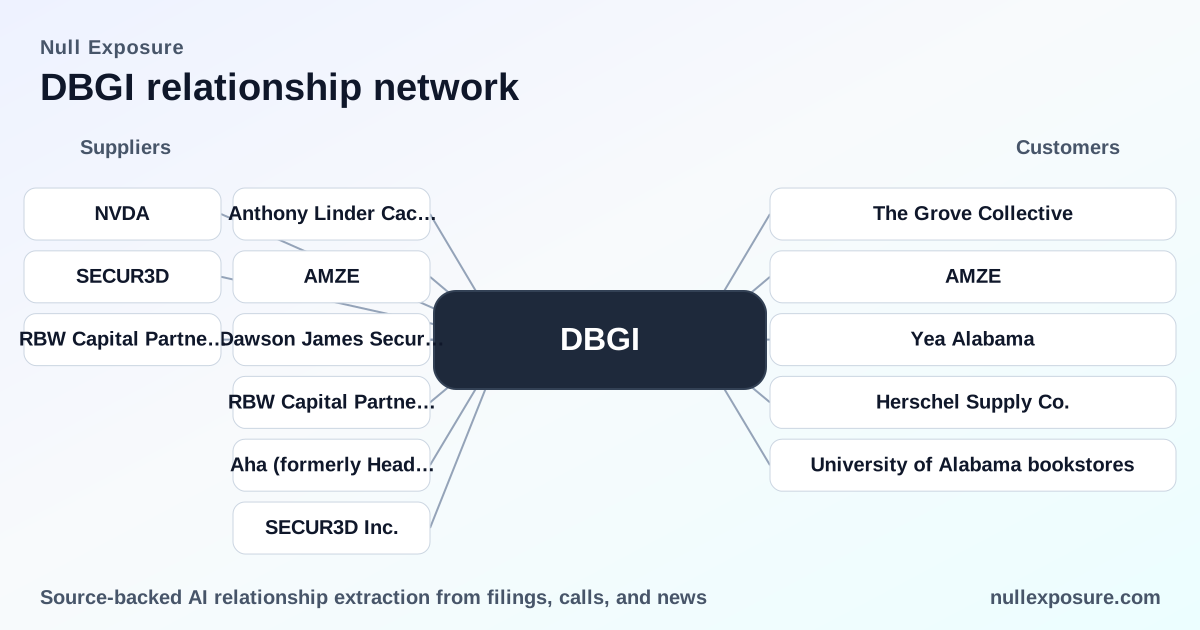
Digital Brands Group (DBGI): Customer Relationships That Drive Revenue and Risk
Digital Brands Group (NASDAQ: DBGI) operates a vertically integrated apparel business that monetizes through direct-to-consumer and wholesale sales, private‑label manufacturing, licensing royalties, and ancillary services such as AI‑driven brand protection. The company leverages its Los Angeles manufacturing footprint and college-NIL partnerships to secure recurring manufacturing contracts and royalty streams while recognizing revenue at the point of shipment.
Explore a consolidated view of partner relationships and signals at https://nullexposure.com/
What DBGI’s partner list reveals about the business model
DBGI’s announced partners reflect a hybrid retail‑manufacturer model rather than a pure DTC play. The relationship roster shows DBGI acting as seller and contract manufacturer, taking on private‑label production for third parties and capturing retail margin when it routes goods through its own channels or bookstore distribution. Press releases and corporate disclosures indicate revenue is recognized at shipment, consistent with a spot‑contract posture where control transfers on delivery rather than long‑term subscription or recurring service billing.
- Contracting posture (spot): DBGI recognizes revenue when control transfers on shipment, signaling transaction‑level, shipment‑based cash flow rather than long‑term contractual lock‑ins (company revenue recognition policy excerpts).
- Geographic focus (North America): Shipping and returns policies highlight a U.S. customer base and cost assumptions tied to domestic distribution.
- Role diversity (seller / reseller / licensor): DBGI operates as a direct seller and wholesaler and also earns royalty income as a licensor for at least one brand (Bailey), showing multiple monetization levers within apparel.
- Relationship stage and segment: Multiple active commercial arrangements sit squarely within DBGI’s single operating segment—apparel—suggesting concentrated operational focus and limited diversification outside clothing and accessories.
These signals imply operational leverage tied to manufacturing throughput and retail execution, plus exposure to demand swings in college NIL programs and branded accessories. For a quick look at DBGI’s partner inventory, visit https://nullexposure.com/ for a compact partner map.
Relationship-by-relationship: who DBGI serves (concise investor summaries)
Below are the customer and partner relationships disclosed in DBGI press coverage and releases, with source context for each.
The Grove Collective
DBGI signed an exclusive three‑year private label manufacturing agreement with The Grove Collective to produce collegiate apparel for the University of Mississippi’s NIL program, positioning DBGI as the manufacturing partner behind private‑label campus merchandise. (Business Insider Markets press release, March 9, 2026; GlobeNewswire release, Dec 11, 2025.)
Key takeaway: Exclusive private‑label manufacturing for a college NIL operator anchors DBGI’s footprint in the collegiate apparel channel.
Amaze Holdings, Inc. (AMZE)
Amaze will leverage DBGI’s Los Angeles facilities to manufacture custom apparel and athleisure domestically, signaling DBGI’s role as a third‑party contract manufacturer for direct‑to‑brand partners. (GlobeNewswire press release, Sept 9, 2025.)
Key takeaway: Partnership with Amaze demonstrates DBGI’s capacity to sell manufacturing services (domestic production) to growth‑stage branded customers.
Yea Alabama
DBGI established an exclusive private‑label manufacturing relationship tied to the University of Alabama’s NIL program through Yea Alabama and will produce the AVO x Yea Alabama collection, with Yea Alabama earning a reported 20% royalty on related apparel revenue. (GlobeNewswire releases and coverage, Sept–Oct 2025; AVO tour release, Oct 15, 2025.)
Key takeaway: The arrangement couples manufacturing with royalty arrangements, blending product sales and licensing economics into a single channel.
University of Alabama bookstores
Under the University of Alabama arrangement, DBGI will design, manufacture, and distribute collegiate apparel via campus bookstore channels and Yea Alabama’s online storefronts, giving DBGI direct access to institutional retail distribution. (GlobeNewswire strategic expansion release, Sept 30, 2025.)
Key takeaway: Bookstore distribution provides an institutional retail outlet that can amplify seasonal campus demand and campus events.
Herschel Supply Co.
DBGI signed Herschel Supply Co. as a partner for AI‑powered brand protection, collaborating with SECUR3D to reduce counterfeiting and recover revenue; subsequent reporting cited an estimated $500,000 in lost revenue from counterfeits that the program targets to address. (DBGI press release, Dec 16, 2025; TipRanks/The Fly coverage, May 2, 2026.)
Key takeaway: The brand protection engagement diversifies DBGI’s service offerings into anti‑counterfeit and brand integrity work, offering fee and value capture beyond apparel manufacturing alone.
How these relationships change the risk / return profile
- Concentration and criticality: DBGI’s partner list shows concentration in collegiate NIL apparel and a dependence on spot deliveries and seasonal campus demand; private‑label exclusivity deals are commercially meaningful but not the same as multi‑year supply‑and‑demand guarantees tied to inventory consignment. That structure increases revenue volatility tied to order flow.
- Revenue recognition and cash flow dynamics: The company recognizes revenue at shipment, creating strong correlation between unit shipments and recognized top line; working capital and inventory execution are therefore critical to near‑term performance.
- Business model maturity: DBGI operates a mix of legacy DTC/wholesale sales and newer manufacturing and service contracts (licensing and brand protection). This suggests a company in transition from brand consolidator to multi‑product apparel services provider, which increases optionality but also execution complexity.
- Customer roles and monetization mix: Acting as seller, reseller, licensor, and contract manufacturer creates multiple revenue streams but increases dependency on partner relationships for scale. The Bailey license example indicates DBGI already generates royalty revenues at the brand level (company disclosure referencing Bailey license, 2024).
Investment implications and risks for operators and researchers
- Upside: Private‑label manufacturing contracts and NIL partnerships can scale quickly if DBGI converts exclusive arrangements into repeat ordering seasons; brand protection services can add high-margin recurring fees if adopted broadly.
- Downside: The spot nature of revenue recognition, reliance on U.S. logistics and campus seasonality, and the company’s small market cap and negative EBITDA amplify execution and funding risk. Inventory management, contract renewal timing, and the ability to convert single‑season agreements into multi‑year demand are key near‑term value drivers.
If you are modeling DBGI, emphasize shipment timing, contract renewal probabilities, and margin capture from manufacturing vs. retail sales.
For a concise partner map and to track updates to DBGI’s customer relationships, see https://nullexposure.com/.
Final read
DBGI’s disclosed relationships present a coherent strategy: monetize apparel manufacturing and college NIL demand while layering licensing and brand protection services to diversify revenue. Execution on production scale and timing, plus the ability to convert exclusive arrangements into recurring purchase orders, will determine whether those partnerships are durable value drivers or episodic revenue spikes.