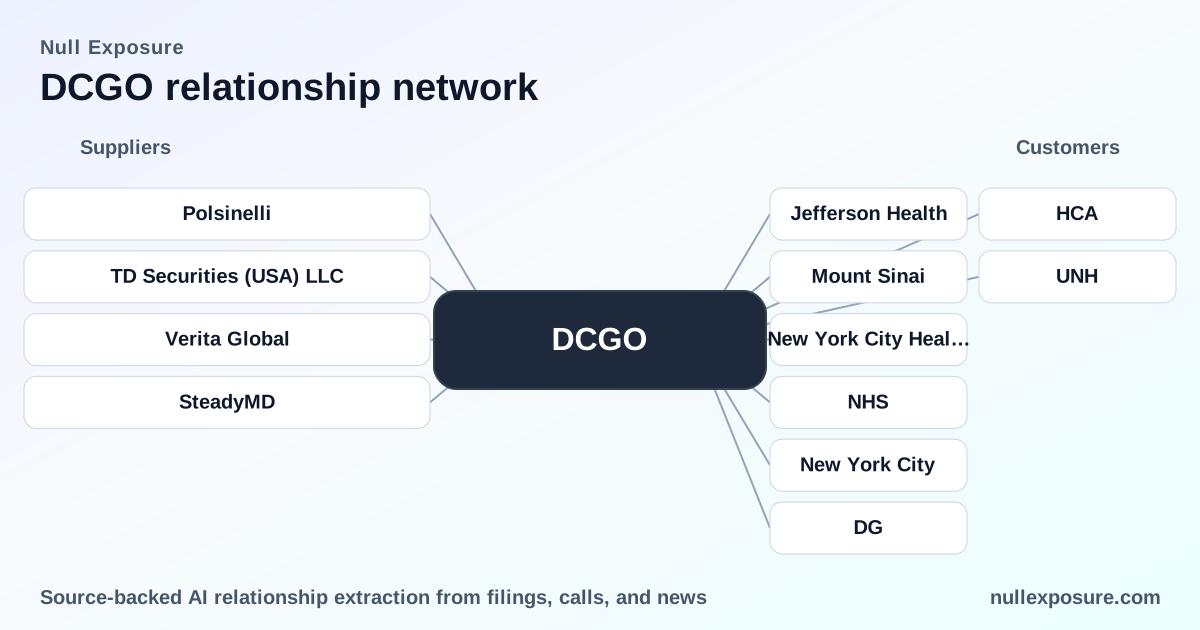
DocGo (DCGO) — Customer Relationships that Drive Revenue and Risk
DocGo operates and monetizes by running mobile clinical services and medical transportation for hospitals, health systems, governments and commercial partners. The company sells usage‑based transportation and fee‑for‑service mobile health offerings, supported by proprietary dispatch technology and managed service agreements, generating revenue from patient trips, clinic visits and large institutional contracts. For investors, the business combines high growth volume leverage with concentrated counterparty exposure, and near‑term cash flow dynamics are driven by the timing of receivable collections from large government customers.
Learn more about the platform and relationship signals at https://nullexposure.com/.
How to read DocGo’s customer picture
DocGo’s disclosed relationships show a two‑part operating model: a services‑led revenue engine and significant government contract exposure. Key company‑level signals from filings and public commentary:
- High government exposure. Management and filings state that government contracts represented a substantial portion of revenue (roughly 64–73% historically), making public sector receivables and contract cadence a primary cash‑flow driver.
- Usage‑based contracts for transportation. Transportation revenues are recognized on a per‑trip or usage basis, aligning revenue with volumes rather than fixed retainers.
- North America heavy with EMEA presence. DocGo operates primarily in the U.S. (majority of transactions) but maintains operations in the U.K., providing some geographic diversification.
- Concentration risk is material. The company disclosed two unnamed customers that together accounted for roughly two‑thirds of revenue and net receivables in 2024, indicating meaningful top‑customer dependence.
- Service provider posture. DocGo functions as a seller and operator of clinical and transportation services under MSAs and managed services, rather than a pure technology licensor.
- Revenue mix dominated by services. Mobile Health Services accounted for approximately 69% of 2024 revenues; transportation remains the other core segment.
These constraints frame where upside and downside show up: volume increases translate directly to near‑term revenue because of usage‑based billing, while receivable timing and large counterparty concentration create cash volatility.
The customer roster and what it signals
Jefferson Health — a foundational hospital partner
Management highlighted Jefferson Health among its long‑term health system customers that use DocGo’s total transportation solution (software, ambulances, EMS crews and staff), noting this segment is expected to exceed $200 million in 2025 and to improve adjusted EBITDA margins as scale increases. (2025 Q3 earnings call)
Mount Sinai — large metropolitan system engagement
Mount Sinai is listed on management’s roster of long‑term contracts that helped drive record transportation volumes in Q3, signaling entrenched hospital network relationships in New York City. (2025 Q3 earnings call)
New York City Health + Hospitals — operationally significant municipal client
New York City Health + Hospitals appears repeatedly in management remarks as a major health system customer contributing to record volumes; however, DocGo also attributes slower‑than‑expected contract conclusions with NYC Health + Hospitals to near‑term performance impacts. (2025 Q3 earnings call; Investing.com, FY2026)
NHS (United Kingdom) — international transportation contract
DocGo cites the U.K. National Health Service as part of its “enviable roster,” confirming service delivery in the U.K. and contributing to the company’s EMEA footprint. (2025 Q3 earnings call; company filings on geography)
HCA / HCA TriStar — broad health system relationships
HCA and its TriStar affiliate are named among long‑term hospital customers responsible for strong transportation volumes, underscoring relationships with large, multi‑facility systems. (2025 Q3 earnings call)
City of New York — large emergency migrant services contract
Reporting and press coverage note that New York City engaged DocGo under a substantial emergency contract (reported at $432 million in May 2023) for migrant services including shelter and related support, a contract that materially affected cash flows and public scrutiny. (New York Post, FY2024 coverage)
New York City Department of Housing Preservation and Development (HPD) — receivable timing issue
DocGo disclosed delayed collections from the New York City Department of Housing Preservation and Development tied to migrant‑related accounts receivable, which reduced year‑end cash balances versus expectations. (InsiderMonkey / company commentary, FY2026)
Dollar General (DG) — retail pilot that concluded
DocGo ran a retail clinic pilot placing mobile clinics in Dollar General parking lots (three locations in Tennessee); the pilot was later ended, indicating experimental retail partnerships without ongoing scale to date. (MedCityNews, June 2024; ModernHealthcare, FY2024)
UnitedHealthcare (UNH) — no New York contract per outside reporting
A legal‑industry report noted that UnitedHealthcare did not have a contract with DocGo in New York, which is informative for assessing payer‑mix exposure and clarifying that some large insurers are not counterparty sources for certain municipal programs. (ClassActionLawyers blog, FY2025)
Notes on sources: management remarks are drawn from DocGo’s 2025 Q3 earnings call transcript, municipal contract coverage appears in press reporting in FY2024–FY2026, and pilot program details were reported in June 2024 media coverage.
Implications for investors: growth levers and risk vectors
- Volume leverage is real. Because transportation is billed on a usage basis, market share gains at hospitals and health systems convert directly to revenue growth and margin expansion as fixed fleet and staffing leverage improves. Management expects adjusted EBITDA contribution margins for the transportation business to rise toward ~12% with scale. (2025 Q3 earnings call)
- Counterparty and cash concentration are the largest risk. Two unnamed customers drove roughly 66% of revenue and receivables in 2024; combined with large government contracts and the New York migrant program, this concentration creates meaningful counterparty and collection risk. (Company disclosures, year ended Dec 31, 2024; InsiderMonkey FY2026 reporting on receivables)
- Geographic diversification cushions but does not eliminate concentration. U.K. operations add a revenue stream and operational complexity; the firm remains primarily U.S.‑centric. (Company filing; earnings call)
- Commercial partnerships are exploratory. The Dollar General pilot shows willingness to pursue retail distribution channels, but pilots have not translated into large, recurring commercial revenue yet. (MedCityNews; ModernHealthcare, FY2024)
Bottom line — an actionable customer map
DocGo’s model converts operational scale into margin improvement through usage‑based transportation and services contracts, but investors must weigh that upside against material government concentration, large receivable risk tied to municipal contracts, and dependence on a small number of major customers. The company’s presence in the U.K. provides a diversification vector, while retail pilots show optionality that has not yet become material.
For a focused review of contract terms, receivables cadence and counterparty concentration in your model, explore DocGo customer signals and filings at https://nullexposure.com/.
Bold takeaways: usage‑based revenues (trip billing) drive near‑term growth; government and a few large customers drive material concentration and cash volatility.