DCOMP — How Dime Community Bank’s customer footprint informs risk and opportunity
Dime Community Bancshares (preferred ticker: DCOMP) is the holding company for Dime Community Bank, a regional commercial bank that monetizes through interest spread on commercial and consumer loans, deposit-taking, fee income from treasury and merchant services, and loan servicing/sale activity. The bank’s economics are driven by a concentrated real-estate lending book, municipal and retail deposit flows across Long Island and New York City, and ancillary fee revenue from servicing and commercial banking relationships. For investors in the preferred stock, the key read-throughs are funding stability, asset concentration, and the bank’s exposure to local commercial real estate dynamics.
For a quick signal refresh, visit the NullExposure homepage: https://nullexposure.com/
Why customer relationships matter for a regional bank investor
Dime’s customer architecture is not a scattershot retail franchise; it is a geographically concentrated community bank with a mix of individuals, small and mid-market businesses, and municipal customers. That mix drives both resilience and vulnerability:
- Resilience through broad-based retail and municipal deposit inflows (deposit growth was strong into 2024), which supports funding liquidity and reduces wholesale funding reliance.
- Vulnerability from a heavy tilt toward non-owner occupied commercial real estate and multifamily loans, which accounted for a majority of loans and therefore concentrate credit risk in one asset class.
These operating characteristics determine how to value the preferred: focus on deposit stickiness, loan performance in CRE and multifamily, and the fee income runway from servicing and municipal relationships.
Customer relationships in plain English
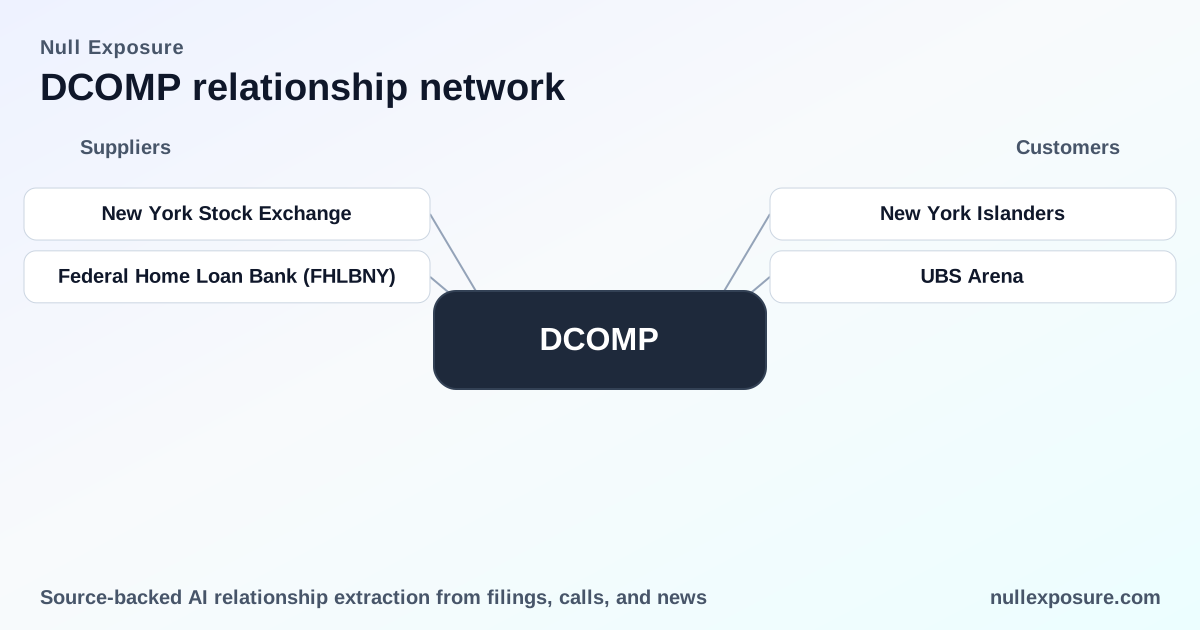
New York Islanders
Dime Community Bank signed on as the official retail and commercial bank partner of the New York Islanders, a relationship that positions the bank as a visible consumer and commercial banking presence around the franchise and its fanbase. According to a 2021 press release on GlobeNewswire, the agreement establishes Dime as the Islanders’ banking partner and builds brand exposure in the New York metropolitan market.
Source: GlobeNewswire press release, May 2021.
UBS Arena
Dime is the exclusive retail and commercial banking partner for UBS Arena, and the Arena’s operating accounts are hosted at the bank, creating a direct commercial banking relationship tied to venue cash management and retail sponsorship. GlobeNewswire’s 2021 announcement states Dime will be UBS Arena’s exclusive retail and commercial banking partner and home to the arena’s operating accounts.
Source: GlobeNewswire press release, May 2021.
Constraints and what they say about Dime’s operating model
The public disclosures and excerpts produce a set of company-level signals that shape how counterparties, credit committees, and investors should think about the franchise. These are not tied to a single relationship unless the disclosure explicitly names one.
-
Contracting posture — short-term funding characteristics. The bank’s disclosures show short weighted average maturities for certain deposit products (for example, CDs had a weighted average maturity of roughly 5–6 months as of end-2024). That dynamic implies monitorable refinancing and rate-repricing risk in a rising rate environment and explains part of deposit volatility modeling for capital and cashflow planning.
-
Counterparty mix — diversified across households, businesses and governments. The company explicitly states the customer base is principally individuals, small and medium-sized businesses, and municipal relationships, and the bank held substantial public funds collateralized by securities and MULOCs (~$1.89 billion at year-end 2024). This structure supports fee income and deposit stability from municipal flows while anchoring retail deposits locally.
-
Geographic concentration — New York metro focus. Dime operates 62 branches across Long Island, the five NYC boroughs and Westchester, and all revenues derive from U.S. banking operations. Geographic concentration increases sensitivity to local economic cycles, commercial real estate trends, and regional unemployment or migration patterns.
-
Revenue concentration — no single customer dominance, but asset concentration. Disclosures state no customer accounted for more than 10% of consolidated revenue through 2024, which is a positive diversification signal for revenue. Conversely, non-owner occupied commercial real estate and multifamily loans represented roughly 65% of loans held for investment at year-end 2024, making loan portfolio concentration a primary credit and valuation risk.
-
Relationship roles — the bank is both a service provider and a seller. Dime services loans for third parties (collecting payments, escrows, foreclosures) with roughly $329.1 million outstanding serviced at end-2024, and the company sells loans while retaining servicing rights and records servicing rights assets under GAAP. These roles generate fee income but also introduce operational and cashflow timing considerations tied to servicing economics and amortization methods.
-
Materiality and criticality signals. The presence of substantial municipal custodial balances and public fund collateral indicates municipal relationships are operationally important for deposits and liquidity. At the same time, the bank asserts that no single customer drives more than 10% of revenue — a distinction between revenue immateriality but balance-sheet materiality given loan concentration.
-
Relationship maturity and activity. Deposit trends were active into 2024, with total deposits increasing materially year over year and core deposits expanding, which signals active customer engagement and funding inflows rather than passive contraction.
Investment implications — what to watch next
- Credit risk concentration in CRE and multifamily is the dominant macro risk for Dime. Underwriting performance and local market vacancy/rent trends will drive preferred security upside or downside via earnings and loss provisioning.
- Deposit stickiness and municipal balances provide a buffer for preferred holders; continued municipal and retail inflows reduce the need for expensive wholesale funding.
- Short deposit maturities and interest rate sensitivity imply monitoring funding costs and margin compression risk if market rates reprice deposit stock faster than asset yields.
- Fee income from loan servicing and venue partnerships (Islanders/UBS Arena) improve earnings diversity but are not large enough to offset portfolio concentration risk.
If you want a systematic view of Dime’s counterparty exposure and the exact lines in financial filings that support these signals, explore our analysis hub: https://nullexposure.com/
Final read
Dime Community Bank’s customer relationships are strategically local and operationally focused: municipal and retail deposits underpin funding while CRE and multifamily loans dominate the asset side. For DCOMP investors, the trade-off is clear — deposit stability and fee diversification against concentrated real estate credit exposure. Monitor loan performance in non-owner occupied CRE, municipal deposit behavior, and deposit maturity profiles to track downside risk to dividends and preferred valuation.