Dingdong (DDL) — Customer relationships and the post-sale commercial map
Dingdong (Cayman) Limited operates a fresh‑food e‑commerce business and monetizes through retail sales, logistics and marketplace services; the company is executing a strategic exit of its China operations via a sale to Meituan while redeploying proceeds into shareholder returns and international focus. This transition reshapes Dingdong’s counterparty profile from a broad retail network to a small set of strategic acquirers and retail partners that will define near‑term cash flow and execution risk. For a concise company resource, visit https://nullexposure.com/.
The short investment thesis for relationship investors
Dingdong’s operating model historically generated revenue from rapid grocery fulfilment and branded product sales; value now crystallizes through a $717 million sale of core China assets and a commitment to substantial capital return. That transaction converts operational exposure into concentrated counterparty risk (the acquirer and its affiliates), while an active retail partnership program (DFI and Hong Kong retail channels) preserves product reach in select markets. Investor focus should be on deal execution, proceeds allocation, and the durability of remaining partner channels.
What the relationship set tells you about the business
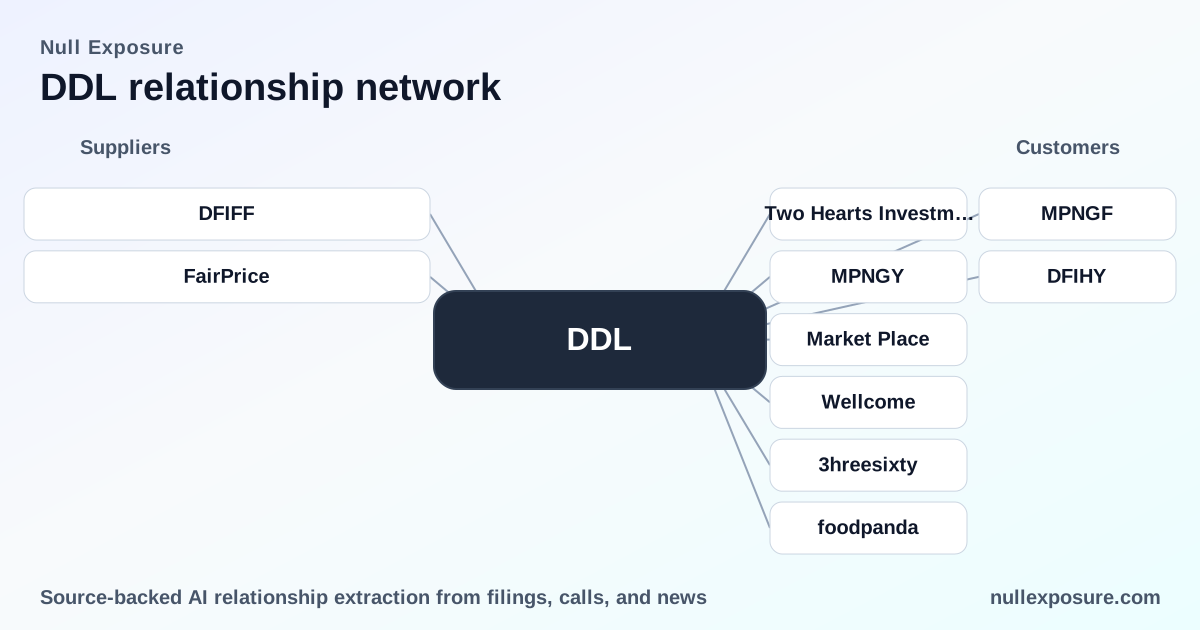
The headline relationship is the Meituan transaction and its related parties; secondary relationships show channel extension into Hong Kong retail and food delivery partnerships. Two structural themes stand out: (1) conversion of operating assets into cash via an M&A counterparty, and (2) reliance on selected retail and delivery partners to monetize product supply outside mainland China. The relationship map below covers every named counterparty referenced in public reporting.
Customer and counterparty map — each relationship explained
Meituan (also cited under tickers MPNGY / MPNGF)
Dingdong agreed to sell its China business to Meituan for roughly $717 million, with 90% paid up front and the remainder after tax settlement; the company signaled it will use a large majority of proceeds for share buybacks and dividends to enhance shareholder returns (reported Feb–Mar 2026). Source: SahmCapital and Yahoo Finance reporting on the Feb 2026 definitive agreement and subsequent company announcements.
MPNGY
Multiple press items referenced Meituan under its OTC ticker MPNGY when reporting the acquisition and capital return plans, reinforcing that the buyer is Meituan’s publicly traded affiliate and that market commentary tracked under that symbol. Source: Intellectia.ai and CNBC coverage in March 2026.
MPNGF
Investment commentary and industry writeups also referenced Meituan under the alternative OTC ticker MPNGF and cross‑listed identifiers in February–March 2026, reflecting how outlets tracked the acquirer across trading venues. Source: SahmCapital analysis (Feb 2026).
Two Hearts Investments / Two Hearts Investment Limited
Dingdong entered a definitive Share Purchase Agreement with Two Hearts Investments (described as a wholly‑owned subsidiary of Meituan) as the special‑purpose vehicle for the asset transfer; shareholder approvals referenced this entity in relation to the sale of BVI‑incorporated assets. Source: Intellectia.ai (Mar 2026) and InsiderMonkey / HarianBasis reporting (May 2026).
DFI Retail Group (DFIHY)
DFI Retail Group established a strategic partnership with Dingdong to integrate fresh produce into DFI’s retail network, aiming to enhance supply chain efficiency and retail distribution in Hong Kong and regional markets. Source: Retail‑Insight‑Network (coverage of the DFI partnership, FY2025 reporting).
DFIHY
DFI Retail Group was also cited under the financial ticker DFIHY in trade press summaries of the strategic partnership, confirming market‑level attention to the collaboration in FY2025 coverage. Source: Retail‑Insight‑Network (Mar 2026).
Wellcome
Wellcome, a DFI supermarket chain, began an initial rollout on 9 April 2025 that placed six Dingdong vegetable SKUs into about 280 Wellcome stores and Wellcome’s online shop, expanding Dingdong’s retail footprint in the region. Source: Retail‑Insight‑Network (report dated FY2025).
Market Place
Market Place — another premium supermarket brand under DFI — was identified as a planned incremental channel for Dingdong products as the partnership expands beyond the initial Wellcome rollout. Source: Retail‑Insight‑Network (FY2025 report).
3hreesixty
3hreesixty, positioned as a premium DFI banner, was named for future product extension under the DFI partnership, indicating Dingdong’s targeting of higher‑margin grocery segments in physical retail. Source: Retail‑Insight‑Network (FY2025).
foodpanda
foodpanda was named as a distribution partner in the initial phase, carrying selected Dingdong produce on its delivery platform and thereby preserving an online channel presence through third‑party logistics and last‑mile delivery services. Source: Retail‑Insight‑Network (FY2025).
Operating model and company‑level signals (constraints and characteristics)
No explicit constraint excerpts were provided with the relationship data; at a company level investors should register these operational characteristics:
- Concentration shifting toward a single principal counterparty. The Meituan sale converts recurring operational revenue into transaction proceeds and creates near‑term dependence on successful deal settlement and the buyer’s payment schedule.
- Contracting posture moves from multi‑channel retailing to transactional M&A outcomes. Historically distributed retail and delivery contracts supported recurring revenue; the sale centralizes value capture into a definitive buyer agreement and follow‑through payments.
- Criticality of partner channels remains material for non‑China operations. DFI, Wellcome, Market Place, 3hreesixty and foodpanda are operationally important to preserve product reach in Hong Kong and nearby markets following the China divestiture.
- Maturity signal: The deal signals a shift from growth/runway posture to capital‑return and portfolio reallocation, a hallmark of a maturing, consolidation‑oriented phase.
Investment implications and risk checklist
Investors evaluating Dingdong’s customer relationships should weigh the following:
- Execution risk on sale proceeds and tax/escrow mechanics. The headline $717 million figure includes staged payment mechanics (90% upfront, 10% post‑tax settlement); timing and final net proceeds will directly drive capital returns and balance‑sheet strength. Source: SahmCapital and Benzinga (Feb 2026).
- Concentration risk concentrated in Meituan/Two Hearts vehicle. With the China business sold to a Meituan subsidiary, counterparty credit and strategic integration terms become single‑point risks; monitoring regulatory clearances and settlement timelines is essential. Source: Intellectia.ai and InsiderMonkey (Mar–May 2026).
- Residual commercial runway via DFI and delivery partners. Continued revenue visibility outside mainland China depends on the DFI partnership and rollout into Wellcome, Market Place and 3hreesixty, plus distribution on foodpanda. Source: Retail‑Insight‑Network (FY2025).
- Shareholder returns vs. reinvestment trade‑off. The company’s stated use of proceeds for buybacks and dividends reduces reinvestment in operations, shifting the risk/return profile toward capital allocation execution. Source: Company announcements covered by Yahoo Finance and CNBC (Feb 2026).
Key takeaway: DDL’s relationship profile has transitioned from broad operational counterparties to a concentrated M&A counterparty plus targeted retail partners; short‑term value realization depends on careful monitoring of payment mechanics and channel continuity in non‑China markets.
For a focused view of counterparties and to track subsequent filings and press coverage, see https://nullexposure.com/.
Disclaimer: This commentary synthesizes publicly reported relationship signals and should be used as a starting point for due diligence rather than as a substitute for reviewing company filings and definitive transaction documents.