Diageo (DEO): Divestments, buyers and what counterparty moves mean for investors
Diageo monetizes global brand equity in spirits and beer through a mix of direct sales, regional subsidiaries, and portfolio management that extracts cash via targeted disposals and joint ventures. The company drives margins through premiumization and scale while actively pruning non-core assets to strengthen the balance sheet — a strategy that converts illiquid regional stakes into near-term cash and reduces operating complexity. For primary documentation and relationship tracking, see NullExposure for ongoing coverage: https://nullexposure.com/
Portfolio pruning as a strategic lever — quick thesis
Diageo is executing a disciplined portfolio streamlining program: selling regional assets and minority stakes to recycle capital into core global brands and reduce leverage. These transactions are not random asset sales; they are deliberate monetization moves with identifiable buyers that improve liquidity and sharpen the company’s commercial footprint in premium markets.
Recent headline deals and the buyer roster
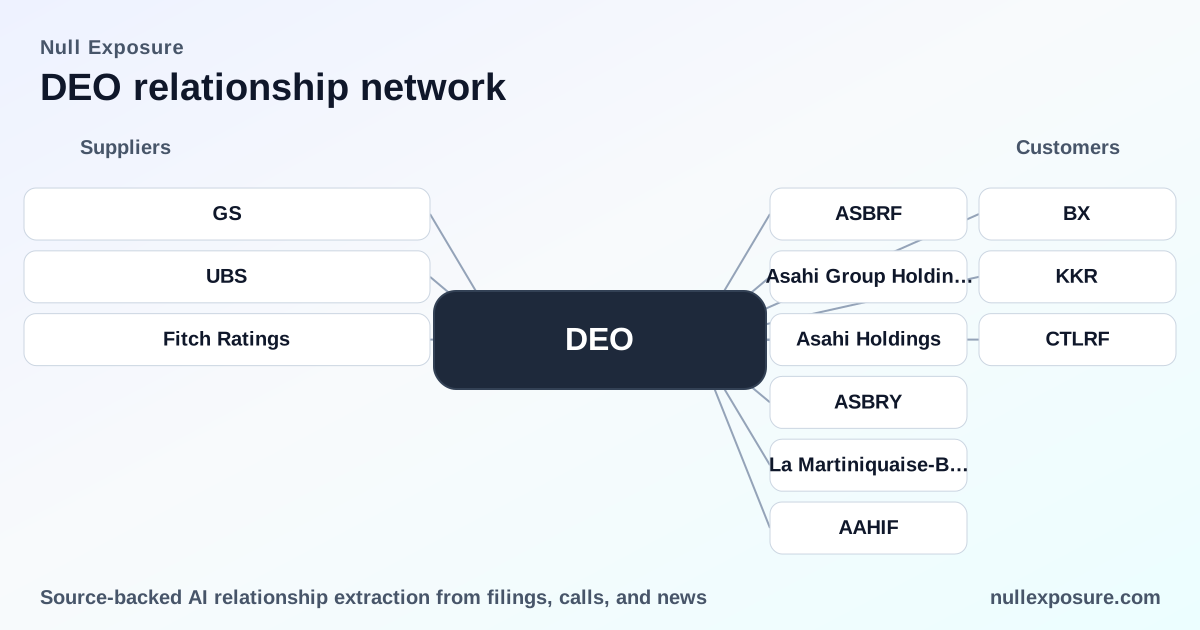
Diageo’s FY2026 signals center on two threads: (1) the sale of United Spirits’ Indian IPL franchise stake and (2) the exit or reduction of positions in various regional businesses (East Africa, Cacique rum, Ghana stake). The buyer set spans strategic industrial acquirers and private equity, an outcome that recalibrates counterparty exposure from broad consumer groups to a concentrated group of financial and strategic sponsors.
Aditya Birla Group
Diageo’s United Spirits subsidiary sold its 100% stake in Royal Challengers Sports Private Limited to a consortium that includes Aditya Birla Group; the transaction formed part of a consortium purchase valued at INR 166.6 billion. Source: JamesSharp market news and WebWire press coverage (May 2, 2026) — https://www.jamessharp.co.uk/market-news/diageo-subsidiary-usl-announces-divesture-in-rcb/
The Times of India Group
The Times of India Group is a named consortium participant acquiring Diageo’s Royal Challengers Bengaluru stake, reflecting strategic media interest in sports assets tied to consumer brands. Source: JamesSharp and WebWire press releases (May 2, 2026) — https://www.webwire.com/ViewPressRel.asp?aId=352508
Bolt Ventures
Bolt Ventures joined the consortium that purchased the Royal Challengers Bengaluru franchise from Diageo’s United Spirits, indicating sports investment houses are bidders for brand-linked assets. Source: JamesSharp (May 2, 2026) — https://www.jamessharp.co.uk/market-news/diageo-subsidiary-usl-announces-divesture-in-rcb/
Blackstone (BX)
Blackstone’s perpetual private equity strategy (BXPE) appears as a consortium buyer for the IPL franchise stake, shifting Diageo counterparty risk toward large-scale private equity capital. Coverage: JamesSharp, Proactive Investors and WebWire (May 2, 2026) — https://www.proactiveinvestors.com/companies/news/1089449
Asahi Group Holdings (ASBRF / AAHIF / ASBRY references)
Diageo agreed to sell its East African business — including its majority stake in East African Breweries and related Kenyan spirits operations — to Asahi for approximately $2.3 billion as part of FY2026 portfolio streamlining, with Kenya legal proceedings referenced in media coverage. Multiple sources cite the transaction and related court action (March 9, 2026): FoodBusinessMEA, TradingView and StockTwits — https://www.foodbusinessmea.com/diageo-reviews-china-assets-considers-divestments-as-portfolio-streamlining-continues/
La Martiniquaise‑Bardinet
Diageo divested the Cacique rum brand to La Martiniquaise‑Bardinet in March FY2026, a targeted sale of a regional spirits label to a Europe-based strategic buyer. Source: FoodBusinessMEA coverage of portfolio moves (March 9, 2026) — https://www.foodbusinessmea.com/diageo-reviews-china-assets-considers-divestments-as-portfolio-streamlining-continues/
Castel (CTLRF)
Diageo sold its stake in Guinness Ghana Breweries to Castel, continuing a pattern of exiting certain African positions into regional beverage groups. Source: FoodBusinessMEA (March 9, 2026) — https://www.foodbusinessmea.com/diageo-reviews-china-assets-considers-divestments-as-portfolio-streamlining-continues/
KKR
Private equity firms including KKR have been reported as potential bidders for IPL franchise interests tied to Diageo’s United Spirits, demonstrating heightened PE interest in sports assets with brand linkage. Source: CoinCentral reporting on IPL franchise speculation (FY2026) — https://coincentral.com/diageo-dge-l-stock-falls-amid-us-demand-concerns-and-ipl-franchise-speculation/
Operating posture, concentration and maturity — what the evidence says
Diageo’s recent transactions reveal a contracting posture that is proactive and intentional: the company is converting minority and regional stakes into cash to reduce leverage and refocus on scalable global brands. FY2026 commentary and earnings coverage explicitly link the Asahi sale proceeds to deleveraging efforts (InsiderMonkey and Finviz summaries cite the $2.3 billion figure as a balance-sheet action). Source: InsiderMonkey and Finviz FY2026 earnings coverage — https://www.insidermonkey.com/blog/diageo-plc-deo-reports-fiscal-2026-first-half-results-1711875/
- Concentration: Counterparty concentration increases in the short term because large strategic buyers (Asahi, Blackstone) and conglomerates (Aditya Birla) take sizeable positions, replacing a diffuse set of regional exposures.
- Criticality: These divestments reduce the operational criticality of lower-margin or jurisdictionally complex units, lowering Diageo’s day-to-day exposure to country-specific regulatory and distribution risk.
- Maturity: The business is mature and cash-generative (RevenueTTM ~$19.8bn, EBITDA ~$6.185bn), enabling selective portfolio exits without immediate capital stress; disposal proceeds target balance-sheet strengthening rather than survival needs.
What investors should weigh next
- Balance-sheet benefit vs. earnings dilution: Disposals improve leverage metrics and free up cash for core investments and buybacks, but they also remove localized revenue streams that have upside in recovery scenarios.
- Counterparty credit profile: The buyer mix includes strategic industry players and top-tier private equity; that mix reduces downstream commercial exposure but concentrates counterparties that are themselves cyclical and active in M&A.
- Event risk in closing: Court challenges and regulatory reviews can delay cash realization (Kenyan court hearings were reported in January 2026 for the Asahi transaction), which implies timing risk to any leverage-improvement thesis. Source: TradingView coverage of Kenyan High Court schedule (Jan 2026) — https://www.tradingview.com/news/gurufocus:ad631c5ce094b:0-kenyan-court-asked-to-pause-diageo-s-east-africa-sale-to-asahi/
For a structured feed of buyer relationships and ongoing monitoring, visit NullExposure for consolidated coverage: https://nullexposure.com/
Bottom line for allocators
Diageo is executing value-recycling transactions and reallocating capital toward its premium global core. Investors should view these buyer relationships as evidence of disciplined portfolio management that reduces operational complexity and accelerates deleveraging, while also accepting short-term concentration in high-profile strategic and financial counterparties. Monitor closing progress and regulatory developments in East Africa and India as the primary timing risks to realized cash flow from these disposals.