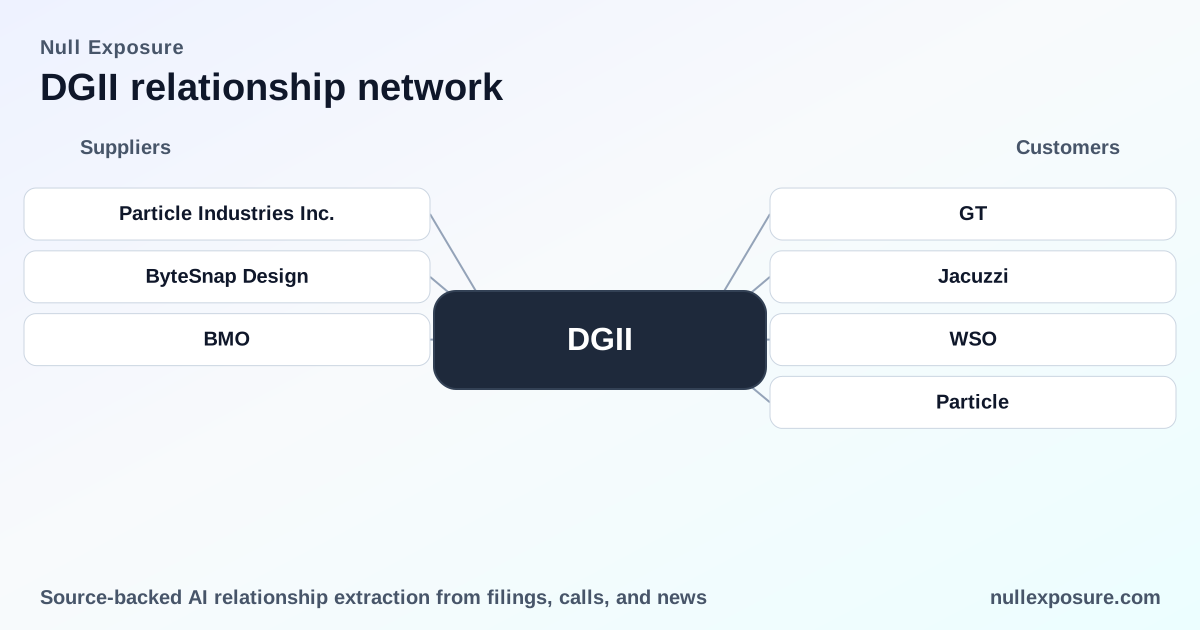
DGII Customer Map: What Goodyear, Jacuzzi, Watsco and Particle Tell Investors
Digi International sells IoT hardware and connectivity software to OEMs, distributors and large enterprises, monetizing through a mix of one‑time device sales, multi‑year subscriptions and usage‑priced platform services that charge by devices managed. The company’s revenue profile blends recurring, higher‑margin subscription streams (SmartSense, Ventus, Jolt) with hardware distribution, creating predictable cash flow on top of transactional sales. For a concise dossier on customer relationships and what they imply for risk and growth, see https://nullexposure.com/.
How Digi structures commercial relationships — a practical summary
Digi operates with a dual revenue model that investors should view as complementary rather than binary: hardware sold through distributors and OEM channels, and software/PaaS billed on subscription or per‑device usage. Company filings for the year ended September 30, 2025 show North America concentrated revenue ($341.9m of $430.2m), and management describes subscription terms that typically range one to five years with evergreen renewal provisions. According to that same disclosure, one distributor customer accounted for 13% of consolidated revenue for the year — a concrete indicator of customer concentration that investors must monitor.
Key operating characteristics for evaluation:
- Contracting posture: mix of fixed‑term subscriptions (monthly billing) and usage‑based PaaS fees; subscriptions deliver higher margin stability while usage pricing scales with device footprint.
- Concentration: meaningful single‑distributor exposure (13% of revenue) implies downside risk if large channel partners reset terms or volumes.
- Customer types and criticality: revenue comes from OEMs, government and large enterprises — clients for whom uptime and security are mission‑critical.
- Maturity and spend: company reporting places some customers in the $10m–$100m spend band, consistent with large enterprise and distributor accounts.
The public relationships observed and what they mean for revenue validation
Goodyear (GT) — enterprise endorsement
Goodyear is named among “over 150 enterprise customers” that accelerated IoT initiatives with Particle during Digi’s public commentary in Q1 FY2026. This is a strong commercial validation of Digi’s Particle offering within large industrial OEMs. According to an InsiderMonkey transcript of Digi’s Q1 2026 earnings call (March 2026), Goodyear is listed alongside other marquee enterprise customers.
GT (duplicate entry) — same source, same signal
A second entry in the public results repeats the Goodyear reference from the same Q1 FY2026 earnings call transcript, underscoring that the mention comes from management’s prepared remarks rather than a third‑party press release. The InsiderMonkey Q1 2026 earnings call transcript (March 2026) contains the duplicated reference.
Jacuzzi — industrial/end‑user adoption
Jacuzzi is cited as another enterprise customer that has adopted Particle’s IoT solutions, signaling adoption of Digi’s software stack in consumer‑facing industrial applications. Management included Jacuzzi in the list of enterprise customers in the Q1 FY2026 earnings call transcript (InsiderMonkey, March 2026).
Watsco (WSO) — channel or commercial customer usage
Watsco appears on the same customer list, indicating adoption within HVAC/distribution channels that match Digi’s historical distributor and OEM go‑to‑market footprint. The Q1 FY2026 earnings call transcript lists Watsco among over 150 enterprise Particle customers (InsiderMonkey, March 2026).
Particle — strategic product family now inside Digi
Particle is referenced in coverage that chronicles the product lineage: Particle’s founders recall XBee (a Digi product inspiration), and press coverage describes Particle’s integration into Digi. Hackster reported on Particle’s return to Digi in March 2026, describing the full‑circle nature of the relationship and reinforcing that Digi is consolidating IoT assets that accelerate go‑to‑market for large customers (Hackster, March 2026).
What the relationship set implies for investors and operators
These named customers collectively reinforce three investment themes inherent to Digi’s model:
- Commercial validation across sectors. The presence of industrial (Goodyear), consumer industrial (Jacuzzi), and distribution (Watsco) customers demonstrates cross‑sector applicability for Digi’s hardware + software stack; that breadth improves runway for recurring revenue growth.
- Recurring revenue tailwind with scaling upside. Management’s public commentary and filings show an explicit move toward subscription and PaaS monetization; subscription and usage‑based pricing scale as device installs expand, converting one‑time device sales into longer duration revenue streams.
- Concentration risk is real. The company disclosed one distributor represented 13% of consolidated revenue for the year ended September 30, 2025; that single relationship is a material counterparty exposure even as Digi diversifies its enterprise customer base. Monitor distributor contract renewals and channel inventory dynamics.
For hands‑on tracking of how these relationships translate into revenue, renewal cadence and usage growth, visit https://nullexposure.com/ for ongoing updates.
Constraints and governance signals that shape execution risk
Company‑level disclosures set boundary conditions on how Digi sells and serves customers:
- Contract types: A clear tilt to subscription contracts across IoT Solutions (one to five year terms, monthly billing) with supplemental usage‑based PaaS fees where customers pay by devices managed.
- Counterparty mix: Revenue derives from OEMs, large enterprise and government customers, which increases contract complexity but raises stickiness when solutions become embedded.
- Segment split: Hardware sales continue via distributors and OEM channels while software/services are expanding as a higher‑margin segment.
- Geographic concentration: North America is the dominant revenue region, with the U.S. representing the bulk of fiscal 2025 revenue.
- Spend concentration: Public evidence signals at least one customer in the $10m–$100m spend band, indicating some large, strategically important accounts.
These are company‑level signals investors should fold into scenario analysis rather than one‑off customer narratives.
Final takeaways for allocators and operators
- Validate renewals and usage growth. The durable upside for subscribers depends on device attach rates and PaaS consumption per device. Track customer renewals and per‑device billing trends.
- Watch distributor exposure. A 13% revenue concentration with a single distributor is a tangible single‑counterparty risk that can affect near‑term revenue volatility.
- Enterprise logos matter for pipeline. Named customers like Goodyear and Watsco provide sales momentum into adjacent accounts and justify continued investment in the Particle stack.
- Balance hardware complexity with software margins. Digi’s ability to shift revenue mix toward subscriptions and usage fees will determine margin expansion and multiple re‑rating potential.
For a structured, investor‑grade view of Digi’s customer network and evolving revenue mix, NullExposure maintains timely coverage and relationship updates at https://nullexposure.com/.