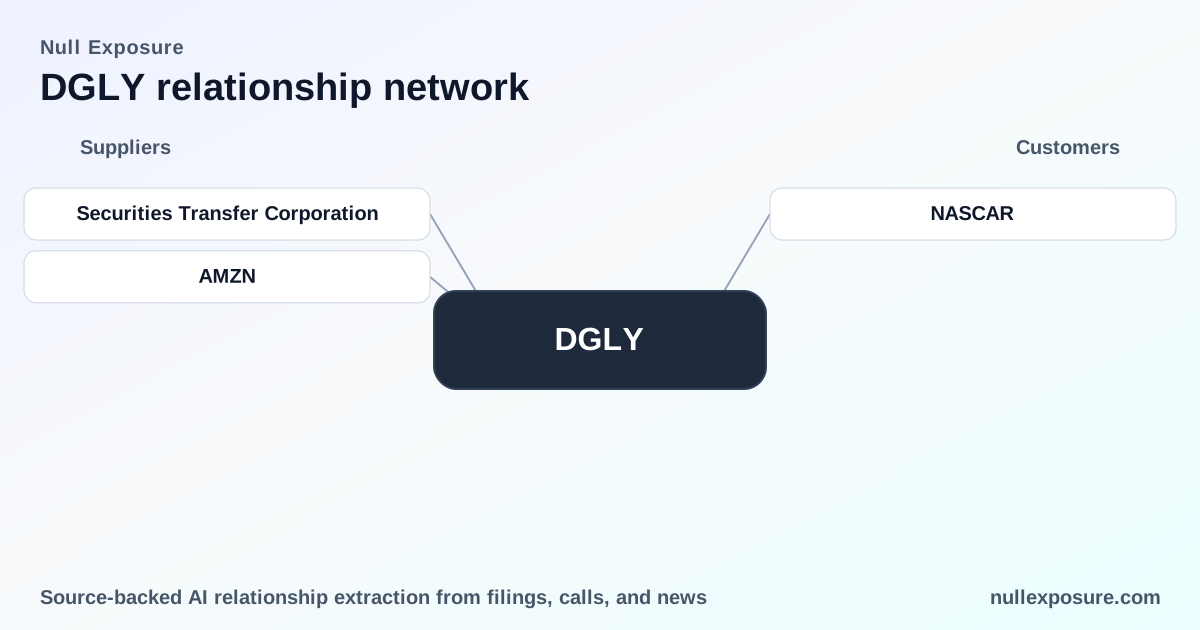
Digital Ally (DGLY) — customer relationships and commercial posture
Digital Ally operates as a vendor of physical-security hardware, access and controlled‑entry systems, video/software packages, and related disinfection products to live-venue and public-safety customers. The company monetizes through hardware sales, follow-on services and software licensing tied to installed camera and entry-control systems, and it leverages venue rollouts to cross-sell software and recurring maintenance. For investors assessing customer risk and opportunity, the revenue model combines one-time equipment installations with higher-margin recurring software/support revenue as the strategic value driver. For a fuller customer map and screening tools, visit https://nullexposure.com/.
How the commercial model actually works and what matters to returns
Digital Ally’s go-to-market is built around bundling physical products (cameras, control hardware, disinfectant devices) with software and support. That mix produces a predictable pattern: lumpy upfront hardware revenue followed by steadier, smaller recurring streams from software licenses, monitoring, and maintenance contracts. Contracts with large venues and live-entertainment operators create windows for multiyear service agreements and product refreshes.
Key operating-model characteristics that shape investment outcomes:
- Contracting posture: Primarily transactional hardware sales with growing emphasis on multi-year software/support agreements that lift lifetime value. Sales cycles align with venue procurement and capital budgets rather than daily transactional volumes.
- Customer concentration risk: Venue and promoter deals can be large but episodic; a small number of venue rollouts can meaningfully move top-line results in a quarter.
- Criticality: Security and entry-control products are operationally important for venues; however, Digital Ally competes in a commoditized hardware market, so criticality does not automatically ensure pricing power without differentiated software or long-term contracts.
- Maturity and scalability: Hardware product lines are mature; scalability depends on converting installations into recurring service users and expanding into adjacent venue and public-safety segments.
These company-level signals frame revenue volatility and the leverage potential of converting installations into subscription-like income streams. No explicit contract-level constraints were provided in the source material; treat these characteristics as high-level operating signals for DGLY.
What we found on customer relationships — a concise inventory
Digital Ally’s public customer references emphasize live-entertainment and venue operators as a commercial focus. The dataset contains the following named customer relationship:
- NASCAR
Digital Ally lists NASCAR among venue and racing‑operation clients for its controlled entry, security camera/software, and disinfection product lines, signaling penetration into motorsport and large-event environments. This relationship is reported in a TicketNews article covering company activities (September 2021): https://www.ticketnews.com/2021/09/digital-ally-announces-acquisition-of-ticketsmarter-and-goody-tickets/.
That entry is the sole explicitly named customer in the available results; the mention highlights Digital Ally’s positioning within the live-events ecosystem and underscores the company’s route to large, venue-level deployments.
Why the NASCAR reference matters to investors
A named reference to NASCAR is meaningful for three reasons:
- Scale and visibility: NASCAR events are high-attendance, high-profile venues where security and access systems are exposed to rigorous operational demands and public scrutiny. Winning deployments in that segment validates the product set under demanding conditions.
- Commercial leverage: Motorsport series and venues create repeatable rollouts across tracks and events, offering upsell opportunities for monitoring, analytics, and maintenance services that drive recurring revenue.
- Proof point for adjacent markets: Success with NASCAR translates into credibility when pursuing other large venues, stadiums, and event promoters.
Accordingly, the NASCAR mention functions as a commercial endorsement rather than as evidence of a material revenue stream on its own; investors should view it as an indicator of the type of contracts DGLY targets.
Risk factors and what to monitor in earnings and filings
Investors and operators should watch for the following signals in quarterly disclosures and press releases:
- Revenue split by hardware vs. services: A rising services share indicates improving gross margins and revenue durability. Hardware-driven growth can be volatile quarter-to-quarter.
- Customer concentration disclosures: Large one-off venue deployments can create headline revenue lifts that are not sustainable; watch for single-customer percentages in filings.
- Contract duration and renewal rates: Multiyear service agreements materially increase predictability; disclosure of contract lengths and renewal metrics enhances visibility.
- Cross-sell conversion rates: The company’s ability to convert an installed base into software/monitoring subscribers determines long-term margin expansion.
- Procurement timing in the live-entertainment market: Event calendars and capital budgets govern the sales cadence; quarter-seasonal patterns are possible.
These items translate directly into valuation sensitivity: higher recurring revenue and lower concentration raise the multiple; lumpy hardware wins and high customer concentration compress it.
Tactical takeaways for investors and operators
- Positive: Presence in motorsports and venue segments demonstrates product fit for large-event operations and sets up recurring-service expansion opportunities. The NASCAR reference validates capability under high-demand conditions.
- Watch: Lack of multiple, named customer references in the disclosed results increases the importance of management commentary and filings to prove scale and subscription growth.
- Action: Prioritize management updates showing growth in service revenue and any disclosure that a defined installed base is on subscription contracts.
For ongoing monitoring and to view a structured map of DGLY customer mentions and commercial signals, see https://nullexposure.com/. For investment teams building exposure models, track quarter-to-quarter shifts in the hardware/service split and any disclosed large-customer concentrations as primary drivers of short-term volatility.
Bottom line
Digital Ally commercializes an integrated hardware-plus-software offering targeted at venues and public-safety clients, monetizing through initial equipment sales and follow-on software and support. The NASCAR client mention is a high-visibility endorsement that supports the company’s venue-focused strategy, but investors should prioritize disclosures that demonstrate recurring-service growth and reduced revenue concentration to justify multiple expansion.