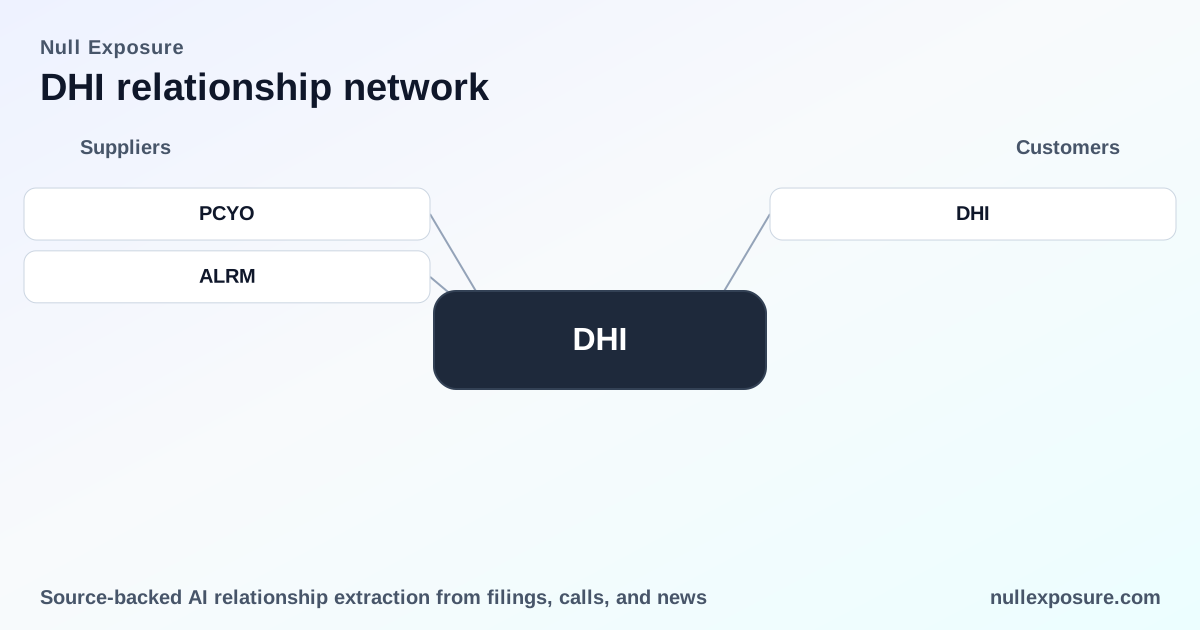
D.R. Horton: Customer relationships that move homes — and cash
D.R. Horton builds and sells single‑family homes and monetizes through three core levers: home construction and sales, lot purchases/resales, and financial services (mortgage and title). Revenue is driven by high turnover of inventory, short contract cycles from contract to closing, and an integrated mortgage arm that captures financing economics and accelerates closings. For investors, the critical signals are lot supply relationships, institutional buyers of completed inventory, and the degree to which DHI’s financial services lock buyers into the company’s sales funnel. Learn more about underlying relationship exposures at https://nullexposure.com/.
Quick investor thesis: integrated scale with channel and supplier exposures
D.R. Horton’s scale across 126 markets in 36 states generates predictable unit economics and margin leverage, but also creates concentration and counterparty dynamics: single‑family lot suppliers such as Forestar are a material upstream input, institutional buyers of developed homes or townhomes provide a liquidity outlet for unsold inventory, and DHI Mortgage converts homebuyer demand into financed closings that accelerate revenue recognition. The combination of short sales cycles and a vertically integrated finance arm supports cash flow stability, while lot sourcing and third‑party disposition channels are primary operational risks.
What the recent relationship evidence shows
Bayshore Investment Partners LLC — institutional buyer of completed townhomes
Bayshore acquired the Laurel Lakes community — 68 townhomes in Seffner, Florida — from D.R. Horton for $18 million, reflecting DHI’s use of third‑party capital to offload completed inventory and shorten working capital cycles. According to a Simply Wall St report on May 2, 2026, this transaction demonstrates a recurring disposition channel for finished product and helps reduce carrying costs on communities approaching stabilization.
Forestar — strategic lot supplier with recurring sales to D.R. Horton
Forestar supplied a meaningful volume of residential single‑family lots to D.R. Horton: the 2025 Form 10‑K records 11,751 lots sold to D.R. Horton, with associated lot sales revenue of $1,278.7 million in FY2025. The 10‑K frames Forestar as a primary upstream supplier of lots to national and regional homebuilders, confirming a material supplier relationship for DHI (D.R. Horton 10‑K, FY2025).
Forestar (operational contribution in FY2026) — recent revenue contribution and margins
Separately, Forestar reported contributing $374.3 million in revenue from 2,938 lot sales, delivering an 11.7% pre‑tax margin, a figure cited in a Benzinga earnings discussion in April 2026; this underscores the profitability profile of lot developers and the downstream cost base D.R. Horton faces when buying inventory from land sellers.
DHI / D.R. Horton (company filings) — internal confirmation of lot flows and scale
D.R. Horton’s own FY2025 disclosures reiterate the scale and timing of lot purchases and home closings: the 10‑K describes the company’s national footprint, the volume of lots acquired from suppliers such as Forestar, and the overall sales backlog timing that converts to revenue within fiscal cycles (D.R. Horton 2025 Form 10‑K). These filings are the primary source confirming the volume and dollar exposure of lot purchases to DHI’s operating model.
How these relationships shape DHI’s operating characteristics
The relationship evidence and company disclosures create a clear map of operational constraints and business model traits:
- Short‑term contract horizon: DHI’s sales backlog largely converts in one to three months, meaning revenue recognition and cash flow are heavily tied to near‑term closings rather than multi‑year contracts (D.R. Horton 10‑K).
- Counterparty mix dominated by individuals: Homebuyers are the primary end customers, and DHI uses DHI Mortgage to originate and sell mortgages, which keeps financing flow aligned with home sales and reduces credit intermediation friction.
- Geographic concentration in North America: D.R. Horton is the largest U.S. homebuilder by homes closed, indicating domestic market exposure rather than international diversification.
- Multi‑role relationships: DHI functions as a buyer of lots, a seller of finished homes, and a service provider through mortgage and title operations — creating both vertical capture of margin and cross‑functional dependency across its value chain.
- Active operational stage: DHI Mortgage financed 81% of D.R. Horton homes in fiscal 2025, an increase from 78% the prior year, signaling an active and growing interplay between home sales and captive financing that supports closings and revenue visibility.
Note: the evidence specifically naming Forestar in the seller context comes from the 10‑K disclosure that ties Forestar’s revenues to lot sales to homebuilders.
Implications for investors: risk, concentration, and optionality
- Supplier concentration risk: The volume of lots purchased from Forestar (11,751 lots in FY2025) is a material upstream dependency; disruption or price shifts in lot supply will influence DHI’s land cost and margins.
- Inventory disposition channels: Institutional buyers like Bayshore offer liquidity for built product, compressing holding costs and smoothing gross margin volatility when retail absorption slows.
- Financing integration is a competitive advantage: DHI Mortgage’s high penetration of buyer financing accelerates closings and captures origination economics, improving conversion of backlog to cash.
- Short contract cycles reduce long‑term lock‑in: While fast closings improve cash turn, they also mean revenue is sensitive to near‑term demand shocks, requiring active inventory and lot cost management.
Bottom line and where to look next
D.R. Horton’s model combines national scale, upstream lot sourcing from specialized sellers like Forestar, and downstream disposition to institutional capital when advantageous. The dominant investor questions are whether lot supply costs will remain stable and whether mortgage penetration continues to support steady closing rates. Monitor Forestar lot sales and margins, institutional buyouts of finished communities, and DHI Mortgage’s share of financed closings for the best read on operational momentum.
For a deeper read on counterparty exposures and document‑level evidence, visit https://nullexposure.com/ for linked source summaries and investor‑grade relationship analytics.