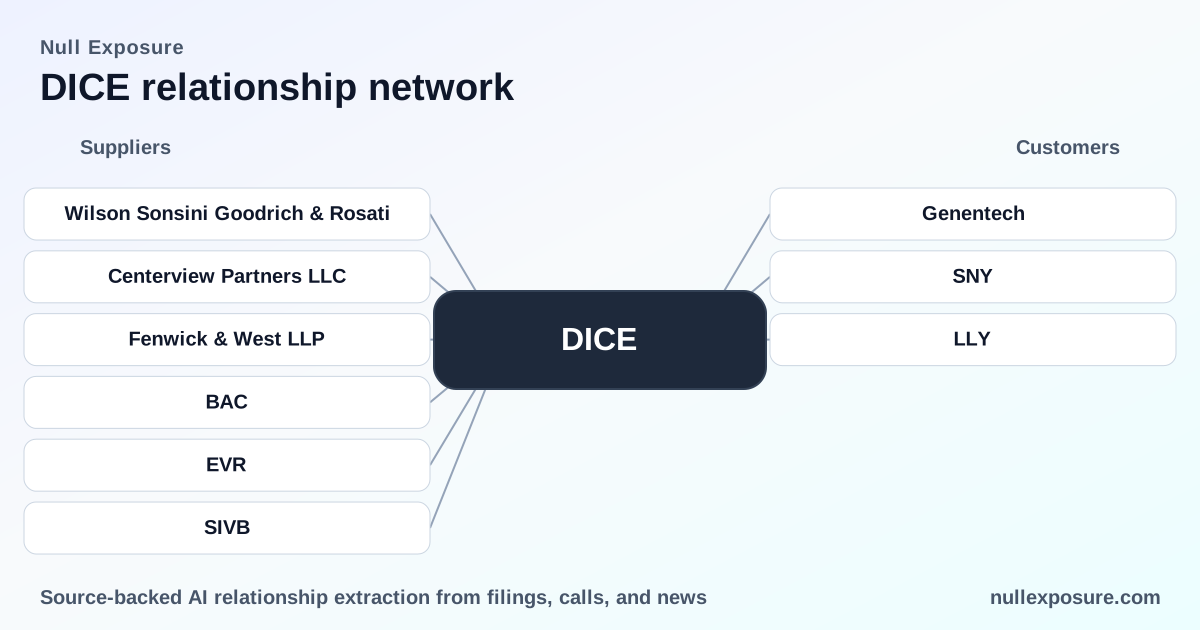
DICE Therapeutics: Customer Relationships and What They Signal for Investors
DICE Therapeutics built a discovery platform to create oral small molecules that target the same biology as injected biologics, and it monetized that capability through research partnerships, option-to-license agreements, milestone payments, and ultimately strategic exit activity. The company’s commercial value crystallized when Eli Lilly acquired DICE for $2.4 billion in 2024; before that, DICE generated value from a small number of high-profile collaborations with major pharma companies. For investors evaluating counterparties and business risk, these relationships reveal a partnership-driven commercialization model, concentrated counterparty exposure, and high strategic criticality to partners. For more structured signals on counterparties and contract terms, visit https://nullexposure.com/.
What the reported customer relationships are — one by one
-
Genentech
As of the end of 2020, Genentech had not requested additional research services nor exercised customer options under its contract with DICE, indicating a passive or optional engagement status at that point. This observation was reported in MedCityNews’ coverage of DICE’s IPO filing in September 2021 (FY2021 coverage): https://medcitynews.com/2021/09/dices-ipo-roll-comes-up-with-204m-for-rd-of-oral-drugs-to-rival-biologics/. -
Sanofi
DICE entered an immuno‑oncology research partnership with Sanofi in 2015 that granted Sanofi an exclusive option to license, develop, and commercialize discoveries coming from the collaboration, reflecting a classic pharma‑partner licensing posture for early discovery plays. MedCityNews summarized the 2015 deal and its option structure in a report tied to DICE’s IPO filing (FY2021 coverage): https://medcitynews.com/2021/09/dices-ipo-roll-comes-up-with-204m-for-rd-of-oral-drugs-to-rival-biologics/. -
SNY
The record also lists SNY (Sanofi’s ticker) separately; the item repeats that a 2015 immuno‑oncology alliance grants the pharma partner an exclusive option to license and commercialize compounds discovered by DICE, reinforcing the same licensing economics and strategic alignment with Sanofi. The source is the MedCityNews IPO coverage (FY2021): https://medcitynews.com/2021/09/dices-ipo-roll-comes-up-with-204m-for-rd-of-oral-drugs-to-rival-biologics/. -
Lilly
In 2024 Eli Lilly paid $2.4 billion to acquire DICE Therapeutics, reflecting Lilly’s valuation of DICE’s platform and programs and effectively converting future option and milestone economics into an outright purchase price. MedCityNews reported the acquisition in July 2024 (FY2024 reporting): https://medcitynews.com/2024/07/eli-lilly-acquisition-morphic-immunology-inflammation-inflammatory-bowel-ibd-lly/. -
LLY
The listing of LLY (Eli Lilly’s ticker) duplicates the acquisition note: Lilly’s $2.4 billion purchase of DICE in 2024 confirmed the strategic exit and monetization path for the company’s platform and partnerships. See MedCityNews’ July 2024 coverage for context (FY2024): https://medcitynews.com/2024/07/eli-lilly-acquisition-morphic-immunology-inflammation-inflammatory-bowel-ibd-lly/.
Operating-model signals and business-model constraints
The payload contains no explicit structured constraints or contract excerpts, which is itself a signal: DICE’s public record in the provided data set lacks standardized contract detail. Treat that absence as a company‑level limitation on visibility rather than evidence about any single partner.
From the relationship evidence and timeline, investors should register these company-level characteristics:
-
Contracting posture: DICE pursued deal structures common to discovery-stage biotech — research funding plus exclusive option-to-license rights for large pharma. That produces up-front funding with asymmetric upside via license milestones and royalties or, alternatively, strategic acquisition value.
-
Concentration: The reported relationships are concentrated among a handful of large pharmaceutical firms (Sanofi, Genentech and ultimately Lilly), indicating high counterparty concentration and the attendant revenue and negotiation risk this creates.
-
Criticality: Exclusive options and the attractiveness of DICE’s biology to Lilly (culminating in acquisition) signal high strategic criticality for successful partners: DICE’s ability to produce oral alternatives to biologics is sufficiently valuable to drive major deals or full buyouts.
-
Maturity: Partnerships stretch back to at least 2015 (Sanofi) and were still referenced in IPO disclosures through 2020–2021, giving DICE a multi‑year collaboration runway and an established discovery track record prior to its 2024 acquisition.
Investment implications and risk framework
-
Upside is partnership-driven. DICE’s path to value in the public record relied on collaborations that converted research capability into licensing options and exit value; the Lilly acquisition validates that trajectory but also concentrates returns into discrete corporate events.
-
Concentration is a material risk. A small number of large partners means counterparty decisions materially influence outcomes — as illustrated by Genentech holding optionality without exercising additional services into 2020.
-
Optionality structures reduce near-term revenue predictability but preserve upside. Option-to-license terms attract strategic buyers and large corporate partners while delivering limited committed future revenue until options are exercised or deals progress to milestones.
-
Limited public contract detail increases due-diligence requirements. The absence of contract excerpts or constraint metadata in the provided data requires investors to obtain primary filings or confidentiality-mitigated summaries to quantify milestone schedules, exclusivity windows, and termination provisions.
Tactical takeaways for operators and researchers
-
Model revenue conservatively for similar platform biotechs: count confirmed research funding, but treat option exercise and milestone capture as probabilistic events unless contracts provide firm commitment.
-
Prioritize counterparty mapping and timeline visibility when valuing discovery-stage partnerships; strategic acquisitions like Lilly’s flatten long-term uncertainty but are rare exits.
-
Request clause-level detail on exclusivity periods and option exercise windows during diligence to size captureable economics precisely.
For further structured analysis and access to the underlying relationship records, review the company summary at https://nullexposure.com/ — investors and operators will find clearer counterparty maps and contract-level signals there.
Final assessment
DICE’s customer record reflects a classic discovery-stage commercialization strategy: targeted partnerships with major pharma firms, option-driven licensing economics, and concentrated counterparty exposure that translated into a strategic exit. The relationships recorded here validate the platform’s commercial appeal and illustrate the tradeoff between early-stage optionality and concentrated, event-driven value realization — essential input for valuation, risk assessment, and deal structuring.