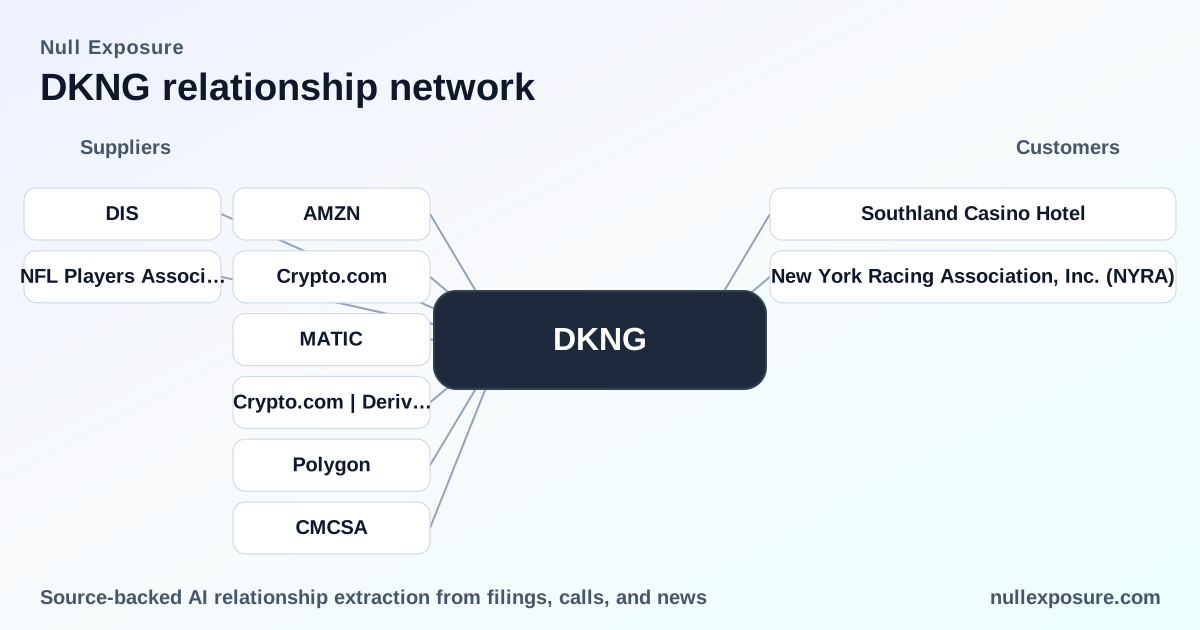
DraftKings (DKNG) — Customer Relationships That Drive Scale and Risk
DraftKings operates and monetizes a two-pronged digital wagering business: it sells sportsbook and iGaming experiences directly to individual customers while also licensing technology and managing white‑label operator relationships with commercial gaming partners. Revenue derives from net gaming revenue (player losses net of payouts), marketplace fees and revenue‑sharing with partners, plus sponsorship and distribution agreements that amplify user acquisition and retention.
For a concise, business‑facing view of these customer relationships and what they imply for contract structure, concentration and operational risk, see Null Exposure’s overview: https://nullexposure.com/.
What the relationship map tells investors in plain terms
DraftKings’ customer set is a hybrid mix of individual end users (the revenue base) and institutional commercial partners that function as distribution channels, brand amplifiers and regulated licensers. The business model shows high dependency on Sportsbook and iGaming as core products, strong North American concentration, and a mix of usage‑based and short‑duration contractual economics that favor volume scaling but require continuous customer acquisition.
Below I walk through every named relationship in public reporting and press, summarizing commercial roles and the source evidence.
Commercial partners and sponsorships — the list, one by one
-
Southland Casino Hotel
DraftKings secured a license to operate its online sportsbook on behalf of Southland Casino Hotel in Arkansas, positioning DraftKings as the technology and operational provider for a local commercial licensee. (Reported in StockTitan filings summarizing SEC disclosures, March 9, 2026: https://www.stocktitan.net/sec-filings/DKNG/form-4-draft-kings-inc-insider-trading-activity-eeccae18da31.html) -
New York Racing Association, Inc. (NYRA)
DraftKings is the presenting sponsor of the 155th running of the Grade 1 Travers, reflecting a marketing and sponsorship relationship that leverages live sports rights to drive user acquisition. (NYRA press release announcing the sponsorship, noted FY2024: https://www.nyra.com/saratoga/news/nyra-and-draftkings-announce-new-sponsorship-agreement) -
Priceline (PCLN)
Priceline partnered with DraftKings on a “Dream It, Book It Bracket” marketing activation around men’s college basketball, demonstrating DraftKings’ use of consumer travel and lifestyle platforms to broaden reach. (Marketing Dive coverage of the Priceline marketing collaboration, May 3, 2026: https://www.marketingdive.com/news/priceline-young-travelers-stop-dreamscrolling-latest-ads/741997/) -
UFC
DraftKings is an official sports betting and daily fantasy partner of the UFC, a relationship that provides rights and promotional channels into the combat sports audience. (Company release summarized in QuiverQuant, relating to DraftKings’ partner list in Q3 2025 reporting: https://www.quiverquant.com/news/DraftKings+Inc.+to+Release+Third+Quarter+2025+Results+and+Host+Conference+Call+on+November+7%2C+2025) -
NHL
DraftKings is an official sports betting and daily fantasy partner of the NHL, giving it league association, branded promotion and likely access to league marketing inventory. (Partner list referenced in DraftKings’ Q3 2025 release as published on QuiverQuant: https://www.quiverquant.com/news/DraftKings+Inc.+to+Release+Third+Quarter+2025+Results+and+Host+Conference+Call+on+November+7%2C+2025) -
NASCAR
DraftKings is an official daily fantasy partner of NASCAR, reflecting rights to engage motorsports audiences via DFS products and event promotions. (Partner list referenced in Q3 2025 reporting coverage: https://www.quiverquant.com/news/DraftKings+Inc.+to+Release+Third+Quarter+2025+Results+and+Host+Conference+Call+on+November+7%2C+2025) -
PGA TOUR
DraftKings is an official sports betting and daily fantasy partner of the PGA TOUR, securing promotional access to golf viewership and sponsorship inventory. (Documented in Q3 2025 materials hosted on QuiverQuant: https://www.quiverquant.com/news/DraftKings+Inc.+to+Release+Third+Quarter+2025+Results+and+Host+Conference+Call+on+November+7%2C+2025) -
WNBA
DraftKings is an official sports betting and daily fantasy partner of the WNBA, supporting brand exposure and targeted fan engagement in women’s professional basketball. (Noted in company partner disclosures summarized on QuiverQuant, Q3 2025: https://www.quiverquant.com/news/DraftKings+Inc.+to+Release+Third+Quarter+2025+Results+and+Host+Conference+Call+on+November+7%2C+2025) -
NFL
DraftKings holds official sports betting and daily fantasy partnerships with the NFL, a high‑value league association that materially assists customer acquisition and legitimacy. (Included in DraftKings’ partner list as presented in Q3 2025 reporting and reprinted on QuiverQuant: https://www.quiverquant.com/news/DraftKings+Inc.+to+Release+Third+Quarter+2025+Results+and+Host+Conference+Call+on+November+7%2C+2025) -
MLB
DraftKings is an authorized gaming operator of MLB, establishing league‑level commercial and promotional alignment around baseball properties. (Cited in the same partner disclosure for Q3 2025 on QuiverQuant: https://www.quiverquant.com/news/DraftKings+Inc.+to+Release+Third+Quarter+2025+Results+and+Host+Conference+Call+on+November+7%2C+2025) -
NBA
DraftKings is an official sports betting partner of the NBA, leveraging the league’s reach to deploy promotional offers and branded content. (Listed among league partnerships in DraftKings’ Q3 2025 release summarized on QuiverQuant: https://www.quiverquant.com/news/DraftKings+Inc.+to+Release+Third+Quarter+2025+Results+and+Host+Conference+Call+on+November+7%2C+2025)
Operating constraints and what they signal for investors
Public filings and disclosures translate into clear operating signals:
-
Contracting posture — usage‑based, short horizon. DraftKings’ revenue model and partner contracts contain variability driven by market pricing, cash discounts, revenue sharing and usage‑based fees, and contract acquisition costs are expensed immediately because the period of benefit is typically one year or less. This structure favors high customer turnover and fast monetization, but increases sensitivity to monthly active payer trends. (Company financial disclosure language on transaction price variability and ASC 606 practical expedient, FY filings)
-
Customer mix — individuals are the revenue engine. The primary counterparty type is the individual paid user (Monthly Unique Payers), with peer‑to‑peer DFS contests and real‑money engagements forming the base. This emphasizes unit economics and lifetime value management over long B2B locked contracts. (FY disclosures defining MUPs and DFS mechanics)
-
Geographic concentration — North America focused. Operations and revenue are predominantly North American; DraftKings operates in 27 of 33 jurisdictions with legalized online sports betting as of February 10, 2026, and regulatory outcomes in the U.S. drive growth potential. (Company geographic disclosures, Feb 2026)
-
Materiality — core products are critical. Sportsbook and iGaming account for roughly 91–93% of revenues in recent fiscal years, making them the company’s core product levers and the primary drivers of partner negotiations and technology investment. (FY 2023–2025 revenue breakdowns)
-
Business role — seller and service provider. DraftKings functions as both a direct consumer seller and as a technical/service platform for other operators and licensees, creating revenue diversification across direct net gaming and B2B technology services. (Company segment and service descriptions)
-
Relationship stage and product maturity — active and established. The relationships and programs discussed are active commercial partnerships supporting ongoing acquisition and promotional strategies, while the product set (Sportsbook, iGaming, DFS) represents the company’s mature, revenue‑generating core. (Monthly activity measures and one consolidated reportable segment disclosures)
Investment implications and risk signals
-
Positive: High operating leverage to North American legalization and league partnerships supply powerful marketing reach and scale economics when MUP growth is sustained. Sponsorships with major leagues are material distribution assets.
-
Negative: Revenue concentration and usage‑based contracts create volatility tied to short‑term engagement metrics and regulatory shifts; individual payer behavior drives the top line more than long‑dated durable contracts.
For deeper portfolio diligence and to map counterparty exposure across industries and leagues, visit Null Exposure: https://nullexposure.com/.
Bottom line
DraftKings monetizes through high‑frequency, usage‑driven consumer engagement amplified by strategic partnerships with leagues and commercial licensees. The business is structurally North America‑centric, heavily dependent on Sportsbook and iGaming, and exposed to short contract horizons and monthly user dynamics—a profile that rewards scale and marketing muscle but demands constant customer acquisition discipline.