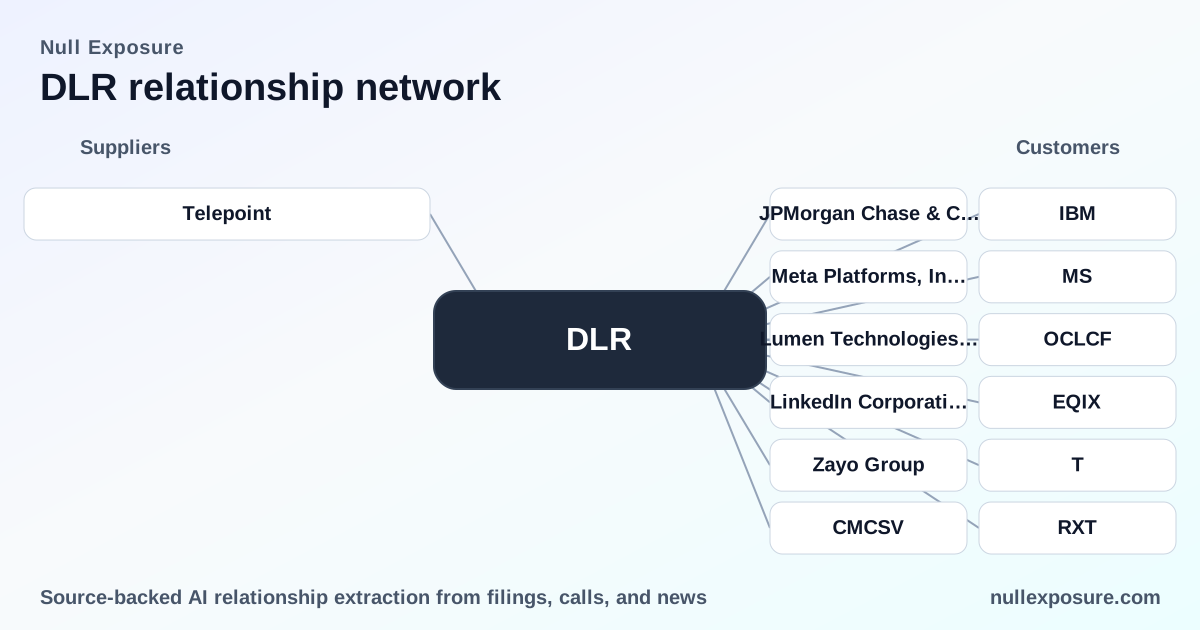
Digital Realty (DLR): Customer Footprint and What It Means for Investors
Digital Realty is a global REIT that monetizes real estate and connectivity by leasing data center space, power and interconnection services to large enterprises, cloud providers and network operators. Revenue is generated through a mix of long-term, large-footprint leases for scale deployments and shorter-term colocation and interconnection contracts, producing predictable recurring cash flow while exposing the company to a concentrated roster of very large customers. For deeper signals on counterparty exposures and portfolio composition visit https://nullexposure.com/.
Business model in one line: real estate plus connectivity drives stickiness
Digital Realty operates a dual economic model: long-duration leasing for hyperscale and wholesale customers (multi-year to decade-long commitments) and flexible, higher-turnover colocation and port-based interconnection services that sell incremental margin. The FY2025 disclosures confirm Digital Realty’s PlatformDIGITAL offering and a global footprint of over 300 facilities, which together convert physical infrastructure scale into recurring rent and service revenue. This hybrid contract mix supports a REIT cashflow profile while concentrating revenue with a relatively small number of very large enterprises.
Key operating constraints that shape investor risk/reward
- Contracting posture: Digital Realty runs a bifurcated contracting model — colocation and interconnection for smaller footprints are often month-to-month or one-year terms, whereas scale builds and hyperscale powered-base leases carry 5–10+ year terms and drive most of the committed revenue. This split creates near-term repricing flexibility at the margins and long-dated revenue certainty at scale.
- Concentration and materiality: The company reports that its largest customer approximates ~12% of revenue, signaling material counterparty concentration that investors must monitor as part of credit and tenant risk assessments.
- Counterparty profile and criticality: The customer roster is populated by very large enterprises and service providers (Fortune 50/25 and major cloud, network and financial services firms), which increases uptime and compliance expectations but also strengthens tenancy durability.
- Geographic and strategic scale: Digital Realty is explicitly a global provider across 50+ metros and 25+ countries; the business model depends on multi-region relationships where customers transact in multiple geographies.
- Relationship maturity and stage: The company’s average remaining lease term was roughly five years as of December 31, 2024, and many facilities are pre-leased prior to construction, indicating a mature, active portfolio with significant committed occupancy.
- Role and revenue recognition: Digital Realty is the seller / service provider to its customers — leasing space, delivering power and interconnection — while accounts receivable confirm the buyer side of lease cashflows that feed reported revenues.
For additional context and signal layering, see https://nullexposure.com/.
The customer roll call investors should read — line by line
Below are every customer mention pulled from the FY2025 filing; each entry is summarized in plain English with the filing as the source.
JPMorgan Chase & Co.
JPMorgan Chase is listed among Digital Realty’s large customers with an associated figure of $44,326 in the FY2025 customer table, indicating a meaningful enterprise tenancy within the company’s top customer roster. According to Digital Realty’s FY2025 Form 10‑K, JPMorgan is presented as one of the named enterprise customers in the disclosure.
Meta Platforms, Inc.
Meta is included on the FY2025 customer list with the table showing a figure of $73,494, reflecting Meta’s scale as a global hyperscaler-grade tenant across Digital Realty sites. The FY2025 10‑K explicitly names Meta Platforms among the company’s key customers.
Lumen Technologies, Inc.
Lumen appears in the top-customer table at $56,649, marking it as a network and carrier customer for interconnection and colocation services identified in the 10‑K. Digital Realty’s FY2025 filing lists Lumen among its varied industry vertical customers.
LinkedIn Corporation
LinkedIn is cited in the FY2025 customer schedule at $77,088, demonstrating social-network tenancy and likely multiple metro deployments across the Digital Realty platform. The FY2025 10‑K includes LinkedIn in its roster of notable customers.
Zayo Group
Zayo Group is named in the narrative list of customers in the FY2025 filing, reflecting carrier and fiber-network partner relationships that support Digital Realty’s interconnection business. The FY2025 10‑K cites Zayo among service-provider and network customers.
Comcast Corporation
Comcast is listed in the table with an associated figure of $47,235, and appears in the narrative list of prominent customers in the FY2025 10‑K. The filing includes Comcast both by name and by ticker variant in the customer disclosures.
IBM
IBM is shown in the FY2025 largest-customer table with $109,596, underlining its status as a significant enterprise tenant utilizing colocation and possibly managed infrastructure footprints. The FY2025 10‑K explicitly names IBM among Digital Realty’s customers.
MS
An entry labeled “MS” corresponds to Morgan Stanley in the FY2025 customer schedule (listed with $39,944), reflecting the filing’s inclusion of major financial-services tenancy. The 10‑K lists Morgan Stanley among its top customers.
CMCSV
The filing repeats Comcast in a ticker-form entry “CMCSV,” linked to the same table figure ($47,235) and demonstrating duplicate references to the same customer across the FY2025 disclosures. This appears in Digital Realty’s FY2025 10‑K customer table.
Morgan Stanley
Morgan Stanley is separately listed with the $39,944 figure, confirming the brokerage/fund services relationship highlighted in the FY2025 filing. The FY2025 10‑K includes Morgan Stanley in the table of largest customers.
Oracle Corporation
Oracle appears as #2 in the FY2025 customer table with $424,130, marking it as one of the most material tenants in the portfolio and corroborating the company’s reliance on a small number of very large technology customers. Digital Realty’s FY2025 Form 10‑K presents Oracle in the top-customer schedule.
OCLCF
OCLCF is a ticker-format duplicate of Oracle’s listing in the FY2025 table (same numeric association), showing the filing’s use of both corporate names and ticker variants for key customers. The FY2025 10‑K contains this entry in the customer table.
EQIX
EQIX (Equinix ticker) shows up with a table figure of $95,641, reflecting competitor/colocation operator presence in the customer listing and relationships via interconnection ecosystems. The FY2025 10‑K lists Equinix/EQIX in the customer schedule.
Equinix
Equinix is repeated in name form with the $95,641 figure in the FY2025 filing, confirming that the document references both the company name and its ticker. See Digital Realty’s FY2025 10‑K.
AT&T
AT&T is listed in the FY2025 table with an associated figure of $48,802, identifying it as a global carrier customer for connectivity services within Digital Realty’s portfolio. The FY2025 10‑K names AT&T among major customers.
T
The filing includes a ticker-form entry “T” that duplicates AT&T’s listing and the same numeric association ($48,802) in the FY2025 customer table. This duplication is present in the FY2025 10‑K.
Rackspace
Rackspace appears in the customer list with $39,768 in the FY2025 table, illustrating relationships with managed hosting and cloud services providers. Digital Realty’s FY2025 Form 10‑K includes Rackspace among the top customer entries.
RXT
RXT is the ticker-form duplicate of Rackspace in the FY2025 table (same figure $39,768), reflecting the filing’s mixed use of corporate names and tickers in the customer disclosures. The FY2025 10‑K contains this entry.
What investors should take away
- Concentration is real and material: a single top customer approximates ~12% of revenue, so tenant loss or contraction would have meaningful income effects. (FY2025 10‑K)
- Contract mix reduces short-term volatility but concentrates long-term risk: long-term scale leases underpin revenue, while month-to-month interconnection creates incremental margin but limited structural commitment. (FY2025 filing disclosures)
- Customers are global and enterprise-scale, which supports tenancy durability, but also creates dependency on the spending patterns of a handful of hyperscalers and large service providers.
For portfolio managers and operators, the FY2025 customer roster is a clear indicator of both strength and concentration in Digital Realty’s model; investors should weigh the predictability of long leases against counterparty concentration and geographic exposure when sizing positions.
Explore more counterparty signals and structured customer intelligence at https://nullexposure.com/.