Denison Mines (DNN): Customer relationships that shape a uranium developer’s path to production
Denison Mines operates as a vertically focused uranium explorer and developer that monetizes through project development, joint-venture partnerships, asset optioning and operator fees. The company advances projects in the Athabasca Basin and retains economic upside by operating assets or holding minority JV stakes while monetizing non-core acreage through option agreements. Investors should value Denison as a hybrid developer/operator whose revenue and capital returns depend on successful project transitions, JV cash flows and the strategic disposal or optioning of exploration packages. For deeper relationship intelligence, visit https://nullexposure.com/.
Why partners matter more than commodity cycles for Denison
Denison’s balance between operated projects and minority joint-venture stakes is central to its contracting posture. The company acts as operator on several projects, collects operator returns or royalties where it holds minority interest, and recycles capital by optioning project portfolios to third parties. This structure reduces full-cycle capital intensity for Denison while preserving exposure to discovery and mine development upside. The mix drives two investor-level implications: concentration of cash flow around JV outcomes and operational leverage to execution on Phoenix and milling arrangements.
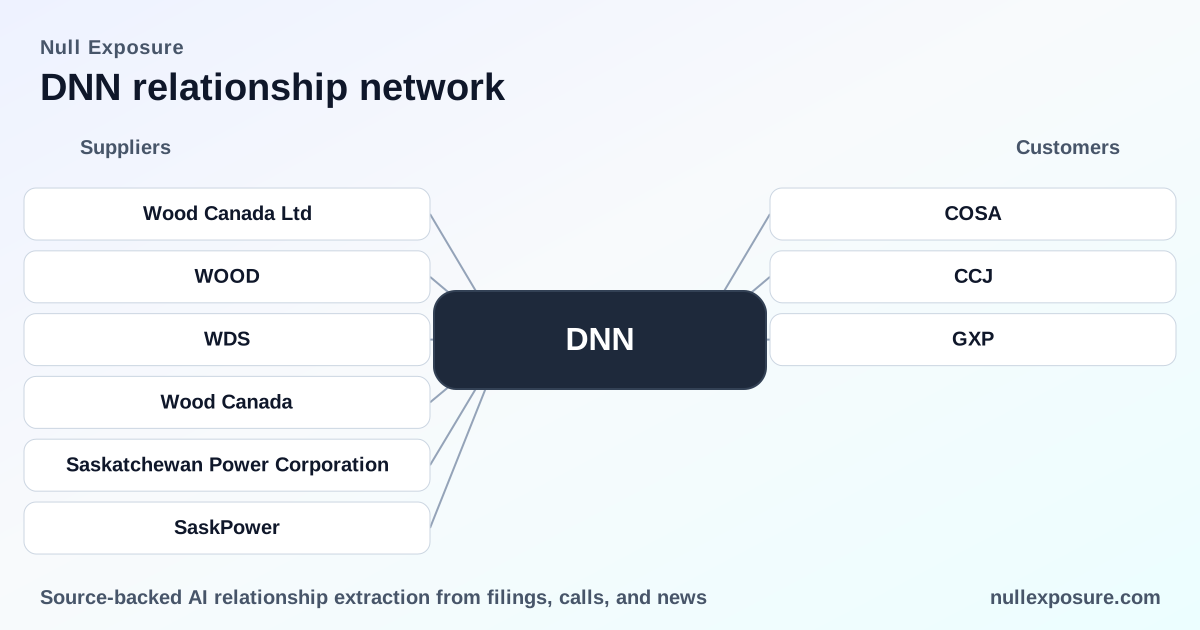
The full list of customer/partner relationships surfaced in public reporting
Below I cover every named relationship in the available reporting, with a concise plain-English summary and source for each mention.
-
Cosa / Cosa Resources Corp. (COSA)
Denison supplied confidential technical data and reports to Cosa as part of expanded work on the Orion project and new joint-venture arrangements, providing the smaller explorer with operator-level information to accelerate winter 2026 activity. Source: Junior Mining Network press release and a Yahoo Finance distribution, March 9, 2026. -
Cameco (ticker often reported as CCJ)
Denison holds a minority interest in the McClean Lake mill (22.5%), where ore from Cameco’s Cigar Lake is processed under a toll-milling arrangement; that relationship embeds Denison within a tolling supply chain that has strategic operational importance to its processing and offtake posture. Source: ts2.tech articles summarizing market commentary, March 9, 2026. -
Foremost Clean Energy (FRRSF)
A package of 10 optioned Athabasca Basin uranium projects was acquired from Denison and forms part of Foremost’s 2026 exploration push, indicating Denison’s use of option sales to reallocate capital and crystallize value from exploration acreage. Source: The Globe and Mail press release coverage, fiscal-period reporting referencing FY2025. -
Greenridge Exploration Inc. (GXP)
Denison is the 80% owner and operator of the Hook-Carter uranium project, with Greenridge holding 20% and Greenridge publicly announcing winter 2026 drilling to be conducted with Denison as operator. This demonstrates Denison’s role as an on-the-ground operator in joint projects. Source: Greenridge press release covered by The Globe and Mail, March 2026.
What these relationships reveal about Denison’s operating model
- Contracting posture: Denison routinely operates projects where it retains majority stakes and supplies technical and confidential reports to joint-venture partners, while simultaneously optioning peripheral assets to third parties to conserve capital. That dual posture creates a mix of operator cash flow and carry/option monetization events.
- Concentration: Cash flow and project risk are concentrated around a small set of strategic assets and mills (notably the McClean Lake JV and the Phoenix development), which makes JV performance and tolling arrangements disproportionately material to company economics.
- Criticality: Ownership of processing capacity (22.5% McClean Lake JV) and the operator role on key projects are critical operational levers—both for timing to first production and for near-term operational revenues or fees.
- Maturity: The portfolio exhibits mixed maturities—development-stage Phoenix and operated JV projects sit alongside exploration packages being optioned to third parties. This mix delivers near-term development optionality and longer-dated discovery upside.
Investment implications and risk vectors
- Upside drivers: Successful commissioning or progress at Phoenix and stable tolling terms at McClean Lake can de-risk rerating opportunities since they convert Denison’s optionality into tangible production-linked value. The company’s operator role on several projects gives it execution control on activities that directly affect value realization.
- Key risks: The business is exposed to operational execution on JV assets, counterparty reliability in tolling and option agreements, and commodity-price sensitivity for uranium; option proceeds and JV distributions are lumpy and dependent on partner decisions and regulatory timing.
- Capital strategy signal: Repeated use of option sales and JV partnerships indicates a deliberate capital-light approach to portfolio advancement—investors should monitor sequential option receipts and JV funding milestones as leading indicators of cash-flow stability.
Quick takeaways for portfolio managers
- Denison is a developer-operator that leverages JV ownership and asset optioning to preserve upside while limiting capital intensity.
- McClean Lake JV exposure and operator status across projects are the most material partner relationships for near-term operational and cash-flow outcomes.
- Tracking press releases and partner announcements—like the Cosa and Greenridge items—gives a direct read on operational cadence and partner-funded activity.
For institutional intelligence and a concise view of how partner flow affects project economics, see the company relationship tracking hub at https://nullexposure.com/.
Closing: where to watch next
Monitor the execution timeline for Phoenix and any partner-funded drilling results from the Hook-Carter program; both will determine whether Denison’s operator strategy converts optionality into reproducible value. Investor focus should be on JV funding events, tolling terms at McClean Lake, and option-sale cash receipts as proximate catalysts for valuation re-assessment.