Healthpeak (DOC) — Customer Relationships and Concentration Risk: Who Pays the Rent
Healthpeak is a healthcare-focused REIT that owns, operates, and develops outpatient medical buildings, life‑plan communities, and lab/flex space, generating recurring revenue through long-term leases, property management fees, lease escalations, and occasional transactional gains such as lease termination income. Investors should view cashflow stability as driven by large, long‑dated counterparties and a concentrated U.S. footprint—a profile that delivers predictable rent rolls but concentrates policy, geographic and tenant credit risk. Learn more at https://nullexposure.com/.
Why counterparty composition matters for a healthcare REIT
Healthpeak’s business model is predicated on leasing high‑quality real estate to healthcare operators and life‑science firms. That model creates five structural characteristics that drive both upside and risk:
- Long-term contractual cashflows. The company’s revenue depends on multi-year leases with healthcare providers and lab operators, which increases cashflow visibility but embeds execution risk if tenants consolidate or change strategies.
- Large-enterprise counterparties. A meaningful share of rent comes from major hospital systems and national healthcare services, increasing counterparty credit concentration.
- Geographic concentration. The portfolio is heavily U.S.-centric with material concentrations in California (labs) and Florida (life‑plan communities), creating exposure to regional shocks.
- Sector concentration and materiality. Healthpeak’s focus on healthcare real estate amplifies sensitivity to sector cycles and reimbursement policy shifts.
- Active portfolio management and fee income. Healthpeak acts as a service provider and external manager in certain deals, producing recurring management fees and occasional one‑time items such as accelerated lease terminations.
These characteristics are visible throughout the company’s FY2025 disclosures and public releases; they explain why investors prize the predictability of REIT cashflow while demanding careful monitoring of tenant concentration and regional exposure.
Contracting posture and lease maturity: durability with caveats
Healthpeak’s leasing program demonstrates a deliberate tilt toward long‑dated arrangements. The FY2025 Form 10‑K records an early lease renewal executed in July 2024 for roughly 2 million square feet leased by CommonSpirit, extending the weighted average lease term of those leases from July 2027 to December 2035 and increasing contractual escalations—an explicit example of durable, renewals-focused contracting. The same filing emphasizes the outpatient segment’s dependence on stable, long‑term occupancy as central to operating results. (Source: Healthpeak FY2025 Form 10‑K, filed for the year ended December 31, 2025.)
Customer roster — relationship-by-relationship review
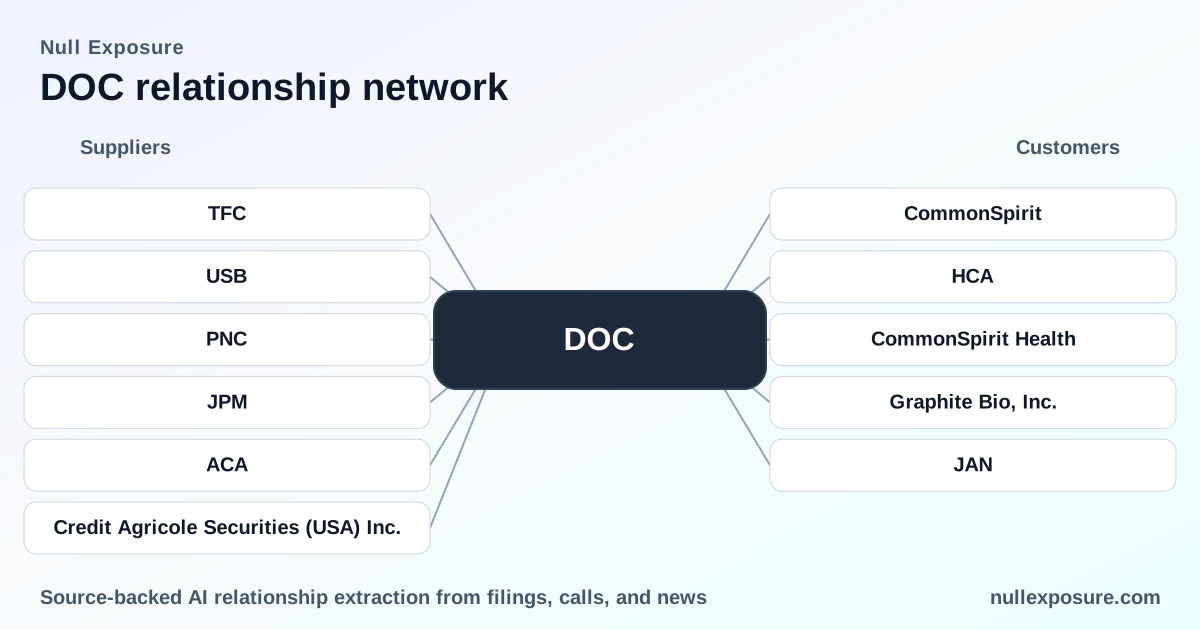
Below are all customer relationships identified in public FY2025 materials and related press summaries, with concise, investor‑oriented takeaways.
-
CommonSpirit — The company is identified in the FY2025 Form 10‑K as one of Healthpeak’s largest outpatient medical tenants; Healthpeak executed an early lease renewal in July 2024 covering approximately 2 million square feet that extended leases to December 2035 and increased contractual escalations. (Source: FY2025 10‑K, Healthpeak Properties; lease renewal disclosed July 2024.)
-
CommonSpirit Health — Healthpeak reports that CommonSpirit represented roughly 6% of outpatient medical segment revenues and about 3% of total revenues for the three and nine months ended September 30, 2025, underscoring the tenant’s materiality to current period cashflows. (Source: company earnings commentary summarized on StockTitan in connection with FY2025 filings.)
-
HCA — The FY2025 10‑K lists HCA as one of the largest outpatient medical tenants, indicating HCA is a core counterparty in Healthpeak’s delivery segment and a meaningful contributor to rental revenue. (Source: FY2025 10‑K, Healthpeak Properties.)
-
HCA Healthcare Inc — The company’s filings repeat HCA Healthcare Inc by name as a largest tenant member for FY2025, reinforcing that HCA’s relationship is recorded at the tenant level across Healthpeak disclosures. (Source: FY2025 10‑K, Healthpeak Properties.)
-
Graphite Bio, Inc. — Healthpeak amended a lease with Graphite Bio in October 2023 for a South San Francisco lab building; Graphite Bio later merged with LENZ Therapeutics in March 2024, and Healthpeak recorded termination‑related income tied to accelerated lease expiration. The company recognized termination fee income of $4 million and $13 million for the three and nine months ended September 30, 2024, respectively, related to the lease modification that accelerated expiration to December 2024. (Source: company 10‑Q and related press summarized on StockTitan, FY2024–FY2025 disclosures.)
-
JAN — In connection with a senior housing transaction, Healthpeak agreed to contribute a 34‑community, 10,422‑unit portfolio and serve as external manager while retaining majority ownership, signaling a hybrid capital/provider relationship that blends asset‑sale economics with ongoing management income. (Source: press release summary on StockTitan, transaction announced in FY2025 commentary.)
-
Janus Living, Inc. — The same transaction is recorded under Janus Living, Inc. nomenclature in disclosure excerpts; Healthpeak’s role—asset contribution, external manager, majority owner—establishes Janus as the operator/customer for that portfolio tranche. (Source: press release summary on StockTitan, FY2025 commentary.)
What the constraints tell investors about business risk
The disclosure set embeds several company‑level signals investors must integrate into valuations and scenario analysis:
-
Long‑term exposure is intentional and material. Healthpeak’s operating model depends on long-term occupancy by healthcare providers; that structural choice delivers rent stability but increases sensitivity to tenant consolidation and policy shifts. (Source: FY2025 10‑K excerpts on outpatient segment risk and lease renewals.)
-
Government payors are a measurable but not dominant counterparty. Medicare accounted for about 3% of total revenues in 2025, signaling modest direct government revenue exposure but important indirect policy risk for tenant economics. (Source: FY2025 10‑K.)
-
Counterparty profile skews to large enterprises. The firm explicitly lists pharmaceutical, biotech, medical device companies, healthcare delivery systems and specialty physician groups as primary customers—an orientation toward large, creditable counterparties. (Source: FY2025 10‑K.)
-
Geographic concentration drives event risk. Approximately two‑thirds of lab assets by gross asset value sit in California, while 69% of life plan community assets are in Florida; those concentrations create regional hazard and regulatory sensitivity. (Source: FY2025 10‑K geographic concentration table.)
-
Healthpeak plays multiple economic roles. The company functions as landlord, service provider/external manager, and sometimes as a seller or buyer in portfolio transactions, creating diversified fee streams but also operational complexity. (Source: FY2025 10‑K excerpts describing property management and transactional activity.)
-
Portfolio performance is currently active and stable. Reported occupancy metrics (mid‑90s for certain segments) underline that the relationships in place are operational and producing rent. (Source: FY2025 operating performance tables.)
If you want a mapped view of these relationships and how they affect counterparty concentration metrics, see the company profile and relationship analytics on our site: https://nullexposure.com/.
Bottom line for investors
Healthpeak’s customer base blends durable cashflow with concentration risk. Large, long‑dated leases with hospital systems and lab operators provide predictable rent streams and support valuation multiple expansion, while the company’s sector and geographic focus require focused scenario testing around tenant credit, reimbursement policy, and regional disruptions. For investors and operators, the key sensitivities are tenant concentration (CommonSpirit and HCA), the lab exposure in California, and the economics of management‑style transactions such as the senior housing contribution to Janus.
For a systematic counterparty view and ongoing updates to these relationships, visit https://nullexposure.com/.