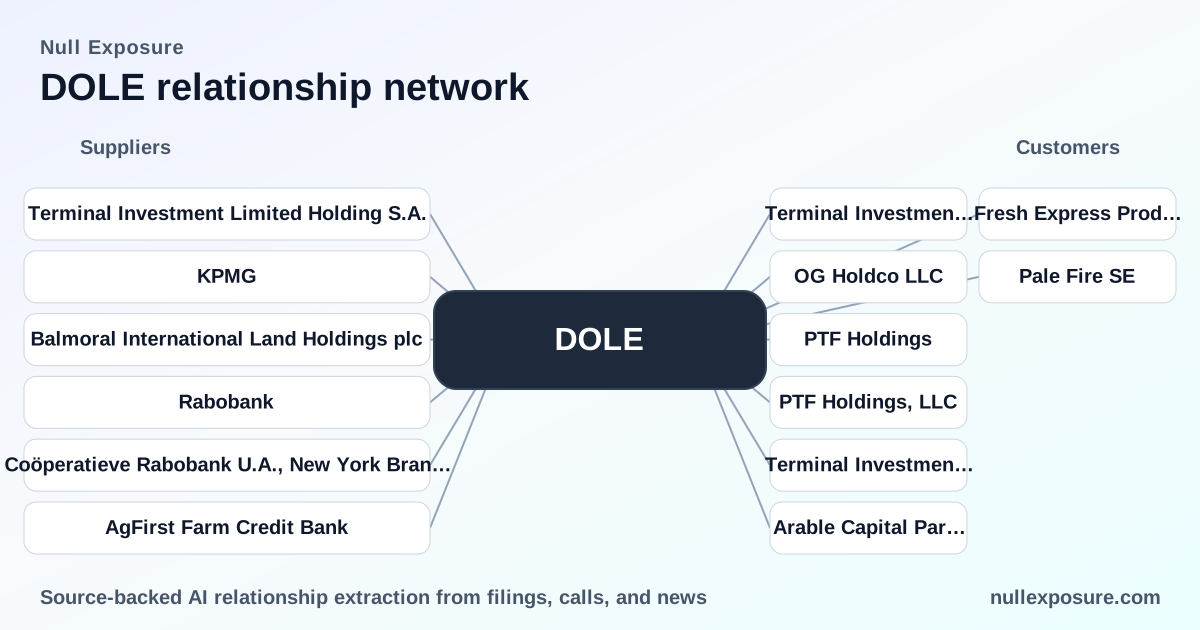
Dole PLC (DOLE) — Customer Relationship Map and Strategic Implications
Dole PLC operates as a global supplier of fresh produce (bananas, pineapples, packaged salads and fresh vegetables) and monetizes through product sales, distribution and branded packaging across retail and foodservice channels, while actively managing its balance sheet through selective divestitures of non-core assets. Recent asset sales and unit divestitures convert operational exposure into liquidity, reduce capital intensity, and materially reshape Dole’s customer and asset footprint. For further proprietary relationship analytics, visit https://nullexposure.com/.
Quick investor thesis: how Dole makes money and why relationships matter
Dole’s core cash generation comes from high-volume fresh-produce sales that rely on integrated sourcing, global logistics and key distribution relationships; margins are thin, so scale and operational efficiency determine profitability. The company increasingly supplements operating cash flow with strategic sales of businesses and property interests, which improves leverage metrics but concentrates remaining volumes into fewer operating units and customer channels. These dynamics make counterparties (buyers of divested assets and tenants/port operators) critical signals for capital redeployment and earnings stability.
Key operating signals investors should track
- Capital recycling: Multiple recent divestitures indicate a deliberate move to monetize non-core assets and sharpen the core produce business.
- Concentration and criticality: Selling entire divisions or port operations shifts counterparty exposure—buyers of those assets will assume operational control and revenue streams formerly under Dole’s umbrella.
- Contract posture: Agreements documented in SEC filings show structured deals (cash, seller notes, earn-outs), revealing Dole’s preference for partial deferred consideration to bridge valuation gaps.
- Maturity of transactions: Transactions were executed through definitive purchase agreements and completed closings during FY2025–FY2026, signaling near-term balance sheet impact rather than long-term contingencies.
How the recent relationships reshape Dole’s customer map
Dole’s FY2025–FY2026 disclosures highlight a run of asset and division sales that transfer customers, terminal operations, and physical capacity to third parties. The following notes cover every relationship referenced in Dole’s recent public filings and press reports.
Terminal Investment Limited Holding S.A.
Dole agreed to sell 100% of the membership interests in its port properties and associated operations in Guayaquil, Ecuador to Terminal Investment Limited Holding S.A.; the transaction is documented in Dole’s filings and disclosed as part of the Port Sale Transaction in FY2025–FY2026. According to Dole’s SEC reporting (Form 6-K and FY2026 10-K disclosures filed in March 2026), the sale transfers port operations and related customer access in Ecuador to Terminal Investment. (Source: Dole SEC filings via StockTitan, March 2026)
Terminal Investment Limited (alternative naming in reports)
Public coverage and Dole’s December 2025 announcement also refer to Terminal Investment Limited in connection with the Guayaquil port sale, citing a purchase price figure reported in market commentary and analyst notes. Market commentary later referenced a $75 million figure for the port operations acquisition. (Source: Dole 10‑K press release and MarketScreener coverage, Dec 2025–May 2026)
OG Holdco LLC
Dole entered into a definitive agreement with OG Holdco LLC to sell its Fresh Vegetables division (the Vegetables Transaction), with the deal structured for approximately $140.0 million in total consideration (about $90.0 million cash, a $50.0 million seller note, and a potential $10.0 million earn‑out). Dole completed the transaction on August 5, 2025, transferring the Fresh Vegetables business and related customer relationships. (Source: Dole FY2026 10‑K / annual report, August 2025)
og Holdco LLC (lower‑case reference in press)
Industry press reiterated the cash component and total consideration for the Fresh Vegetables sale to og Holdco LLC and noted the buyer’s affiliation with organicgirl, confirming the operational handoff to a specialized fresh-vegetable operator. (Source: PerishableNews and sector reporting, August 2025)
Arable Capital Partners, LLC
Arable Capital appears as the private equity sponsor connected to OG Holdco/organicgirl in coverage of the Fresh Vegetables transaction; press reporting framed Arable as the buyer’s backer and described the acquisition as a strategic bolt-on for the sponsor’s portfolio. (Source: PerishableNews coverage of the Vegetables Transaction, FY2025)
PTF Holdings, LLC / PTF Holdings
Dole sold its 65% stake in Progressive Produce to PTF Holdings for gross proceeds of $120.3 million in cash, a transaction that materially reduces Dole’s minority equity exposure in that joint venture and transfers associated customer channels to PTF. The agreement was executed on February 27, 2024 and is disclosed in Dole’s FY2026 filings. (Source: Dole FY2026 10‑K and ThePacker industry reporting, Feb 2024–FY2026)
Fresh Express Produce
Industry reporting referenced Fresh Express Produce in connection with the sale of Dole’s fresh vegetables division—coverage tied the Vegetables Transaction to the broader fresh‑cut and packaged‑salad competitive set and named Fresh Express in related market context. This coverage underscores how Dole’s divestiture reallocates shelf and foodservice relationships among remaining category players. (Source: ThePacker industry article and related press, FY2026)
Pale Fire SE
Dole disclosed that an entity affiliated with Pale Fire SE, a beneficial owner of more than 5% of the company’s ordinary shares, currently leases a property from a Dole subsidiary; this is a contract/real‑estate relationship rather than a product customer, and it links a large shareholder to Dole as a landlord/tenant counterparty. (Source: Dole FY2026 10‑K disclosures, March 2026)
What these relationships imply for investors
- Revenue mix and counterparty migration: The sale of the Fresh Vegetables division and a majority stake in Progressive Produce shifts customers and shelf access to buyers (OG Holdco/PTF Holdings/Fresh Express), reducing Dole’s direct exposure to certain fresh‑vegetable channels while concentrating the company back on core fruit and packaged salad lines. Expect revenue volatility in short term as volumes migrate to buyers and contract transition periods conclude.
- Liquidity and leverage trade: Combined proceeds from these transactions—cash, seller notes and potential earn‑outs—improve near‑term liquidity and de‑risk balance-sheet concentration. Dole is using asset monetization to buy strategic optionality rather than expand operational leverage.
- Operational criticality of port divestiture: Selling the Guayaquil port operations to Terminal Investment transfers a strategically important logistics node; that reduces Dole’s capital intensity but also hands control of a chokepoint to a third party, which is material for distribution dynamics in Ecuador and regional customers.
Constraints and company‑level signals
No customer‑scope constraints were detected in our relationship feed for DOLE; this absence itself is informative—the disclosed relationships are transaction‑driven business events rather than contract disputes or regulatory limitations. Investors should therefore treat the recent filings as strategic portfolio rebalancing rather than remediation actions.
Bottom line and next steps for analysts
Dole’s recent divestitures recast its customer exposures and strengthen liquidity, but they also transfer operating footprints and buyer relationships to third parties, creating short‑term commercial uncertainty and longer‑term clarity about Dole’s focus on fruit and branded packaged items. For detailed, source‑level relationship feeds and ongoing monitoring, see our platform at https://nullexposure.com/.
Key documents referenced: Dole PLC Form 10‑K and Form 6‑K disclosures (filed FY2026 / March 2026), PerishableNews and ThePacker industry coverage, and analyst commentary aggregated on MarketScreener.