BRP Inc. (DOO) — How customer relationships drive product adoption and portfolio focus
BRP Inc. manufactures and sells recreational vehicles, powersports engines, parts and services through a global network of distributors, dealers and specialty operators, monetizing through unit sales, aftermarket parts and branded services. Revenue is driven by product cycles and dealer penetration, while strategic divestitures and targeted OEM/dealer relationships sharpen focus on core growth franchises such as Ski‑Doo, Sea‑Doo and Can‑Am. For a consolidated view of BRP’s customer interactions and transaction history, see https://nullexposure.com/.
Market commentary: BRP combines a capital‑intensive manufacturing model with a distribution posture that depends on franchise dealers, regional distributors and experiential operators. That hybrid commercial footprint produces predictable seasonal revenue and high leverage to product launches and dealer execution, while asset sales in FY2026 signal management is actively pruning non‑core exposure to improve return on capital.
What the relationship map tells investors about BRP’s operating posture
BRP runs a dealer/distributor-first contracting posture: it designs, builds and sells through intermediaries rather than direct‑to‑consumer mass retailing for most markets. This creates reliance on third‑party dealers and regional distributors for critical market access and aftersales service, a structural factor for revenue durability and inventory flow. Institutional ownership is very high (about 93%), which drives disciplined capital allocation and comparatively low stock volatility relative to peers.
Operational signals from the customer list show two concurrent themes in FY2025–FY2026: product ecosystem expansion (electrification pilots with tour operators) and portfolio simplification (asset sales of boat/division businesses). These are strategic levers—one grows core franchise demand and dealer traffic; the other reallocates capital toward high‑margin powersports lines.
Constraints and company‑level signals (what’s relevant to risk and execution)
No explicit contractual constraints are provided in the customer relationship results. At the company level, investors should treat the operating model with these characteristics in mind:
- Contracting posture: Dealer/distributor centric, with select direct relationships for specialized operators.
- Concentration: Broad global dealer base reduces single‑counterparty concentration risk, but high institutional ownership concentrates shareholder influence on strategy and capital allocation.
- Criticality: Dealers and regional distributors are critical for market coverage and aftermarket revenue; operational disruptions at distributor level can interrupt sales and service.
- Maturity: Product portfolio maturity is mixed—legacy ICE franchises show steady cash generation while electrification initiatives are in pilot/early adoption phases, and FY2026 divestitures indicate a tilt toward core businesses.
For a complete listing of customer engagements and transactional headlines connecting to BRP, visit https://nullexposure.com/ to review source links and event timing.
Who BRP is dealing with — relationship snapshots you need to know
Below are all relationships identified in the most recent customer sweep, each with a concise, plain‑English summary and source.
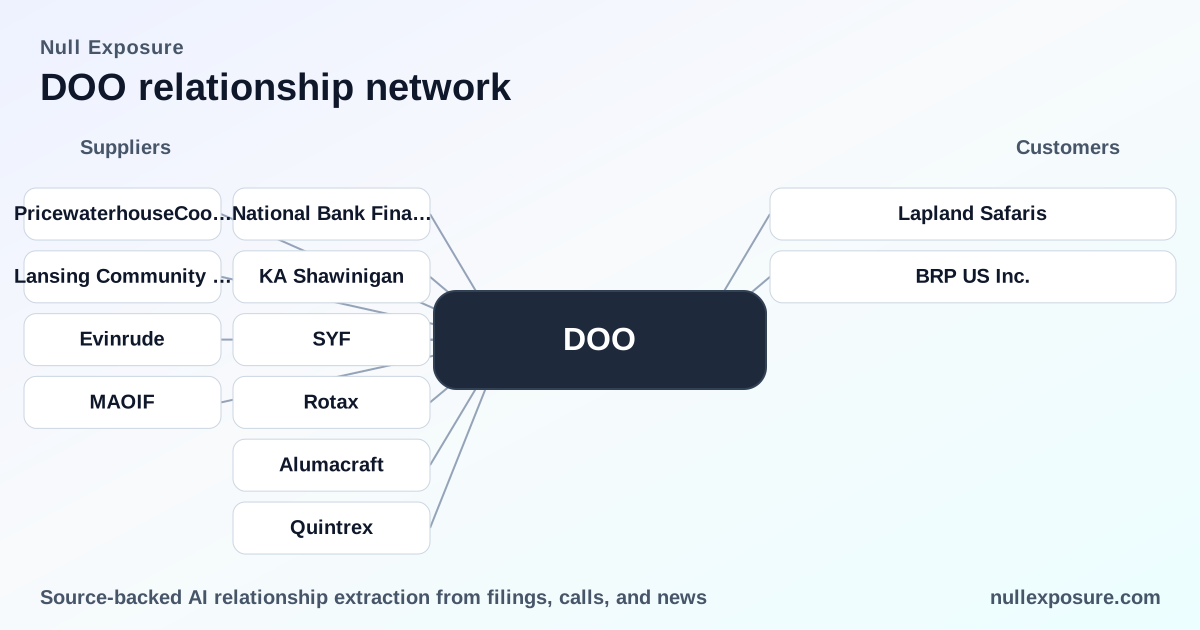
Lapland Safaris — experiential operator receiving pilot electric snowmobiles
BRP is delivering a few hundred electric snowmobiles configured for guided excursions up to 50 kilometres to outfitters such as Lapland Safaris, signaling a targeted roll‑out into the tour/operator channel for electrified vehicles (FY2023 reporting context). Reported by The Globe and Mail (Mar 9, 2026): https://www.theglobeandmail.com/business/article-brp-electric-snowmobiles-off-road/
BRP US Inc. — US distributor cited in recall communications
BRP US Inc., the company’s U.S. distributor based in Sturtevant, Wisconsin, is the named distributor in official recall notices relating to Ski‑Doo and Lynx snowmobiles, highlighting distributor responsibility for safety communications and remediation in the U.S. market (FY2023 context). Reported by Motorsports Newswire (2023 recall coverage): https://motorsportsnewswire.com/2023/09/01/bombardier-recreational-products-brp-recalls-ski-doo-and-lynx-snowmobiles-due-to-fire-hazard/
RDNW (RideNow) — dealer channel recognition and franchise momentum
RideNow’s powersports segment, referenced under ticker RDNW, saw its flagship Chandler, Arizona store recognized as Sea‑Doo Dealer of the Year, reflecting active franchise engagement and dealer execution that supports BRP’s retail presence and brand performance (FY2025). Reported by Powersports Business (Nov 13, 2025): https://powersportsbusiness.com/news/dealers/2025/11/13/ridenows-powersports-segment-returns-to-growth-in-q3-2025/
Bryton Marine Group — buyer of Alumacraft Boat Co (asset sale)
Bryton Marine Group agreed to acquire Alumacraft Boat Co from BRP, a FY2026 transaction that illustrates BRP’s strategic divestiture of non‑core marine assets to refocus on powersports. Reported by Simply Wall St (Apr 2, 2026): https://simplywall.st/stocks/ca/consumer-durables/tsx-doo/brp-shares
Marcott Family — acquirer of Manitou assets in Michigan
The Marcott Family entered a definitive agreement to acquire Manitou assets in Lansing, Michigan from BRP, another FY2026 transaction demonstrating the company’s disposal of selected assets and regional operations to private buyers. Reported by Simply Wall St (Jul 9, 2026 context in FY2026 summary): https://simplywall.st/stocks/ca/consumer-durables/tsx-doo/brp-shares
Yamaha Motor Australia Pty. Ltd. — purchaser of Telwater Pty. Ltd.
Yamaha Motor Australia agreed to acquire Telwater Pty. Ltd. from BRP, an FY2026 sale that transfers regional marine capability to a strategic industry buyer and reduces BRP’s exposure to certain recreational marine markets. Reported by Simply Wall St (Apr 2, 2026): https://simplywall.st/stocks/ca/consumer-durables/tsx-doo/brp-shares
Investment implications and near‑term monitoring points
BRP’s customer footprint blends pilot customers (tour operators) that validate new technology with a broad and recognized dealer base that drives recurring aftermarket revenue. At the same time, FY2026 divestitures of Alumacraft, Manitou assets and Telwater are deliberate capital‑allocation moves that reduce non‑strategic complexity and concentrate management effort on higher‑return franchises.
Key investor takeaways:
- Electrification pilots with operators like Lapland Safaris are commercially meaningful early signals of product acceptance in niche, experience‑based channels.
- Distributor and dealer execution remain mission‑critical; recall incidents routed through BRP US Inc. underline operational risk in aftermarket safety and warranty exposure.
- Divestitures strengthen balance sheet focus and indicate management preference for capital redeployment into core powersports lines.
- Institutional ownership concentration suggests strategic continuity and governance discipline, which supports a steady course on asset rationalization.
For analysts and operators building operating models, track uptake of electrified SKUs among dealers, dealer inventory turns, and the timing of proceeds and redeployment from FY2026 asset sales. For a compact, source‑linked view of these customer ties and transactions, visit https://nullexposure.com/.
Bottom line
BRP’s commercial model remains anchored to a global dealer and distributor network that converts product innovation into customer revenue, while FY2026 transactions show decisive portfolio streamlining. Electrification pilots and disciplined divestitures are the twin operational narratives for BRP going into the next fiscal cycle, and investors should prioritize dealer adoption rates, dealer profitability trends, and remediation costs related to recalls when assessing near‑term performance.