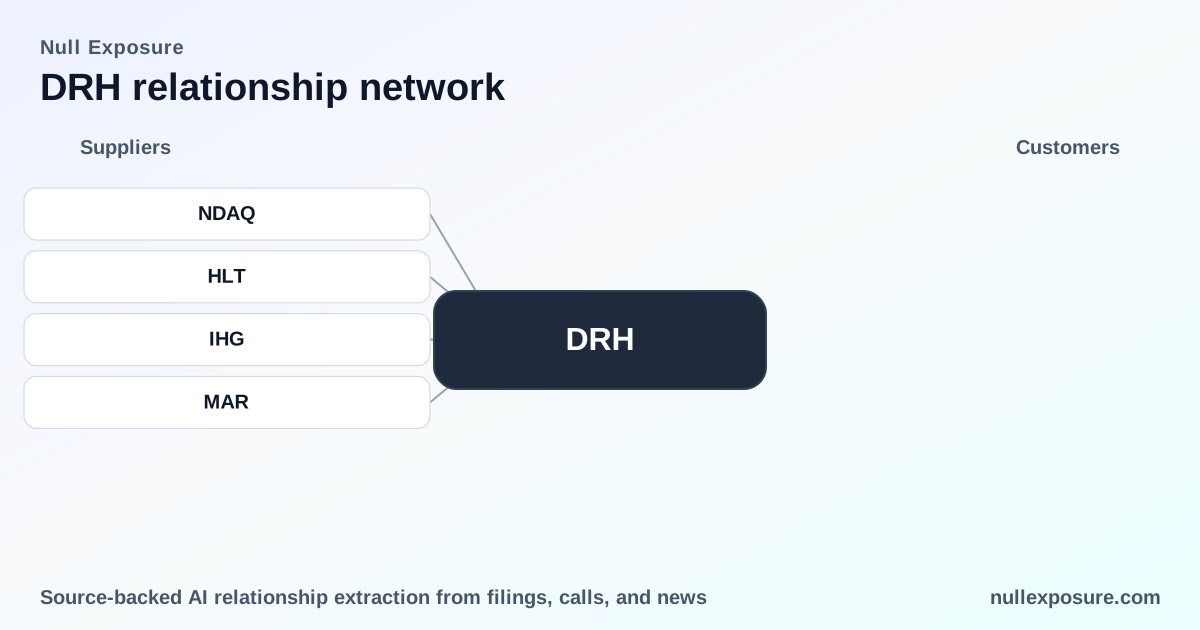
DiamondRock Hospitality (DRH): Portfolio economics, asset recycling, and what the Westin sale signals to investors
DiamondRock Hospitality is a self-advising real estate investment trust that owns and operates a geographically diversified portfolio of upper-upscale and luxury hotels, monetizing through room revenue, food & beverage and ancillary guest services, plus periodic asset dispositions and recaps. The company generates operating cash flow from hotel operations and supplements returns through asset recycling—selling properties when cap-rate dynamics or portfolio strategy warrant—and retains strategic control by managing its own properties. For more background on DRH’s positioning and relationship intelligence, see https://nullexposure.com/.
How DRH makes money and the shape of the business model
DiamondRock runs a classic hospitality REIT model with an operating tilt. The company reports a single segment—hotel ownership—focusing on upper upscale and luxury chain-scale properties that offer rooms, F&B and other guest services, which is where the bulk of cash flow originates. According to company disclosures as of December 31, 2024, DRH owned 37 hotels with 10,004 rooms across 26 U.S. markets, giving the trust national scale while targeting major gateway and resort locations. Financial scale is material: Revenue TTM roughly $1.12bn and EBITDA about $281m (latest company figures through 2026-Q1).
This structure creates a mixed earnings profile:
- Reliable base income from occupancy and ADR in core markets balanced against cyclical sensitivity to travel demand.
- F&B and ancillary services provide margin uplift but are operationally intensive.
- Asset sales and portfolio rotation serve as an important cash-management and returns lever—sales can unlock value when local market dynamics or cap-rate differentials are favorable.
The Columbia Sussex / Westin Washington transaction — plain facts
DiamondRock sold the 410-room Westin Washington, D.C. City Center for $92 million; CoStar reported that buyer Columbia Sussex added the asset to its portfolio of more than two dozen hotels. The sale was disclosed by DiamondRock in May 2026 and covered in Hotel Dive with CoStar attribution. (Hotel Dive, May 2, 2026; CoStar reporting).
Why the Westin sale matters for investors
The disposition confirms that DiamondRock actively recycles assets to optimize its portfolio composition and liquidity. The $92 million sale of a flagship 410-room urban property illustrates the company's willingness to monetize mature or non-core assets in major gateway markets to redeploy capital or shore up balance sheet flexibility. Company filings and market reports show this is an intentional element of DRH’s playbook rather than an ad hoc response.
Operating constraints and what they indicate about DRH’s contracting posture and risks
Two company-level signals matter for how investors should view DRH’s customer and partner relationships:
- Geography and market concentration: the company’s disclosure that it held 37 hotels in 26 U.S. markets is a signal of geographic diversification within the U.S., but concentration within major entry and resort markets. That profile reduces single-market concentration risk but increases exposure to cyclical demand in large gateway cities and destination resorts where ADR and occupancy volatility drives earnings.
- Segment focus and operational intensity: DRH’s single reportable segment—hotel ownership comprising upper-upscale and luxury chain-scale hotels offering rooms, F&B and ancillary services—is a signal that the firm’s contracts and customer relationships are service-heavy and operationally critical. Hotel operations are mission-critical for cash generation, requiring active asset management, brand relationships, and operational capabilities rather than passive leasing models.
From these signals you can derive practical characteristics of the business model:
- Contracting posture: active, self-managed; DRH is self-advising and retains operational control rather than outsourcing strategic management to third-party REIT managers.
- Concentration: diversified by market count but focused on premium gateway and resort assets, implying revenue sensitivity to leisure/business travel cycles and local demand shocks.
- Criticality: high, since hotel operations directly generate the cash flows used to service debt and pay dividends.
- Maturity: established, reflected in a multi-year portfolio and regular asset sales such as the Westin disposition.
Relationship-by-relationship review (what’s in the public record)
- Columbia Sussex — DiamondRock sold the Westin Washington, D.C. City Center (410 rooms) for $92 million; CoStar reported Columbia Sussex as the buyer and Hotel Dive summarized the transaction in early May 2026. (Hotel Dive, May 2, 2026; CoStar reporting).
These public relationships are meaningful because asset buyers and disposals are direct expressions of DRH’s capital allocation strategy: they show how counterparty interaction—sales counterparties, franchise and brand partners, and management vendors—feed into portfolio returns and balance sheet decisions.
Risks and operational watch items for investors
- Demand cyclicality in gateway and resort markets creates earnings volatility; occupancy and ADR swings materially affect margins.
- Execution risk on operations is real because DRH runs its own platform; operational missteps hit cash flow directly.
- Capital allocation discipline is crucial; the company relies on asset sales and refinancing to manage leverage and fund dividends, so timing and pricing of dispositions matter.
- Counterparty concentration in brand and management relationships (brands, franchise agreements, large buyers) can be a source of operational leverage or dependency; monitor changes in major brand terms or buyer pricing.
Bottom line and next steps for investors
DiamondRock is a self-advising, operationally intensive hospitality REIT that monetizes through hotel operations and strategic asset recycling. The sale of the Westin Washington to Columbia Sussex is a concrete example of asset rotation in action and underscores DRH’s dual revenue model: operational cash generation plus opportunistic dispositions. Key investor focus should be on occupancy/ADR trends in gateway markets, the timing and economics of asset sales, and operational execution across the portfolio.
For a centralized view of DRH customer relationships and ongoing transaction intelligence, visit https://nullexposure.com/. For deeper relationship analytics and trend tracking across hospitality counterparties, Null Exposure provides consolidated reporting tailored to institutional research needs.