Driven Brands (DRVN): Franchise-led automotive services with platform monetization and long-term cash flow
Driven Brands operates a highly franchised automotive services platform that monetizes through a mix of franchise license and royalty fees, recurring platform services (parts, supplies, training), and company-operated retail sales; the company extracts recurring economics from long-term franchise contracts while also leveraging distribution and real estate arrangements to optimize capital deployment. For investors, the thesis is straightforward: scale and predictability come from a diversified, franchise-heavy model that converts network density into steady platform revenues and high-margin services, with real estate and carve-outs used tactically to reallocate capital. Learn more about our coverage at https://nullexposure.com/.
Market context and what matters to investors
- Driven Brands reports approximately 5,200 locations across 49 U.S. states and multiple international markets, generating about $2.44 billion in system-wide revenue (TTM) and $388 million of EBITDA on a trailing basis, indicating material scale in auto services.
- The corporate model combines three durable cash engines: franchise royalties/licensing, platform services (procurement, training, distribution) and direct services (company-owned stores, maintenance and collision work). Each revenue stream has different margin profiles and working capital needs, which affects capital allocation decisions and the attractiveness of sale-leaseback or divestiture transactions.
- Contracting posture is generally long-term and franchisor-anchored: franchise rights are granted typically for five to 20 years and platform offerings (e.g., training) are sold on multi-year subscription-like arrangements, creating predictable revenue backstops for investors.
How Driven Brands’ relationships and contracts shape cash flow Driven Brands’ operating model is driven by contractual characteristics and counterparty mix as much as it is by brand recognition. Company-level signals from public filings and segment descriptions reveal a consistent set of operating constraints and strengths:
- Long-term franchise agreements and licensing economics produce durable royalty and license fee streams; upfront license fees are collected at opening but most franchise fees and consulting payments are recognized over the life of the agreement.
- Subscription-like revenue from multi-year training packages and platform services enhances recurring revenue and customer stickiness.
- Counterparty diversity includes small businesses, fleet accounts and government customers, creating a mix of high-volume retail traffic and institutional commercial relationships.
- The business is North America-centric—the majority of revenues are U.S.-based—while retaining international exposure that the company has shown a willingness to rationalize for strategic focus.
- Role diversity across the business is notable: Driven Brands acts as licensor, seller (company-operated retail), and service provider (platform services and training), which increases cross-selling opportunities but also concentrates operational dependencies on distribution and training systems.
- Most relationships are active and operational, with the company reporting thousands of franchised and company-owned locations at the end of the most recent fiscal year.
- Segment exposure is split between services (maintenance, collision, car wash) and distribution (platform services and supply chain)—this combination supports both high-frequency retail revenue and higher-margin B2B offerings.
Notable counterparties and recent transaction activity Below I cover every relationship surfaced in the public results and explain their investor relevance.
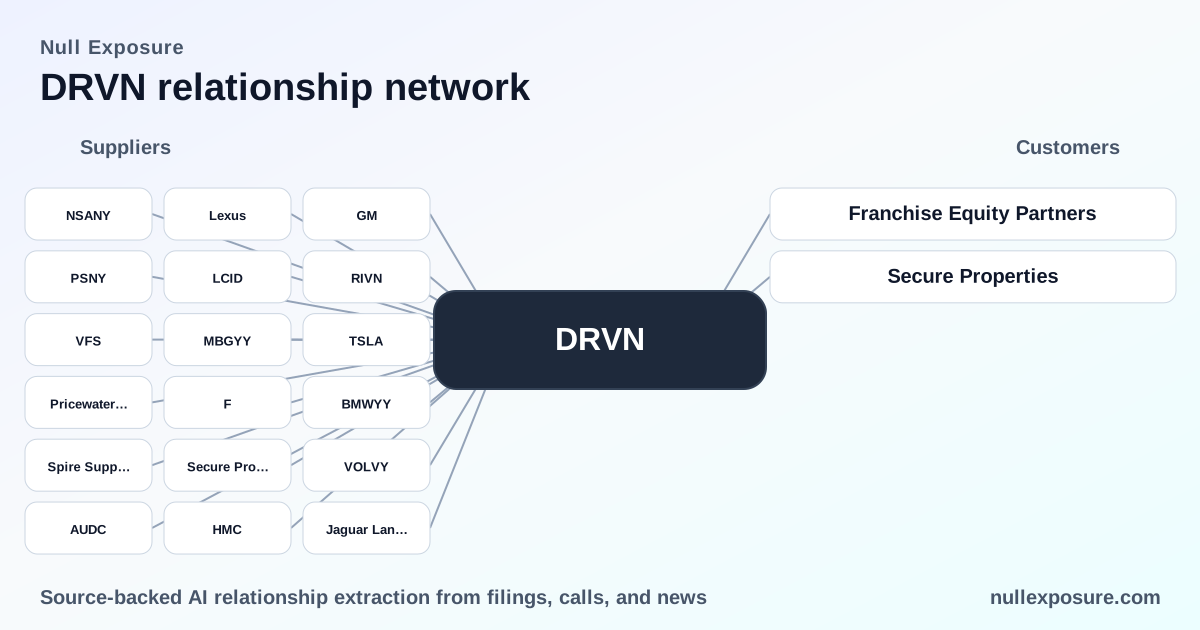
Franchise Equity Partners Driven Brands completed the divestiture of its international car wash business, IMO, to Franchise Equity Partners as part of a strategic refocus on core North American operations. According to an Ad-Hoc News release on March 9, 2026, the transaction represents a deliberate move to concentrate capital and management attention on the franchised platform and U.S.-centric services where margins and scale benefits are strongest (Ad-Hoc News, March 9, 2026: https://www.ad-hoc-news.de/boerse/news/ueberblick/driven-brands-sharpens-focus-with-major-international-divestiture/68548725). Takeaway: this divestiture reduces international operational complexity and frees capital for higher-return initiatives within the North American footprint.
Secure Properties Secure Properties acquired a 15-property Take 5 oil change portfolio in a sale-leaseback transaction with Driven Brands, reflecting the company’s ongoing use of real estate monetization to manage capital intensity. A StockTitan report noted the deal date of December 30, 2025, outlining the transfer of property ownership while preserving Driven Brands’ operating presence through lease arrangements (StockTitan / December 30, 2025: https://www.stocktitan.net/news/DRVN/driven-brands-holdings-inc-to-host-fourth-quarter-and-year-end-1ak1abfezcae.html). Takeaway: sale-leaseback activity signals active balance-sheet management—liberating cash while retaining operational control as a tenant.
How these relationships inform investment risk and upside
- Capital allocation discipline: The divestiture of IMO and targeted sale-leasebacks show management’s willingness to monetize non-core assets and free cash for EBITDA-accretive uses or debt reduction. That supports a thesis of improved returns if proceeds are allocated to higher-margin segments or franchise growth.
- Contract longevity and revenue visibility: Long-term franchise terms (5–20 years) and subscription-style platform services create a predictable revenue base that is resilient to single-location churn—this lowers operating volatility for investors.
- Concentration and counterparty exposure: While the business is diversified across brands and services, performance is still sensitive to U.S. vehicle miles traveled and discretionary maintenance cycles; government and fleet accounts provide partial cyclicality hedges, but the core retail franchise base links revenue to consumer behavior.
- Operational criticality of platform services: Platform services—distribution, training, and procurement—are strategically critical to franchisee economics; disruption or underinvestment in these capabilities would have outsized effects on franchisee retention and unit-level throughput.
Final view and what to watch Driven Brands trades as a scale-centric operator that converts franchising and platform services into recurring cash generation. Investors should watch three vectors closely:
- Execution of capital redeployment from divestitures and sale-leasebacks into organic unit growth or margin-improving initiatives.
- Franchise unit economics and renewal activity across the core U.S. network, given the long-term contract structure.
- Health of platform services revenue and margins, since these are both a growth lever and a differentiator in a fragmented services market.
For a concise look at broader customer relationships and commercial signals across the sector, visit https://nullexposure.com/.
Bold takeaway: Driven Brands is a franchisor whose monetization relies on long-dated franchise contracts, recurring platform services, and tactical real estate transactions—this combination supports predictable cash flows while offering optionality through strategic divestitures.