DSACW: Sponsor-Backed SPAC Warrant with Direct Sponsor and Underwriter Tie-Ins
Daedalus Special Acquisition Corp. Warrant (DSACW) is a SPAC warrant instrument tied to a blank-check vehicle that raises capital through an IPO and private placements, with value driven by the sponsor’s ability to source and complete a business combination. The company monetizes by underwriting and escrow mechanics typical of SPACs: public unit proceeds sit in trust while sponsor economics (private units and promote) and warrant dilution determine post-merger investor outcomes. Sponsor support and the underwriter syndicate's involvement are the principal operational levers for value realization. For supplemental detail on related market coverage and signals, visit our homepage: https://nullexposure.com/.
Quick read: how DSACW’s customer relationships inform investment decisions
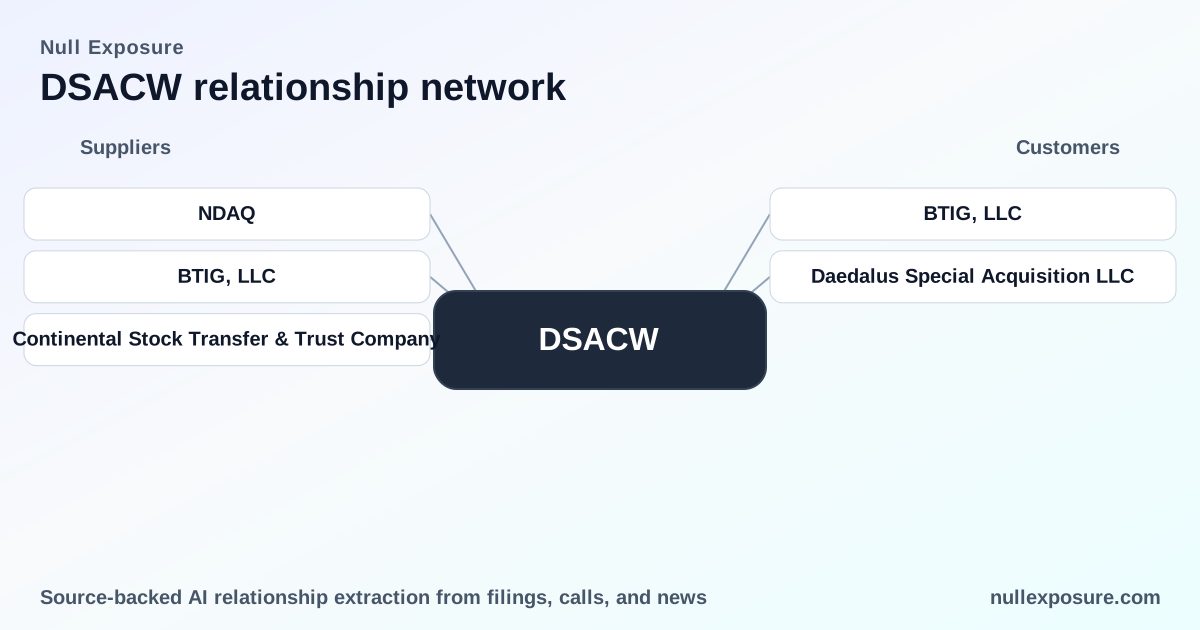
DSACW’s publicly recorded counterparties in the IPO/private placement process are concentrated and strategic: the sponsor (Daedalus Special Acquisition LLC) and the underwriting representative (BTIG, LLC). These relationships are highly material to the SPAC’s capital structure and sponsor economics because they determine initial unit allocation, promote, and the degree of sponsor-aligned risk capital. The two documented counterparties indicate low counterparty breadth but high counterparty importance, consistent with typical SPAC operating structures.
What the filings reveal about counterparties and execution
The SEC filing disclosed in March 2026 around the $250 million IPO and associated private placement shows two explicit transaction counterparts: the sponsor and the underwriter representative. These entries are not customers in the classic revenue-generating sense; they are structural counterparties that shape how equity and warrant economics are distributed.
Daedalus Special Acquisition LLC — sponsor purchasing private units
Daedalus Special Acquisition LLC, the sponsor, purchased private units in the offering, reflecting direct sponsor capital commitment and alignment with public investors through ownership of the promote and other sponsor economics. According to an Investing.com summary of the SEC filing for the FY2025 $250 million IPO and private placement (reported March 9, 2026), the sponsor was a purchaser of private units in the transaction. This is a standard SPAC sponsorship structure that concentrates economic upside and execution risk in sponsor hands.
BTIG, LLC — underwriter representative and private purchaser
BTIG, LLC acted as the representative of the underwriters and purchased private units in the offering, indicating that the underwriting syndicate had a meaningful allocation role and that BTIG carried representative responsibilities during the deal placement. The same Investing.com report on the SEC filing (March 9, 2026) names BTIG as the underwriter representative and purchaser of private units. Underwriter involvement in private placements signals institutional distribution channel strength and a conventional underwriting posture.
Operational and business-model constraints inferred from the record
No explicit constraints were recorded in the relationships dataset, so the following are company-level signals derived from the transaction structure rather than discrete constraint excerpts.
- Concentration of counterparties: The documented counterparty set is small and concentrated—primarily the sponsor and an underwriter representative—typical of SPAC structures. This produces a contracting posture where a few parties exert outsized influence over deal economics and governance.
- Contracting posture and alignment: Sponsor purchase of private units reflects strong sponsor alignment with public holders on completing a transaction; however, it also concentrates downside and upside in sponsor-managed vehicles.
- Criticality and maturity: The relationships documented are structural (sponsorship and underwriting) rather than commercial customers. That makes them critical to the SPAC’s lifecycle (capital raise, trust governance, and post-merger dilution) but not indicative of operating revenue streams or recurring cash flows.
- Concentration risk and execution dependence: Given the small set of counterparties, DSACW’s future valuation and liquidity profile are materially dependent on sponsor execution and the syndicate’s ability to place subsequent securities or negotiate a merger.
Why these relationships matter to investors and operators
- Sponsor participation is a primary value signal. Sponsor purchase of private units demonstrates the sponsor is financially invested in the SPAC’s success and will drive deal sourcing and negotiation. That alignment reduces some execution risk but concentrates governance decisions.
- Underwriter representation provides distribution capability. BTIG’s role as representative indicates access to institutional channels that facilitate aftermarket liquidity and potential follow-on transactions, which influences warrant pricing and marketability.
- Lack of broader customer relationships signals zero operating revenue exposure. DSACW is a warrant tied to a SPAC with no standalone operating business; investors must evaluate sponsor capability, underwriting relationships, and trust-level cash rather than traditional revenue metrics.
Risks and what to watch next
- Sponsor concentration risk: Sponsor control over private units and promote creates asymmetric outcomes for public warrant holders if sponsor incentives diverge from public investor interests.
- Execution risk on business combination: Success depends on the sponsor identifying a target and completing a deal within the SPAC window; underwriter support is helpful but not determinative.
- Liquidity and market perception: Warrant instruments trade on market sentiment toward the SPAC’s pipeline and execution track record; underwriter representation supports distribution but does not guarantee favorable deal economics.
Practical takeaways for due diligence
- Evaluate the sponsor’s track record and capital commitment; sponsor private-unit purchases are an explicit signal of alignment and concentrated economic exposure.
- Monitor underwriter engagement in any follow-on financing or PIPEs, given that underwriting relationships affect execution flexibility and pricing for a potential merger.
- Treat DSACW as a structurally-driven instrument: value is contingent on sponsor execution, underwriting distribution, and trust mechanics—not operating revenue metrics.
For an expanded view on counterparty intelligence across SPAC instruments, visit our research hub at https://nullexposure.com/.
Final appraisal
DSACW’s public record confirms two determining counterparties: the sponsor (Daedalus Special Acquisition LLC) and BTIG, LLC as underwriter representative—both purchasers in the IPO/private placement that established the SPAC’s initial economic structure. These relationships are concise but decisive: they determine sponsor alignment, underwriting reach, and ultimately the avenues available for liquidity and deal execution. Investors should prioritize sponsor track record and underwriter engagement as the principal drivers of DSACW warrant value.