DTE Energy: Monetizing Michigan demand through large-scale data‑center supply contracts
Thesis: DTE Energy operates as a regulated utility and merchant energy developer that monetizes through regulated electricity and gas distribution plus large-scale commercial supply contracts and behind‑the‑meter infrastructure investments. The core business generates predictable regulated cash flow, while incremental upside comes from multi‑gigawatt data center supply agreements and associated generation/storage buildouts that drive capital deployment and contracted revenue. Explore the underlying customer signals and relationships at https://nullexposure.com/.
Business model and operating posture DTE’s balance is classic utility plus developer: the regulated Electric and Gas segments provide stable, usage‑based revenue to ~3.6 million customers in Michigan, while DTE Vantage and project teams win bespoke, higher‑margin commercial contracts that require capital-intensive buildouts (generation, solar, BESS) and long contract tenors. The company explicitly sells both cancellable, short‑term supply and long‑term fixed arrangements; it also recognizes point‑in‑time sales for commodity products. These characteristics create a hybrid contracting posture:
- Contracting posture: mix of long‑term, usage‑based, and cancellable contracts—long tenors where customers fund dedicated infrastructure; cancellable contracts for general supply.
- Concentration & criticality: geography is concentrated in Michigan, and certain hyperscale customers are system‑critical given multi‑GW load and the capital required to interconnect and maintain grid reliability.
- Maturity & stage: regulated core is mature and stable; large hyperscale projects are active and driving near‑term capital deployment and regulatory filings.
- Counterparty mix: dominated by individual residential/commercial ratepayers for core distribution, with an expanding cohort of large corporate customers for bespoke energy services.
For a deeper read on how these relationship signals are surfaced, visit https://nullexposure.com/.
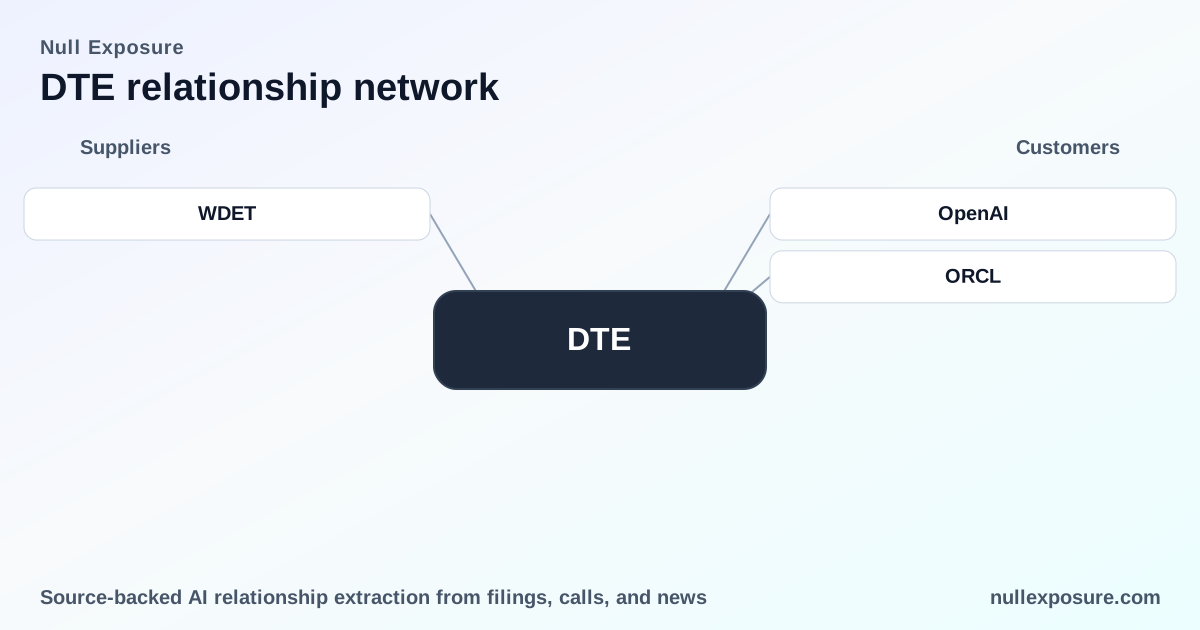
Relationship roll‑call: who DTE is supplying and contracting with Below are the customer relationships captured in recent coverage; each entry is a concise, plain‑English summary with source context.
Google (GOOGL)
DTE has filed a Primary Supply Agreement to power a planned 1‑GW Google data center using new solar generation and up to 480 MW of battery storage, and management has submitted the project to regulators for approval. According to Utility Dive and other reporting in May 2026, the Google contract includes minimum monthly charges and a separate renewables/storage acceleration agreement that underpins investment. (Utility Dive, May 2026; MarketBeat instant alert, May 2026)
Oracle (ORCL)
DTE is committed to supply a 1.4‑GW Oracle data center currently under construction in Saline Township, and the company disclosed that this project—along with other pipeline opportunities—could drive material annual revenues and billions in incremental generation/storage investment through 2032. Management quantified potential customer affordability benefits and sizeable capital deployment tied to the Oracle relationship during Q1 2026 commentary. (MarketBeat instant alert, Apr–May 2026; Utility Dive, May 2026)
OpenAI
Public filings and regional press indicate DTE is engaged to provide power for a planned hyperscale OpenAI facility in Saline Township that is part of the same development footprint being marketed by Related Companies. DTE referenced its role in securing agreements to serve Oracle and OpenAI during regulatory and earnings discussions in early 2026. (Michigan Advance and Yahoo News coverage, Mar 2026)
Related Digital (developer for Related Companies project)
DTE will supply all power for a data center campus developed by Related Digital in Saline Township, a campus reportedly built for Oracle and augmented by battery storage, reflecting a developer–utility execution model where DTE supplies, owns, or operates the necessary energy infrastructure. (IndexBox blog coverage referencing filings, May 2026)
Green Chile Ventures
State regulators provided conditional approval to contracts between DTE and Green Chile Ventures—identified in reporting as an Oracle subsidiary—to supply power to the facility; the relationship was the subject of political scrutiny and public commentary in spring 2026. (Michigan Advance, Apr 2026)
How these relationships move the needle These customer contracts are not incremental commodity sales; they are load‑defining, infrastructure‑driving agreements that create multi‑year revenue visibility and justify accelerated capital expenditure on generation and storage. Management’s statements in Q1 2026 quantify the pipeline as multiple gigawatts of committed and prospective projects, and they estimate projects could translate to roughly $5 billion of incremental generation/storage investment through 2032. (MarketBeat instant alert, Apr–May 2026)
Risks and structural constraints investors should price
- Regulatory sensitivity: Major contracts require Public Service Commission filings and approvals, and political pushback (rate‑pause debates cited in Michigan press) can alter timing and cost recovery mechanics. (Detroit News; WZZM13; Michigan Advance, Feb–May 2026)
- Geographic concentration: Michigan‑centric operations mean DTE’s industrial upside is regionally correlated; outages or permitting setbacks in the state have outsized financial impact. (Company filings summarized in constraint signals)
- Contract mix: Company disclosures show a mix of long‑term dedicated contracts (20‑year examples in industrial projects) alongside cancellable supply and spot transactions—investors should model both stable regulated cash flow and lumpy project revenue and capex. (Company annual disclosures; constraints evidence)
Company‑level signals from constraint analysis The corporate constraint evidence collectively points to a hybrid model: long‑term contracts exist for bespoke, capital‑intensive projects, while much of retail and commercial supply remains cancellable or usage‑based; spot sales occur for specific commodity product lines. The firm is primarily a seller of electricity and gas, serves individual residential/commercial customers at scale, and maintains North American (Michigan) geographic concentration. Financing receivables are reported as immaterial as of year‑end 2024, which supports balance sheet resilience while the company executes a stepped‑up capex agenda.
Final read for investors DTE balances utility reliability with developer upside. The recent data‑center wins with Google, Oracle (and related parties including OpenAI and Green Chile Ventures) convert latent pipeline into regulated and contractually supported load, providing a pathway to higher asset base and clarified earnings growth—subject to regulatory approval and execution risk. Key investor decision points are regulatory outcomes, capex cadence, and the company’s ability to secure cost recovery without shifting burdens onto residential ratepayers.
For prioritized exposure analysis and to monitor regulatory filings and project status in real time, visit https://nullexposure.com/.