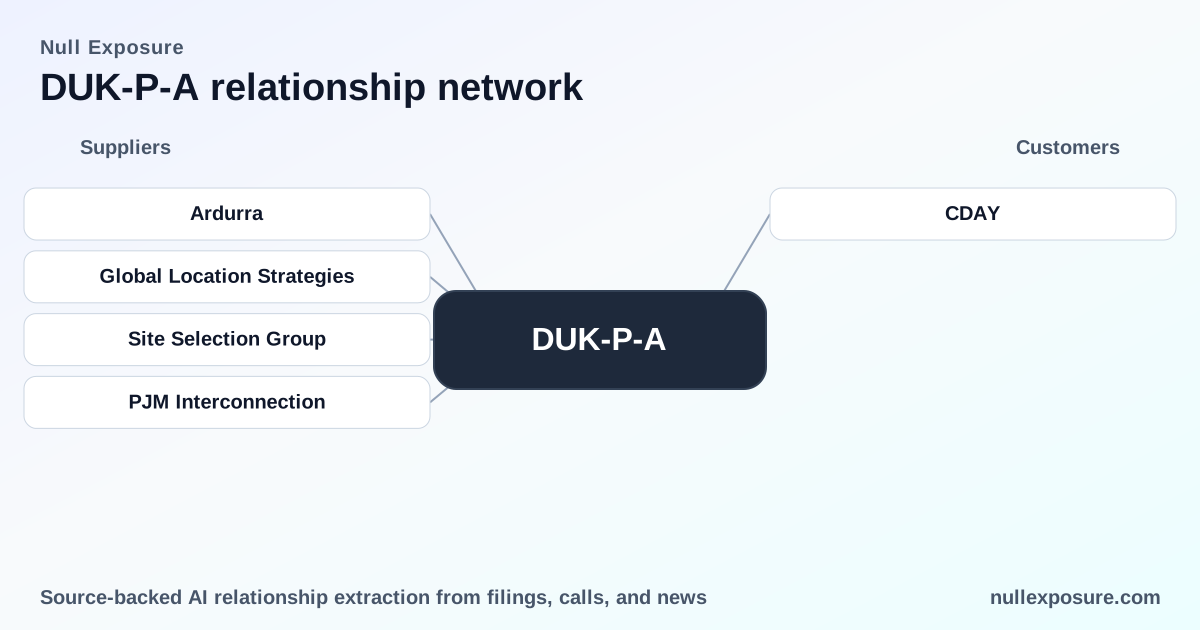
Duke Energy (DUK-P-A): customer map and what it tells investors
Duke Energy operates as a large, regulated electric and natural gas holding company that monetizes through rate-regulated utility revenues, wholesale power sales, and long-term infrastructure investment. For holders of DUK-P-A depositary/preferred shares, the stability of cash flows ties directly to the company’s regulated customer base and its ability to execute capital projects while managing operational and regulatory risk. Explore the full counterparty map and analytic feed at https://nullexposure.com/ for context and ongoing updates.
Why counterparty relationships matter for preferred shareholders
Preferred security holders prize predictable dividends and downside protection. Customer relationships reveal where Duke’s revenue is concentrated, how critical its delivered services are to local institutions, and which strategic partnerships shape future capital deployment. Public press and trade reporting expose both everyday operational work—new substations and grid upgrades—and strategic engagements in advanced nuclear development that alter the company’s long-term capital profile.
Counterparties cited in recent reporting — one-by-one
Below are every relationship flagged in the collected results, with a concise plain-English summary and the original reporting source.
PacifiCorp
Duke is active in advisory and operational roles alongside PacifiCorp on the TerraPower/GE Hitachi Natrium advanced reactor project, providing siting, licensing, operational and training expertise. Source: Power Magazine (May 2026).
Bayfront hospitals
Duke Energy Florida’s new Bayboro GIS substation in St. Petersburg is designed to support critical infrastructure including Bayfront hospitals, improving local resiliency and reducing outage risk for these medical centers. Source: Daily Energy Insider (Nov. 29, reported May 2026).
Tropicana Field
The Bayboro substation will support Tropicana Field as part of the power needs for downtown St. Petersburg, indicating Duke’s role in supplying major venue and municipal demand centers. Source: Daily Energy Insider (Nov. 29, reported May 2026).
University of South Florida’s St. Petersburg campus
Duke’s Bayboro substation explicitly lists the USF St. Petersburg campus among critical customers that benefit from the upgrade, underscoring municipal and education-sector exposure. Source: Daily Energy Insider (Nov. 29, reported May 2026).
All Children’s Johns Hopkins
The same Bayboro substation upgrade is cited as supporting All Children’s Johns Hopkins, highlighting Duke Energy Florida’s service to high-criticality healthcare loads. Source: Daily Energy Insider (Nov. 29, reported May 2026).
Orano
Duke participates in the TerraPower/GE Hitachi Natrium consortium together with Orano, signaling collaboration with nuclear fuel and services providers as part of advanced-reactor efforts. Source: Power Magazine (May 2026).
Rocky Mountain Power
Rocky Mountain Power is listed as a collaborator in the advanced reactor program, showing Duke’s cross-utility partnership network for future generation technology. Source: Power Magazine (May 2026).
TerraPower
Duke provides advisory and operational support to TerraPower on the Natrium advanced reactor project, reflecting an active strategic interest in next‑generation nuclear technologies. Source: Power Magazine (May 2026).
Bechtel
Bechtel appears as a technical and construction partner in the Natrium initiative, placing Duke within a consortium that blends utility operational expertise with large-scale project delivery capability. Source: Power Magazine (May 2026).
Energy Northwest
Energy Northwest is another consortium partner on the advanced reactor project, showing multi-jurisdictional collaboration across public and private generation organizations. Source: Power Magazine (May 2026).
GE Hitachi
GE Hitachi is identified as a technology partner on the Natrium program; Duke’s advisory role with GE Hitachi ties it to major reactor technology suppliers. Source: Power Magazine (May 2026).
Ceridian
Local real estate/campus history reporting notes that an on-campus facility was once sold to ABR (which later became Ceridian) before changing hands again, reflecting Duke’s historical real‑estate and service footprint in some communities. Source: ilovetheburg.com (March 2026).
CDAY
A duplicate listing for CDAY (Ceridian’s ticker) confirms the same transaction context referenced above; the inclusion underscores that local asset ownership and corporate tenants have intersected with Duke’s service territory. Source: ilovetheburg.com (March 2026).
Centrus Energy Corp
Centrus Energy Corp is named among participants in the advanced reactor consortium, indicating Duke’s interactions with fuel-cycle and supply-chain firms as it evaluates future nuclear options. Source: Power Magazine (May 2026).
(If you want a consolidated visual of these links mapped to operating units and rate territories, see the interactive view at https://nullexposure.com/.)
What these relationships reveal about Duke’s operating model
These counterparty items collectively point to several company-level operating characteristics:
- Capital-intensive, long-duration contracting posture. Duke’s participation in multi‑firm reactor projects and construction of GIS substations reflect investments with long lead times and sustained operational commitments.
- High criticality of services. Frequent mentions of hospitals, universities and major venues show that Duke’s customer base contains high‑priority, high‑consequence loads where reliability directly affects public services.
- Broad partner network across public and private utility actors. Engagements with PacifiCorp, Rocky Mountain Power, Energy Northwest and major EPC/technology firms indicate cross-jurisdictional project structures rather than simple one-off vendor relationships.
- Mature, regulated revenue profile with targeted growth bets. The mix of regulated grid upgrades and strategic advanced-nuclear advisory work demonstrates a company balancing steady rate-base returns with selective technology-driven investments.
Investment implications for DUK-P-A holders
- Credit and dividend support is anchored in regulated cash flow. The presence of large institutional customers and municipal-scale projects supports revenue predictability, which is favorable for preferred security stability.
- Capital intensity raises execution risk. Large projects in advanced nuclear and major substation builds increase the company’s execution and regulatory risk profile; watch project timelines and regulatory approvals.
- Concentration on critical customers is a strength and a regulatory focal point. Serving hospitals and campuses strengthens rate-case justification for resiliency upgrades, but also increases reputational and operational obligations.
Bottom line: what investors should track next
Monitor progress and public disclosures on the Natrium consortium projects and staged commissioning of GIS substations, as these items will drive capital deployment and regulatory interactions over multiple years. For ongoing counterparty and exposure monitoring, see https://nullexposure.com/ for updated mapping and source links.
Bold takeaway: DUK-P-A’s safety as an income instrument rests on regulated earnings and operational delivery to critical customers — stable today, but sensitive to large-scale capital project execution.