Duolingo (DUOL): Customer Relationships That Drive Monetization and Platform Risk
Duolingo operates a high-engagement freemium language-learning platform that monetizes primarily through subscription revenue (Super Duolingo), in‑app purchases, and advertising, leveraging scale and AI-driven personalization to convert a small but growing share of a very large global user base into recurring revenue. Investors should view Duolingo as a subscription-first consumer software company with meaningful exposure to mobile platform economics and strategic integrations that extend product relevance into professional and social networks. For more structured relationship intelligence, visit https://nullexposure.com/.
How the revenue engine actually works
Duolingo acquires users through a free product and converts a modest percentage into paying subscribers while collecting ad revenue from non‑payers and selling a la carte in‑app features. Subscription economics (recurring ARPU) and retention metrics drive valuation more than raw MAU, because paid penetration—reported at roughly 9% in recent filings—scales revenue disproportionately. The company’s mobile distribution through app stores and strategic integrations into third‑party platforms are catalytic for both user acquisition and payment flows.
Customer relationships: the partners and integrations that matter
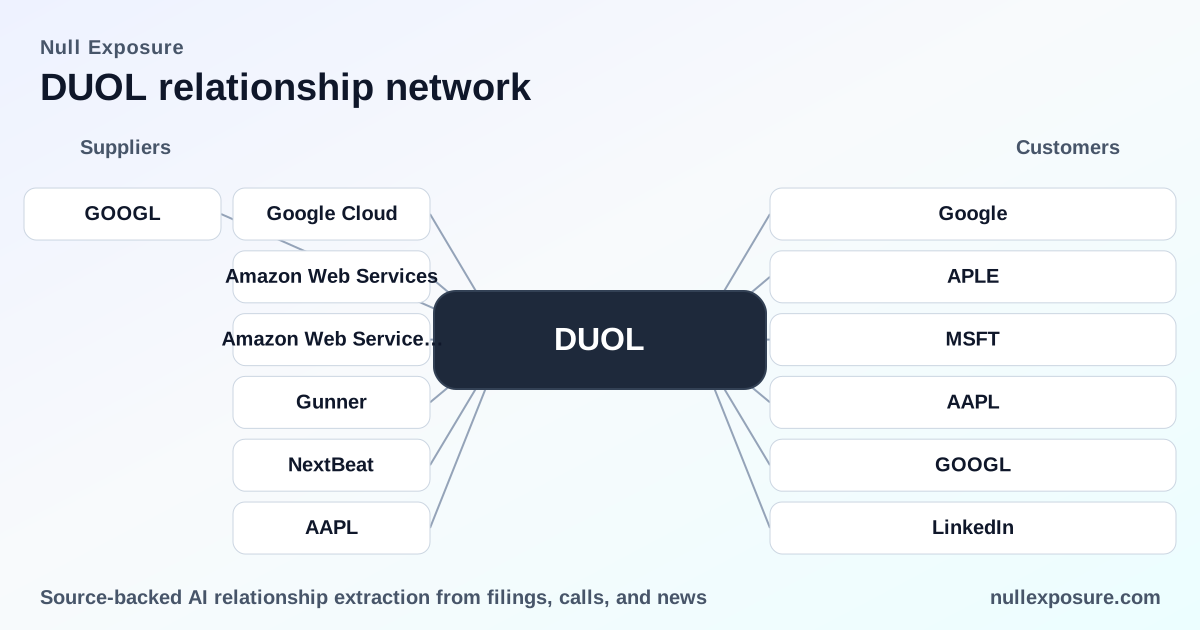
Below I list every customer/partner relationship captured in the available results, with a concise, investor‑oriented take and source reference.
-
Google (FY2024 10‑K) — Duolingo processes in‑app purchases through Google Play and pays a meaningful fee (generally 15–30%) on transactions routed through Google’s in‑app payment system, creating a persistent cost of sales tied to mobile distribution. According to Duolingo’s FY2024 Form 10‑K, these payments materially affect the economics of mobile subscriptions and IAPs (filed for year ended December 31, 2024).
-
MTCH / Match Group (news, May 2026) — Match Group is integrating third‑party personality signals, with reports noting Duolingo as a partner to add language‑related signals to dating profiles, which extends Duolingo’s brand into consumer identity layers and could drive referral engagement. A Proactive Investors article in May 2026 flagged partnerships adding personality signals from services such as Duolingo.
-
APLE (FY2024 10‑K entry / inferred symbol APLE) — The filing reiterates that Duolingo routes in‑app purchases through mobile stores and shares revenue with the stores’ payment systems; the referenced APLE record duplicates the App Store relationship described in the 10‑K. Duolingo’s FY2024 10‑K details these in‑app payment arrangements and the associated fee share (year ended December 31, 2024).
-
Apple (FY2024 10‑K) — Duolingo pays Apple a meaningful share of payments processed through the Apple in‑app payment system (generally 15–30%), directly compressing gross margins on mobile subscription and IAP revenue. This is stated explicitly in Duolingo’s FY2024 10‑K (filed for the year ended December 31, 2024).
-
Microsoft / LinkedIn (news, March 2026) — Duolingo announced the ability for learners to link Duolingo Score to LinkedIn profiles, embedding a product credential into a major professional network and enhancing the product’s utility for users monetizing language skills. A March 2026 Yahoo Finance report described the integration allowing Duolingo Score to attach to LinkedIn profiles.
-
LinkedIn (news, March 2026) — Separate coverage highlighted a first‑of‑its‑kind integration to bring Duolingo Score directly to LinkedIn Profiles, which strengthens credentialing use cases and employer visibility for learners. Multiple March 2026 press reports noted this product partnership.
-
Apple App Store (news, Q2 2025 investor release context) — Duolingo’s flagship app is the top‑grossing Education app on the Apple App Store, underscoring the App Store’s importance to revenue capture and user discovery. QuiverQuant and other investor‑facing releases in 2025 referenced the app’s top‑grossing status on Apple’s App Store.
-
Google (Google Play / GOOGL — news, Q2 2025 investor release context) — Duolingo’s app is also top‑grossing on Google Play, confirming that both major mobile ecosystems are primary channels for monetization and discovery. Investor releases in 2025 (QuiverQuant reports) cited the app’s position on Google Play.
-
Google Play (news, Q2 2025 investor release context) — The platform-level presence on Google Play drives installs and in‑app transactions that are subject to platform fee arrangements; Duolingo’s performance on Google Play is a core distribution metric reported in 2025 investor materials. QuiverQuant and related investor press in 2025 referenced this channel prominence.
-
LinkedIn (stocktitan coverage, March 2026) — Additional press coverage in March 2026 emphasized the LinkedIn integration as a notable product update, reinforcing the strategic nature of credentialing integrations for monetization and retention. StockTitan and other March 2026 outlets covered this product update.
Each of the above entries maps to Duolingo’s dual reality: a consumer subscription business that is distributed and monetized primarily through mobile app ecosystems, and a product strategy that grows utility via integrations with social and professional platforms.
What the relationships imply about operating constraints and risk
-
Contracting posture — subscription and individual contracts dominate. Duolingo’s business model is freemium‑to‑subscription; revenue largely comes from recurring subscriptions and IAPs rather than large enterprise deals. This creates predictable recurring revenue but requires sustained high engagement to expand paid penetration.
-
Customer concentration — individual consumers are the core counterparty. The company’s user base is global and highly dispersed; Duolingo sells directly to individuals rather than relying on a small set of enterprise customers. This reduces single‑counterparty credit risk but raises marketing and retention cost sensitivity.
-
Platform dependence and fee risk — critical third‑party economics. Mobile app stores act as essential distribution and payment rails; the company pays 15–30% fees on in‑app transactions reported in filings, a structural cost that compresses gross margin on mobile revenue and introduces regulatory/contract risk tied to platform policies.
-
Strategic criticality — integrations add product value. Partnerships that bring Duolingo Score to professional and social networks increase product stickiness and create downstream monetization channels, but they also require ongoing engineering and product investment to maintain relevance.
-
Maturity and growth stage — active but still scaling paid penetration. With roughly 9% paid penetration reported in filings, Duolingo demonstrates active monetization with upside from conversion and retention improvements, but revenue growth depends on expanding that paid cohort while controlling CAC and platform fees.
Investment takeaways and risk points
- Primary strength: Scalable subscription economics anchored in a massive global user base and differentiated AI personalization.
- Primary risk: Platform fee exposure and dependence on app‑store rules for payment flows and discoverability.
- Catalysts to watch: Improvements in paid conversion, retention metrics, new credentialing/integration partnerships (LinkedIn, Match integrations), and any change to app‑store fee structures.
For an organized view of these relationship signals and filing excerpts, explore the curated analysis at https://nullexposure.com/.
Bold, business‑level intelligence like platform fee exposure and credentialing integrations will determine Duolingo’s revenue trajectory over the next several quarters. Investors should weigh the high margin potential of recurring subscriptions against the structural cost of mobile distribution and the execution risk of continuing to convert free users into stable subscribers.