DexCom (DXCM) Customer Map: Reimbursement Wins, Device Integrations, and Channel Reach
DexCom builds, manufactures and sells continuous glucose monitoring (CGM) hardware and sensors and monetizes through device and sensor sales to patients, channel partners and health systems, supported by direct sales, distributor networks and third‑party reimbursement. Revenue is driven by recurring sensor consumption and expanded clinical coverage, while device integrations with insulin delivery and digital health partners deepen adoption and stickiness. For a concise view of customer relationships and commercial signals, see Null Exposure’s coverage at https://nullexposure.com/.
How DexCom makes money and how that shapes customer risk
DexCom’s commercial model is a classic med‑device recurring revenue engine: one core product line (CGM systems and disposable sensors) sold to individual patients, facilitated by both direct field sales and distribution partners, and paid for through a mix of private payors and government programs. Company disclosures state that products are purchased principally by individual patients and that DexCom runs direct sales in key markets while using distributors to extend reach internationally. The result is a hybrid contracting posture: high unit economics per active user, but exposure to reimbursement decisions and distribution effectiveness.
- Contracting posture: direct sales where clinical education matters; distributors to scale internationally.
- Concentration: the U.S. generates the majority of revenue, while international markets are material (about 28% of revenue for the twelve months ended Dec 31, 2025).
- Criticality: CGM is a core clinical input for diabetes management—high customer stickiness due to recurring sensor purchases.
- Maturity: established commercial organization with global expansion; distribution arrangements supplement direct channels.
Commercial partners and payors: who is buying and integrating DexCom
Below I list every partner or customer relationship identified in public reporting and media items. Each entry is a plain‑English take and cites the originating source.
- Prime Therapeutics — broad reimbursement coverage for CGM. As of summer 2026, Prime Therapeutics will begin covering DexCom CGM for all people with diabetes, a meaningful payor win that expands insured access to DexCom systems (Q1 2026 earnings call coverage on The Motley Fool, April 2026: https://www.fool.com/earnings/call-transcripts/2026/04/30/dexcom-dxcm-q1-2026-earnings-transcript/).
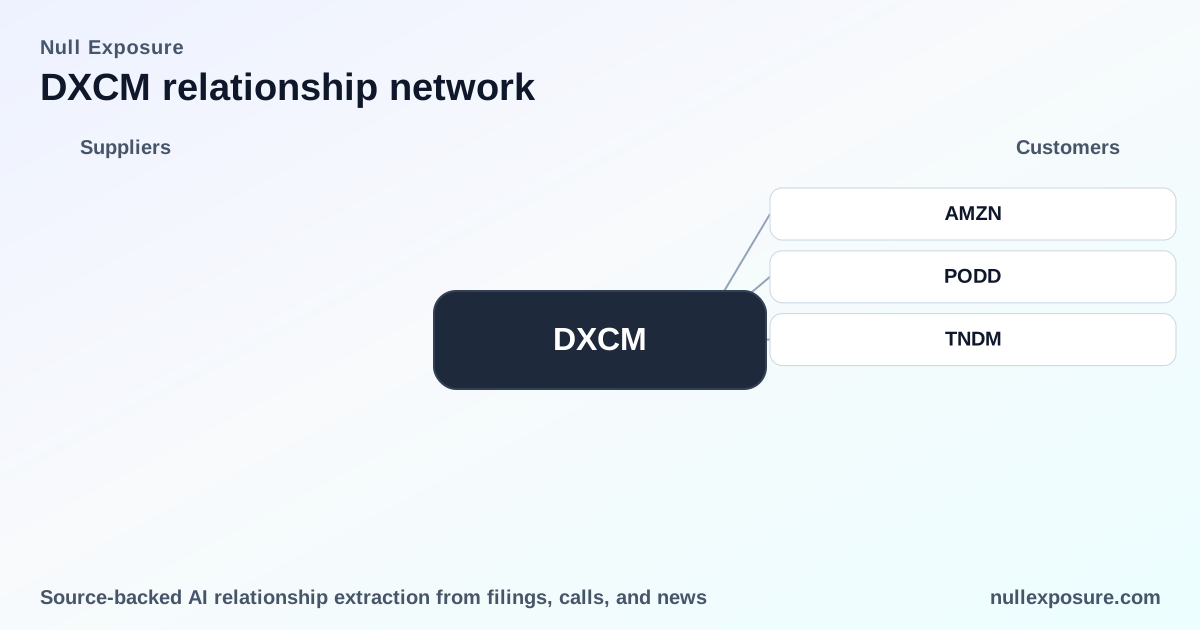
- Insulet Corporation (PODD) — Omnipod integration with Dexcom G7/G6. Insulet launched Omnipod 5 with Dexcom G7 integration in several markets and continues product relationships where its pods interoperate with DexCom sensors (Insulet Q4 2025 earnings and SEC commentary reported via InsiderMonkey/TradingView, March 2026: https://www.insidermonkey.com/blog/insulet-corporation-nasdaqpodd-q4-2025-earnings-call-transcript-1699048/).
- Tandem Diabetes Care (TNDM) — pump software integration with DexCom G7/G6. Tandem’s t:slim X2 pump software became compatible with DexCom G7 and G6 sensors and launched integrations for broader pump/sensor interoperability beginning in 2024–2025 (industry writeups and company launch notes on TradingView and SimplyWallSt, Dec 2025–2026: https://www.tradingview.com/news/zacks:221fab2ec094b:0-reasons-to-hold-tandem-diabetes-stock-in-your-portfolio-for-now/).
- DarioHealth (DRIO) — clinical platform integration. DarioHealth agreed to integrate DexCom CGM data into its digital diabetes platform, extending DexCom sensor telemetry into digital therapeutics and remote coaching workflows (MassDevice coverage of the partnership, reported in 2026: https://www.massdevice.com/dariohealth-dexcom-cgm-digital-diabetes-platform/).
- Amazon (AMZN) — retail presence for Stelo by DexCom. DexCom’s lower‑priced Stelo product has retail availability through Amazon channels, indicating a consumer retail avenue in addition to clinical channels (product review and retail notes on AthletechNews, Mar 2026: https://athletechnews.com/i-tried-dexcom-stelo-continuous-glucose-monitor-cgm-review/).
Each of these relationships either expands end‑user access (payor coverage, Amazon retail), embeds DexCom in insulin delivery ecosystems (Tandem, Insulet), or extends data into digital care workflows (DarioHealth). All citations above link to the specific media or transcript where the relationship is documented.
What the public constraints and filings say about commercial structure
Company disclosures and extracted constraints provide additional, company‑level signals that shape investor assessment:
- Counterparty type: individual patients are the principal buyers. Filings state products are purchased principally by individual patients, with coverage routed through private and government payors. This underlines the recurring‑revenue, patient‑consumption economics rather than enterprise procurement only.
- Geography: North America is dominant but international is material and growing. DexCom reports direct sales forces in North America, Asia Pacific and EMEA; international operations accounted for approximately 28% of revenue in the 12 months to Dec 31, 2025. That creates both growth runway and cross‑border execution risk.
- Relationship roles: DexCom operates as seller via direct field teams and as vendor to distributors; filings confirm distribution arrangements in North America and several international markets to complement direct sales. This hybrid model increases reach but introduces distributor execution risk.
- Relationship stage and segment: Partnerships and integrations are active and focused on the company’s core CGM product, reinforcing product centrality to corporate revenue and clinical positioning.
These constraints collectively point to a company that is commercially mature, globally scaling, and dependent on payor decisions and partner integrations to maximize addressable users.
What investors should watch next
- Reimbursement cadence is an active growth lever. The Prime Therapeutics coverage decision is a material organic growth event that increases insured access; monitor further payor roll‑outs and utilization rates.
- Integration breadth reduces churn risk. Continued integration with insulin pumps and digital platforms increases clinical lock‑in and recurring sensor demand.
- International execution is the main source of upside and operational risk. International revenue is material; success depends on distributor management and regulatory environments.
For a structured competitor and partner map, and to monitor incremental payor and integration announcements, see Null Exposure’s research hub at https://nullexposure.com/.
Final read: positioning and risk
DexCom’s business is predicated on recurring sensor economics and clinical integration, supported by a direct sales organization and distributor partnerships that drive scale. The company’s customer relationships fall into two strategic buckets: payor/channel wins that expand addressable users (Prime Therapeutics, Amazon) and device/data integrations that entrench clinical use (Tandem, Insulet, DarioHealth). Investors should value both the predictability of recurring sensor revenue and the binary nature of large payor coverage moves—both growth catalysts and sources of volatility.