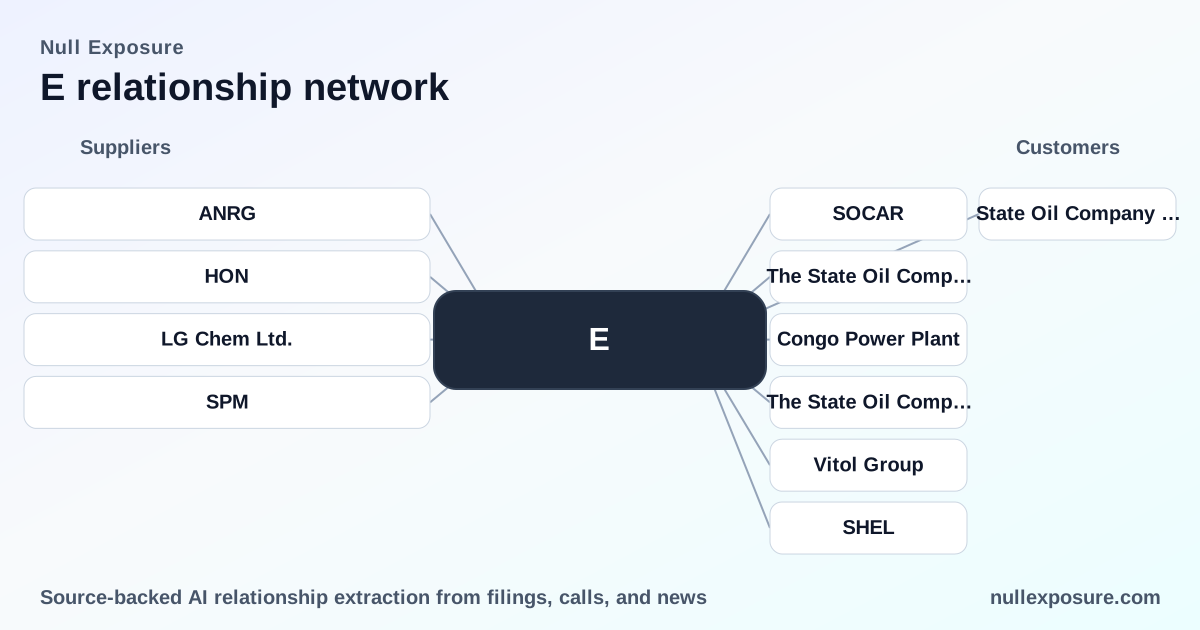
Eni SpA (ADR) — Portfolio of customer and partner exits that fund production and transition
Eni operates as an integrated oil & gas major headquartered in Rome, monetizing through upstream production, midstream infrastructure, LNG and refined product sales, and strategic disposals and joint ventures that crystallize value and fund capital allocation. Over FY2026 the company continued to monetize non‑core stakes and form strategic partnerships—selling minority interests, spinning assets into joint ventures, and contracting deliveries—converting reserves and infrastructure into liquidity while preserving operating control where it matters most. For deeper signals on counterparty exposures and balance‑sheet effects visit https://nullexposure.com/.
What investors need to know up front
Eni’s commercial posture in FY2026 is transactional and portfolio‑active: management is using disposals and minority sales as a lever to reduce capex intensity, fund dividends, and accelerate LNG and CCUS capacity. The firm consistently sells minority stakes to financial and trade partners (infrastructure funds, national oil companies, traders) while retaining operatorship of core developments — a pattern that balances capital discipline with project control. Key drivers for valuation are hydrocarbon production, proceeds from asset sales, and the pace at which Eni scales LNG and carbon‑management businesses.
Operating model signals and constraints
The relationship feed returned no extracted contractual constraints for FY2026, which itself is a company‑level signal: the public record captured here emphasizes portfolio transactions and JV formation rather than long‑term supply contracts or restrictive encumbrances. From the pattern of counterparties — sovereign oil companies, private equity and infrastructure managers, energy traders, and regional producers — Eni’s business model is capital‑light where possible (minority sales), centrally controlled where necessary (operatorship of large offshore projects), and diversified across buyers of assets and offtake partners. This posture reduces single‑counterparty concentration risk while creating execution dependency on timely closings and regulatory approvals.
Relationship-by-relationship review (FY2026 reporting)
Below are every relationship captured in the FY2026 feed, each followed by a concise, plain‑English take and a source citation.
-
KKR & Co. Inc.: Eni completed the sale of an unspecified minority stake in Enilive SpA to KKR for approximately €2.5 billion, representing a sizeable private‑market monetization of a non‑core holding. Source: SimplyWallSt note on the transaction (Mar 6, 2026) — https://simplywall.st/stocks/us/energy/nyse-e/eni
-
SOCAR (marketscreener report): Eni signed a binding agreement to sell a 10% stake in the Baleine offshore project (Côte d’Ivoire), where Eni is operator with a 47.25% interest. Source: MarketScreener reporting on the sale (FY2026) — https://www.marketscreener.com/news/eni-agreement-with-socar-for-the-sale-of-10-stake-in-cote-da-ivoire-s-baleine-project-ce7e5dd8d18df324
-
Etu Energias Block 14 B.V.: Azule Energy (the Eni‑BP JV) agreed to sell its interests in Blocks 14 and 14K in Angola to Etu Energias Block 14 B.V., reducing JV onshore/offshore exposure through third‑party divestment. Source: TradingView summary of the Azule transaction (May 2026) — https://www.tradingview.com/news/zacks:424d2d5e3094b:0-eni-bp-jv-azule-energy-offloads-stake-in-blocks-14-and-14k-in-angola/
-
SOCAR (CNBC Africa): Azerbaijan’s SOCAR agreed to acquire the 10% Baleine stake from Eni, reinforcing the project’s roster of national‑company partners and shifting a portion of project economics to a cash buyer. Source: CNBC Africa report (Mar 9, 2026) — https://www.cnbcafrica.com/2026/azerbaijans-socar-signs-deal-with-eni-for-ivory-coast-offshore-field/
-
The State Oil Company of Azerbaijan (aze.media): The SOCAR transaction was also covered as a strategic move by the Azerbaijani company to expand into African upstream fields, underscoring geopolitical diversification from both parties. Source: aze.media coverage (Mar 2026) — https://aze.media/socar-expands-into-africas-vast-oil-and-gas-resources/
-
Hilcorp Energy Company: Hilcorp completed the acquisition of the Nikaitchuq and Oooguruk assets in Alaska from Eni for $1 billion, a tidy divestment of mature assets in a high‑cost basin. Source: SimplyWallSt summary (Nov 6, 2025 referenced in FY2026 feed) — https://simplywall.st/stocks/us/energy/nyse-e/eni
-
Oando PLC: Oando signed to acquire Nigerian Agip Oil Company Ltd. from Eni, transferring onshore Nigerian assets to a regional operator and trimming Eni’s African upstream footprint. Source: SimplyWallSt entry (Sep 5, 2025 referenced in FY2026 feed) — https://simplywall.st/stocks/us/energy/nyse-e/eni
-
Snam S.p.A.: Snam acquired a 49.9% stake in two gas pipelines from Eni for roughly €410 million, demonstrating Eni’s pattern of selling infrastructure stakes to regulated midstream players. Source: SimplyWallSt transaction summary (Jan 12, 2026) — https://simplywall.st/stocks/us/energy/nyse-e/eni
-
Congo Power Plant: Eni supplies gas to the Congo Power Plant, which provides around 70% of the country’s electricity, highlighting Eni’s role as a regional critical gas‑to‑power supplier. Source: Eni press release on first LNG cargo and power supply (Feb 2026) — https://www.eni.com/en-IT/media/press-release/2026/02/president-congo-and-eni-celebrate-first-lng-cargo.html
-
SOCAR (Rigzone): Rigzone reiterated SOCAR’s acquisition of the 10% Baleine interest from Eni, emphasizing the producing status of the field and the transfer of participating interest. Source: Rigzone article (Jan 22, 2026) — https://www.rigzone.com/news/socar_ventures_into_africa_through_baleine_deal_with_eni-22-jan-2026-182825-article/
-
Etablissements Maurel & Prom: Azule Energy’s stake sale process referenced a previously signed deal that included M&P and BW Energy, indicating third‑party appetite for Angolan upstream positions originally held by Eni. Source: TradingView reporting on the Azule divestment (May 2026) — https://www.tradingview.com/news/zacks:424d2d5e3094b:0-eni-bp-jv-azule-energy-offloads-stake-in-blocks-14-and-14k-in-angola/
-
Ares Alternative Credit Management (Ares): Ares completed the acquisition of a 20% stake in Eni Plenitude S.p.A. from Eni, signifying private credit/infrastructure appetite for renewable and retail energy platforms spun out of oil‑major portfolios. Source: SimplyWallSt transaction note (Nov 4, 2025 referenced in FY2026 feed) — https://simplywall.st/stocks/us/energy/nyse-e/eni
-
Vitol Group: Vitol holds a 30% interest in the Baleine project, a position acquired from Eni, aligning a global trader with project economics and offtake. Source: Rigzone commentary on partner composition in Baleine (Jan 2026) — https://www.rigzone.com/news/socar_ventures_into_africa_through_baleine_deal_with_eni-22-jan-2026-182825-article/
-
Perenco Holdings: Perenco signed to acquire several permits in Congo from Eni for roughly $300 million, another example of Eni exiting selected country positions in exchange for liquidity. Source: SimplyWallSt coverage of the Perenco purchase (Jun 28, 2025 referenced in FY2026 feed) — https://simplywall.st/stocks/us/energy/nyse-e/eni
-
Shell plc (SHEL / Maran Gas Delphi vessel): Shell controlled the vessel that loaded an FLNG cargo produced under Eni‑led Congo Phase 2, underlining third‑party shipping and trading involvement in Eni’s LNG exports. Source: Natural Gas Intel report on Congo Phase 2 exports (Feb 2026) — https://naturalgasintel.com/news/eni-eyes-bigger-lng-trading-role-as-congo-phase-2-exports-begin/
-
ARUM S.p.A.: ARUM and Dompé proposed to acquire a controlling stake in B.F. S.p.A. from a syndicate including Eni, showing Eni’s selective non‑core holdings entering sale processes. Source: SimplyWallSt note on the proposed sale (Apr 22, 2026) — https://simplywall.st/stocks/us/energy/nyse-e/eni
-
Dompé Holdings Srl: Dompé is the co‑bidder with ARUM for the B.F. S.p.A. block that includes Eni’s non‑core shares, consistent with the company’s portfolio pruning. Source: SimplyWallSt reporting (Apr 22, 2026) — https://simplywall.st/stocks/us/energy/nyse-e/eni
-
Global Infrastructure Management, LLC: This manager acquired 49.99% of Eni CCUS Holding, revealing Eni’s willingness to monetize carbon‑management platforms via infrastructure capital. Source: SimplyWallSt summary of the sale (Dec 19, 2025 referenced in FY2026 feed) — https://simplywall.st/stocks/us/energy/nyse-e/eni
-
SOCAR (AzerNews): AzerNews also covered SOCAR’s purchase of the 10% Baleine interest, confirming broad media coverage and stakeholder visibility on the transaction. Source: AzerNews report (Jan 2026) — https://www.azernews.az/oil_and_gas/253361.html
-
State Oil Company of the Republic of Azerbaijan (ocean‑energyresources): Another outlet reported the same 10% Baleine deal, reinforcing the transaction’s permanence in the public record. Source: Ocean‑EnergyResources (Jan 2026) — https://ocean-energyresources.com/2026/01/23/agreement-between-socar-and-eni-for-african-project/
-
SOCAR (InsiderMonkey earnings transcript note): Eni’s Q1 FY2026 earnings transcript noted the Baleine sale announcement as a portfolio activity with sale announced but not fully completed in that quarter. Source: InsiderMonkey Q1 2026 transcript summary — https://www.insidermonkey.com/blog/eni-s-p-a-nysee-q1-2026-earnings-call-transcript-1748847/
-
Ithaca Energy: Ithaca entered exclusivity on a potential combination with Eni’s UK business, indicating strategic consolidation in the North Sea. Source: SimplyWallSt report on exclusivity agreement (Mar 30, 2026) — https://simplywall.st/stocks/us/energy/nyse-e/eni
-
EIP (EIP Capital): Reports suggested EIP in talks to buy a stake in Eni’s renewables business, consistent with external capital taking positions in Eni’s decarbonization assets. Source: SimplyWallSt note (Jun 23, 2025 referenced in FY2026 feed) — https://simplywall.st/stocks/us/energy/nyse-e/eni
-
Timor GAP, E.P.: Timor GAP agreed to buy a 16% interest in Bayu‑Undan upstream from a group including Eni, reflecting regional redistribution of legacy project stakes. Source: SimplyWallSt coverage (Sep 4, 2025 referenced in FY2026 feed) — https://simplywall.st/stocks/us/energy/nyse-e/eni
-
BW Energy: BW Energy was part of the consortium reported as buyer of Azule’s participating stakes in Angola, showing interest from smaller, focused producers in Eni’s divested positions. Source: TradingView summary of the Azule sell‑down (May 2026) — https://www.tradingview.com/news/zacks:424d2d5e3094b:0-eni-bp-jv-azule-energy-offloads-stake-in-blocks-14-and-14k-in-angola/
Investment implications and next steps
- Balance‑sheet and cash flow upside from disposals is material: FY2026 transactions show multiple monetizations that support dividends and capital reallocation to LNG and CCUS.
- Counterparty mix reduces single‑buyer risk: Eni sells to sovereign partners, traders, private equity and infrastructure managers — a deliberate diversification of exit routes that lowers concentration risk.
- Execution and regulatory timing are gating factors: Many deals are minority sales or exclusivity arrangements; final closings and approvals will determine realized proceeds and timing.
If you want a tailored exposure map of Eni’s counterparties and cash‑flow impact from these FY2026 transactions, explore a full analysis at https://nullexposure.com/ — our platform maps counterparty risk and the cash‑flow consequences of portfolio activity.
Bottom line: FY2026 demonstrates Eni’s disciplined use of minority disposals and JV structuring to monetize assets while maintaining operational control of core projects — a deliberate commercial model that funds transition investments without wholesale asset relinquishment.