EBR-B: How recent customer and asset moves reshape counterparty risk and monetization
Eletrobras (EBR-B) operates Brazil’s largest integrated power platform—generation, transmission and distribution—and monetizes through long-term concession revenues, spot and bilateral power sales, and periodic asset sales of legacy and non-core businesses. The company’s ongoing privatization and targeted disposals are accelerating cash generation while reshaping the counterparty map from sovereign-centric counterparties to private energy and infrastructure players. For a rolling view of these relationship dynamics, see Null Exposure’s company profile: https://nullexposure.com/.
Why these relationships matter to investors
Eletrobras is transitioning from a state-dominated operator to a commercially focused utility. That transition changes the company’s contracting posture (more market-oriented, with active asset divestitures), concentration profile (fewer state obligations, more exposure to large private buyers), criticality (nuclear and transmission assets remain systemically important), and maturity (legacy projects with long timelines offloaded to shorten the balance-sheet tail). These strategic moves materially affect valuation drivers: one-off cash from sales, reduction in contingent liabilities, and shifts in regulatory dependency.
A second point: Null Exposure tracks relationship events and counterparties to show evolving operational risk and cash realization timing—visit https://nullexposure.com/ for the full timeline and alerts.
Overview of disclosed customer and counterparty interactions
Below I summarize every relationship noted in our coverage window. Each entry is a plain-English description followed by a concise source reference.
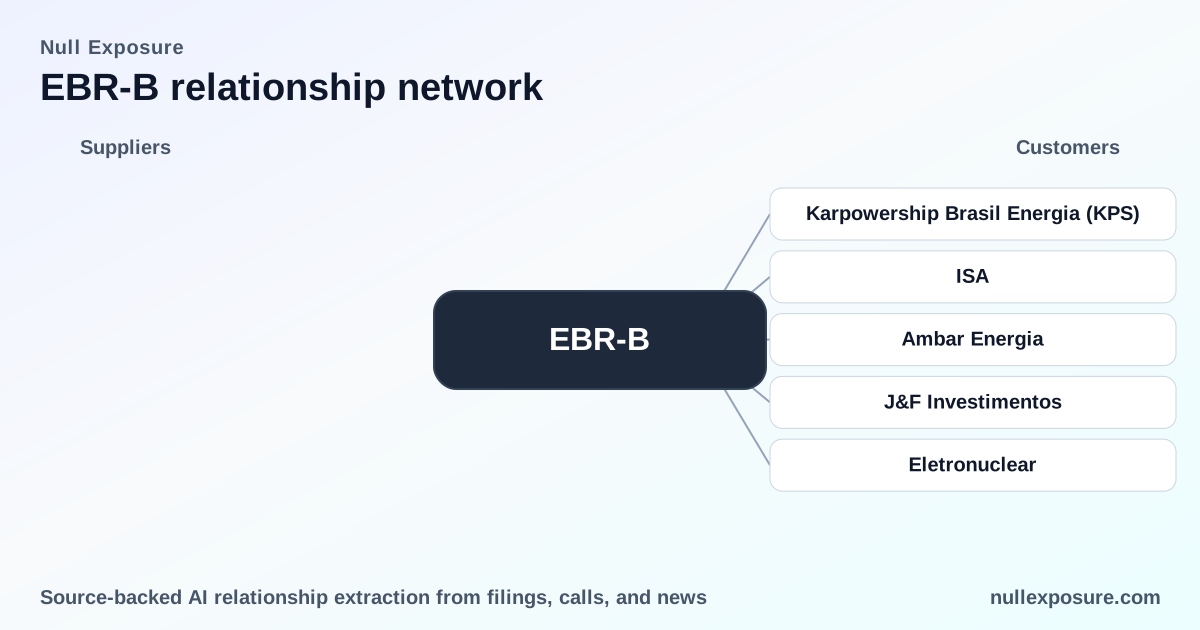
Karpowership Brasil Energia (KPS)
KPS has studied acquiring the Santana diesel-fired thermal plant currently owned by Eletronorte, a subsidiary of Eletrobras, representing a direct buyer interest in non-core thermal generation assets that Eletrobras is prepared to dispose of to optimize its portfolio. According to a MegaWhat report published March 9, 2026, Karpowership Brasil Energia is evaluating the purchase of the Santana plant (FY2025).
Source: MegaWhat / UOL news item, March 9, 2026.
ISA (on CTEEP offer)
ISA is the logical strategic buyer for Eletrobras’ minority stakes in CTEEP—its controller already owns the bulk of the company—and Eletrobras’ launched offer for CTEEP could raise roughly R$35 billion if executed, underscoring transmission assets as major monetization levers. Brazil Journal reported the potential sale dynamics and buyer alignment in a March 2026 coverage note (FY2024 context).
Source: Brazil Journal, March 2026.
Ambar Energia
Through Ambar Energia, J&F agreed to pay BRL 535 million and assume BRL 2.4 billion of related debt to acquire a controversial nuclear asset, effectively removing nuclear exposure from Eletrobras’ balance sheet and converting a politically charged liability into immediate cash and contingent-liability relief. This transaction was covered in a March 2026 Yahoo Finance analysis.
Source: Yahoo Finance, March 2026.
J&F Investimentos
J&F Investimentos, the holding company controlled by the Batista family, executed the purchase of Eletronuclear from Eletrobras, transferring operational and financial responsibility for Brazil’s nuclear units and altering Eletrobras’ counterparty mix toward private holdings in energy. Yahoo Finance summarized the deal and its strategic implications in March 2026.
Source: Yahoo Finance, March 2026.
Eletronuclear
An agreement between Eletrobras and the Union removed Eletrobras’ obligation to continue funding the stalled third reactor at the nuclear complex, closing a long-running legal and political dispute and materially reducing future capital commitments for the company. O Globo reported on the April 29, 2025 agreement and its constitutional and strategic consequences (FY2025 context).
Source: O Globo, April 29, 2025.
What the relationship map reveals for commercial and credit risk
These relationships collectively codify a deliberate strategy: accelerate monetization of non-core and politically sensitive assets; shift counterparty exposure toward private energy and infrastructure groups; and remove long-dated contingent liabilities from the balance sheet. That has four practical implications for investors and operators:
- Cash generation and deleveraging potential. Sales of transmission stakes and nuclear assets create material one-off proceeds that strengthen liquidity and reduce capex commitments tied to stalled projects.
- Concentration and counterparty evolution. As Eletrobras sells assets to a small set of large buyers (e.g., ISA, J&F/Ambar, Karpowership), credit exposure concentrates toward those counterparties; investors should track buyer credit and regulatory ties.
- Regulatory and political risk shifted but not eliminated. Divesting Eletronuclear and shedding reactor obligations reduces political headlines and contingent liabilities, yet transmission and thermal divestitures retain system-critical implications that draw regulatory scrutiny.
- Operational maturity improvement. Removing older, capital-intensive projects accelerates the company’s path to a more predictable, regulated-transmission and renewable-heavy earnings base.
Company-level signal on contractual constraints
Our records contain no explicit third-party contractual constraints flagged for Eletrobras in this review window; that absence is itself a signal: Eletrobras is actively resolving high-impact obligations through negotiated sales and legal settlements rather than remaining encumbered by open contractual constraints. Investors should treat the absence of documented constraints as a positive operating-simplification signal, while continuing to monitor regulatory filings and follow-on transaction terms for contingent warranties or indemnities.
Practical takeaways for investors and operators
- Balance-sheet cleanup is underway. The combination of the Eletronuclear sale and potential CTEEP monetization materially reshapes Eletrobras’ capital allocation optionality and reduces headline legal exposure.
- Counterparty monitoring becomes essential. Large buyers such as ISA and J&F (via Ambar) now carry a larger share of the company’s transactional footprint; investors must evaluate those buyers’ financing and strategic incentives when modeling cash realization risk.
- Regulatory watch remains paramount. Transmission transactions and the transfer of systemically important assets will attract governmental oversight that can affect timing and proceeds.
If you want continuous monitoring of these relationship events and how they affect Eletrobras’ credit and commercial profile, explore Null Exposure’s live coverage and alerts at https://nullexposure.com/.
Bottom line
Eletrobras is executing a focused program of strategic disposals that converts politically charged and maturity-heavy assets into cash and reduces contingent liabilities. That results in a cleaner balance sheet and a new counterparty map dominated by large private energy and infrastructure players—an outcome that improves predictability but concentrates counterparties. Investors and operators should recalibrate models for one-off proceeds, monitor buyer credit, and track regulatory approvals as the key risk levers that will determine the final value realized from these transactions.