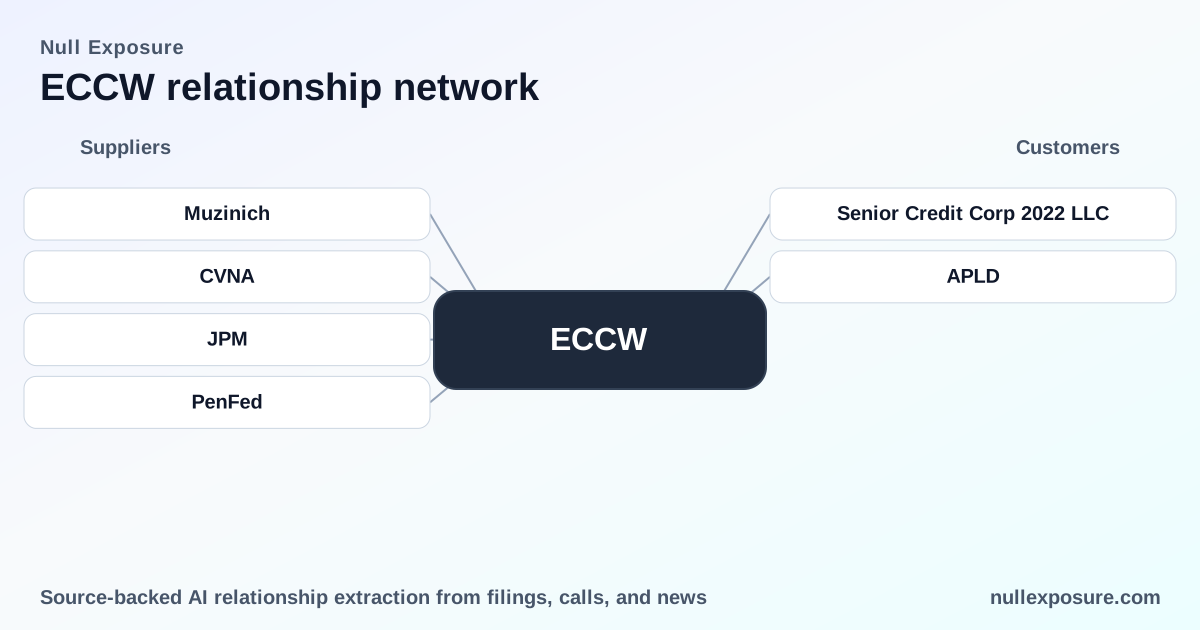
ECCW: How Eagle Point Credit Extracts Income from CLOs and selective private credit exposures
Eagle Point Credit Company Inc. (ECCW) runs a yield-first credit platform that monetizes through interest, structured CLO economics and selective equity stakes in sponsored vehicles. The company holds senior debt positions and CLO-related equity, extracts coupons and excess spread from collateralized loan obligations, and supplements cash flow with opportunistic direct financings and leasing exposures in the private-credit middle market. For investors, ECCW presents a high-income profile with concentrated, actively managed credit positions and portfolio-level sensitivity to credit spreads and collateral performance.
If you want the full tracking view of ECCW customer and counterparty links, see the firm’s relationship map at https://nullexposure.com/.
How to read the relationship map: what the uncovered links reveal about ECCW's operating model
The public relationship evidence is narrow but meaningful: it highlights direct JV and leasing exposures rather than a broad retail customer base. That pattern signals a contracting posture oriented to negotiated, bespoke credit arrangements instead of high-volume transactional customers. The absence of disclosed contractual constraints in the public feed is itself a company-level signal: no flagged single-customer covenants or material vendor-lock disclosures, which suggests flexible counterparty terms and an ability to reallocate capital within the portfolio.
Key company-level operating signals:
- Concentrated, counterparty-driven exposures — ECCW takes structured positions (senior notes and equity in JVs) rather than passive index tracking.
- Yield focus and income distribution — company profile data lists a dividend yield of 7.29%, supporting an income-oriented investor thesis.
- Maturity and active management — the presence of JV equity alongside senior claims indicates active structuring and multi-layered investment horizons.
Explore the broader relationship context and datasets at https://nullexposure.com/ to evaluate counterparty concentration and portfolio composition.
What public coverage actually names: three relationships uncovered
The public results include three distinct entries. Each is summarized below in plain English with source context.
Senior Credit Corp 2022 LLC — structured JV exposure
ECCW reports ownership of a senior note and an equity position in the joint venture Senior Credit Corp 2022 LLC, signaling both secured creditor status and residual equity exposure to that vehicle’s performance (FY2026 earnings transcript, reported March 9, 2026). (Source: Motley Fool earnings transcript republished by The Globe and Mail — https://www.theglobeandmail.com/investing/markets/markets-news/Motley%20Fool/260656/eagle-point-credit-ecc-earnings-transcript/)
APLD — ticker-listed leasing exposure, measured size
Management references a position identified by the ticker APLD that currently contributes roughly 35 basis points to portfolio yield, described in the same FY2026 commentary as part of leasing activity. That level of contribution classifies the holding as de minimis in yield impact today. (Source: Motley Fool earnings transcript republished by The Globe and Mail — https://www.theglobeandmail.com/investing/markets/markets-news/Motley%20Fool/260656/eagle-point-credit-ecc-earnings-transcript/)
Applied Digital — the same counterparty described by name
The firm also called out Applied Digital by name in FY2026 remarks, describing leasing-related exposure with the same quantification (about 35 basis points) and contextualizing it among other small leasing arrangements in the portfolio. This confirms the counterparty-level engagement is both credit and equipment/lease related rather than a core term-loan relationship. (Source: Motley Fool earnings transcript republished by The Globe and Mail — https://www.theglobeandmail.com/investing/markets/markets-news/Motley%20Fool/260656/eagle-point-credit-ecc-earnings-transcript/)
Portfolio implications and risk framing for investors
The relationships disclosed are selective and structured rather than broad-based. Holding a senior note plus equity in Senior Credit Corp 2022 LLC creates layered exposure: the senior note provides priority cash flow while the equity position carries upside or downside linked to residual performance. The Applied Digital leasing exposure is small in current yield contribution, reducing near-term concentration risk but creating idiosyncratic counterparty exposure to leasing and asset utilization cycles.
From an investor point of view, prioritize these considerations:
- Concentration risk: Structured JV positions can be significant at a security level even if not large across the whole fund; credit analysis should evaluate the JV’s collateral and structural protections.
- Cash-flow durability: Senior notes produce coupon stability while equity stakes amplify residual variance; ECCW’s mix indicates an active trade-off between yield and optionality.
- Counterparty criticality: Reported leasing exposures are small today, limiting single-counterparty criticality, but leasing counterparties introduce operational and asset-specific risk not present in syndicated loan exposure.
Data snapshot that matters to valuation
Company-level metrics in the profile point to an income-oriented valuation lens: a 7.29% dividend yield, a 52-week trading range from $21.45 to $25.20, and moving averages clustered in the mid-$20s. These figures support a thesis where market pricing is discounting credit and spread risk relative to coupon income, rather than growth expectations.
Final read: what investors should watch next
ECCW’s public relationship map shows a targeted, credit-structured operator that extracts returns through senior debt coupons and positioned equity interests in bespoke vehicles. The presence of a senior note plus JV equity in Senior Credit Corp 2022 LLC is a material example of ECCW’s dual exposure strategy; the Applied Digital leasing line is a small, idiosyncratic exposure that does not change the income-first portfolio profile.
For active investors and credit analysts, focus next on the detailed credit terms of the JV, the collateral performance under stress scenarios, and the firm’s reinvestment cadence for realized proceeds. For a centralized view of ECCW counterparty links and to monitor updates, visit https://nullexposure.com/.
Bold takeaway: ECCW operates as an income-centric, actively structured credit allocator—its value derives from senior cash flows plus targeted equity upside, with limited public evidence of broad customer concentration.