Edible Garden (EDBLW) — customer relationships and commercial dynamics investors should price in
Edible Garden AG Incorporated operates controlled‑environment agriculture facilities and monetizes by selling hydroponically grown produce, nutraceuticals and ancillary branded items through a mix of long‑term supply agreements with supermarket chains and purchase‑order/spot sales to other buyers and retail channels. The company's revenue base is highly concentrated and regionally focused, so contract renewals and receivable concentration will be the primary drivers of near‑term cash flow and valuation. For a concise view of customer exposures and contract timelines, see https://nullexposure.com/.
Why the customer map matters for valuation
Edible Garden’s business model is straightforward: grow year‑round produce in controlled environments and sell to supermarkets and local retailers. That simplicity belies two structural characteristics investors must price:
- Contracting posture: A mix of multi‑year supply agreements and customary purchase‑order (spot) sales. Long‑term contracts provide predictable shelf placement and volume; spot sales preserve pricing flexibility but add revenue volatility.
- Customer concentration: Four customers generated approximately 82% of 2024 revenue, with one customer responsible for roughly 44%; this creates outsized counterparty and working‑capital risk that directly affects earnings and liquidity.
- Geographic concentration and go‑to market: Sales are predominantly to the Northeast, Midwest and Mid‑Atlantic United States, so regional retail conditions and supermarket category strategies materially affect demand.
- Operational maturity: The company reports active supply agreements extending through 2026, which provides a near‑term revenue runway but also concentrates re‑contracting risk in a narrow future window.
These are not abstract signals: they control negotiating leverage, cash conversion timelines, and the firm’s ability to scale distribution without adding single‑buyer concentration.
Every reported customer relationship (direct evidence)
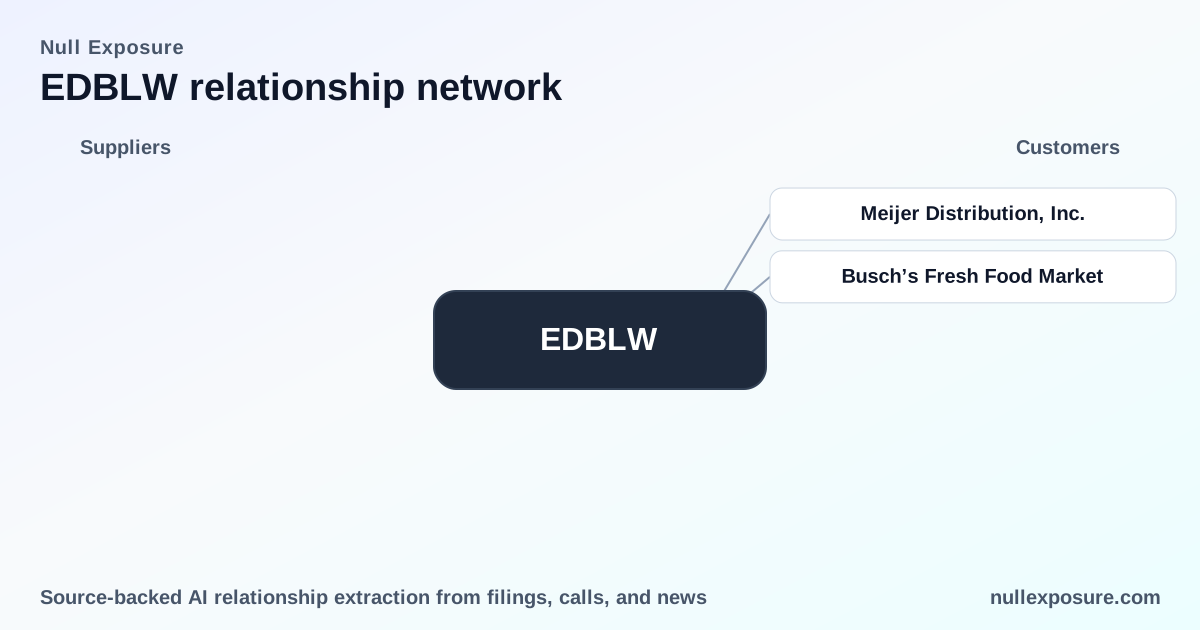
Meijer Distribution, Inc.
Edible Garden entered two supply agreements with Meijer effective January 1, 2024 that require the company to supply and sell products to Meijer; the agreements expire December 31, 2026. According to Edible Garden’s FY2024 10‑K filing, these are formal Supply Agreements that establish a multi‑year commercial relationship and are active through 2026.
Busch’s Fresh Food Market
Edible Garden announced a distribution agreement with Busch’s Fresh Food Market, reported in market commentary on February 25, 2026. A news summary published via TipRanks and syndicated on CNBC noted the company’s distribution arrangement with Busch’s, reflecting continued grocery channel expansion in FY2025.
How the reported constraints shape the operating model
Edible Garden’s public disclosures and filing language produce a clear set of operating constraints investors should treat as firm‑level characteristics:
- Long‑term contract presence (company signal with a named relationship): The 2024 supply agreements with Meijer are explicitly multi‑year (through December 31, 2026) and create a predictable volume corridor while active. This single named relationship demonstrates the company’s willingness and ability to sign multi‑year grocery supply deals.
- Spot sales remain a material channel: Outside the Meijer agreements, Edible Garden sells on purchase‑order terms with no spending or purchase commitments, which preserves margin flexibility but increases revenue variability and credit exposure.
- Customer concentration is material: The company reported that four customers accounted for ~82% of 2024 revenue, and one customer represented ~44%, indicating high counterparty concentration that elevates revenue and receivable risk.
- Regional sales concentration: Distribution is concentrated in the Northeast, Midwest and Mid‑Atlantic, implying sensitivity to regional retail cycles and logistics constraints.
- Counterparty mix and role: Edible Garden operates primarily as a seller of core products (hydroponic produce and related items) to retail buyers and individual consumers through retail channels, positioning supermarkets as strategic buyers.
- Active relationships and contract lifecycle: At least one material long‑term agreement is active, but the cluster of contract expirations and renewals around 2026 creates a single‑point timing risk for revenue continuity.
Collectively these constraints indicate a company that has secured strategic retail distribution while remaining dependent on a small set of large buyers and on regional grocery dynamics.
Risk profile and what investors should watch next
Edible Garden’s commercial profile produces a concentrated set of investment risks and monitoring priorities:
- Customer concentration risk (primary): With four customers accounting for ~82% of revenue, any adverse shift in buying patterns, delisting, or payment timing from these buyers will have an outsized effect on cash flow. This is the single largest operational risk.
- Contract expiry concentration: Meijer supply agreements expire at the end of 2026; renewal terms or replacement volumes will materially affect FY2027 revenue trajectory. Track renegotiation progress and any interim amendments.
- Receivable concentration and liquidity: The filing noted that a large share of trade receivables is tied to a handful of customers; working capital stress from slow payers will compress cash available for operations and expansion.
- Margin and profitability headwinds: The company reported TTM revenue of $12.81M, negative gross profit of $0.204M, EBITDA of -$13.881M, and diluted EPS of -1.309, underscoring ongoing operating losses that make customer stability imperative.
- Regional demand sensitivity: Heavy exposure to the Northeast/Midwest retail landscape concentrates both sales opportunity and downside if regional supermarkets adjust category mix.
- Commercial scaling challenge: To dilute concentration risk, the company must both extend national retail distribution and add a broader base of mid‑market and independent buyers without materially increasing working capital strain.
Investors should prioritize monitoring contract renewal timelines, receivable aging from top customers, and any public announcements about expanded retailer partnerships.
Investment takeaway and action points
Edible Garden has established formal multi‑year distribution with a major supermarket (Meijer) and is expanding grocery channel placement (for example, Busch’s), but the business remains highly concentrated, regionally focused, and unprofitable on current metrics. The firm’s near‑term value hinges on successful contract renewals and broader distribution that reduces single‑buyer exposure.
For an up‑to‑date, consolidated view of the company’s customer exposures and contract timelines, review the coverage at https://nullexposure.com/.
If you are modeling Edible Garden for investment or credit decisions, stress test scenarios for: (1) loss or non‑renewal of a top‑5 customer, (2) slower receivable collections from major buyers, and (3) varying renewal pricing with Meijer at year‑end 2026. These are the factors that will create the largest delta in cash flow and valuation.