Editas Medicine: Partner Deals Drive the P&L — Who Pays, Who Counts
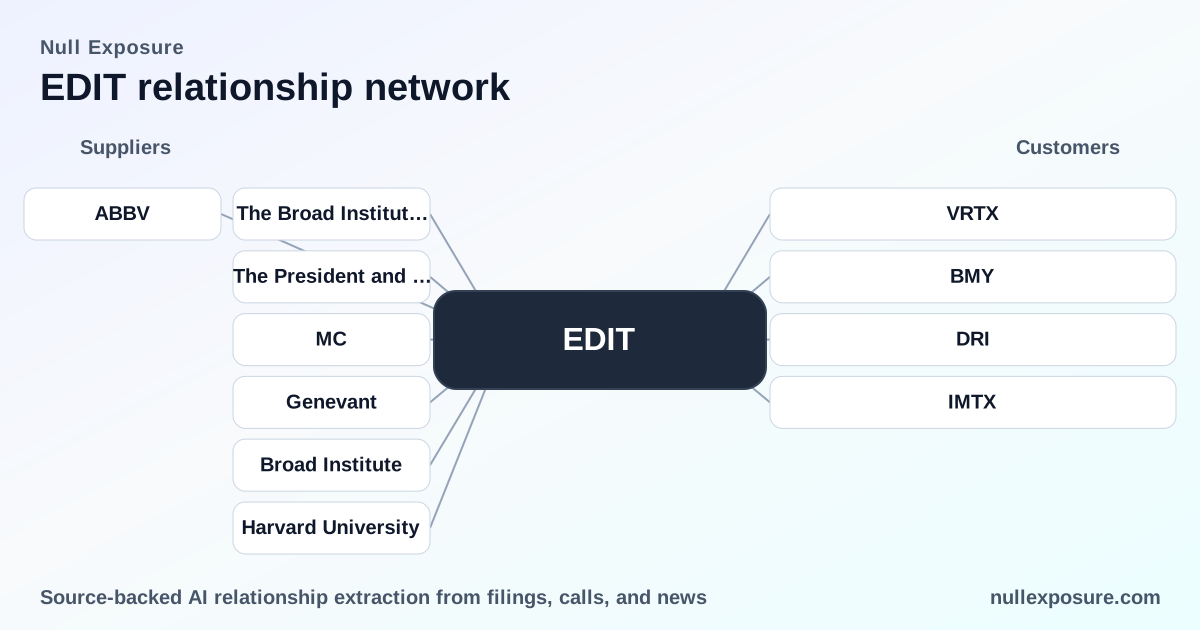
Editas Medicine operates as a clinical-stage genome editing specialist that monetizes intellectual property and R&D through licensing, collaborations, milestone payments and selective monetization of future license fees. The company’s cash runway and near-term revenue profile are driven less by product sales today and more by a handful of strategic partners — notably Vertex and Bristol Myers Squibb — plus finance transactions that convert future partner receipts into working capital. Explore the partner map and what it implies for revenue concentration, contract durability and downside risk. (Learn more at https://nullexposure.com/.)
Why Editas is effectively a partner-licensed biotech, not a commercial-stage drugmaker
Editas’s operating model is contract-centric: value is captured through licenses (upfront and annual license fees), milestone triggers and sponsored R&D rather than broad-market product revenue. Filings and press coverage repeatedly emphasize licensing arrangements—most prominently with Vertex—and milestone recognition under collaborations with Bristol Myers Squibb. That structure produces volatile, lumpy revenue tied to partner clinical progress and accounting recognition of deferred revenue.
- Concentration: Editas reported that in 2023–2024 nearly all collaboration and R&D revenues were U.S.-sourced and in 2024 two customers each represented ≥10% of collaboration revenues, signaling material partner concentration (company filings for 2023–2024).
- Contract maturity: The Vertex license includes multiyear annual license fees through 2034 and upfront consideration, creating a long-dated revenue tail when realized; Editas has also monetized portions of those future flows to shore up liquidity.
- Contracting posture and working capital choices: Editas has converted expected partner receipts into immediate cash via a sale to DRI Healthcare Trust, demonstrating an active approach to monetize asset-backed receivables rather than rely solely on equity or debt.
These operating traits produce high upside when partners advance programs and sharp downside if milestones fail or are delayed — the essential risk-return profile for investors assessing EDIT.
Relationship map: the counterparties that move Editas’s revenue needle
Vertex Pharmaceuticals (VRTX)
Vertex is the cornerstone commercial license counterparty: Editas granted Vertex a non‑exclusive license to its Cas9 technology for ex vivo gene-editing medicines and received an upfront payment plus scheduled annual license fees and contingent payments. FierceBiotech and company releases note a deal that included substantial near-term payments and downstream license fees tied to products such as Casgevy; later press releases and investor communications indicate the retained portion of Vertex payments materially supports Editas’s cash runway into 2027 (FierceBiotech, FY2023; Editas press releases, FY2025–FY2026 — https://www.fiercebiotech.com/, https://www.globenewswire.com/).
Bristol Myers Squibb (BMS / BMY)
Bristol Myers Squibb is a collaborating development partner that has delivered milestone and research funding to Editas, including a milestone tied to an IND/CTA acceptance for a CD19 HD Allo CAR T program that generated a payment to Editas. Company earnings releases attribute specific quarterly revenue uplifts to recognition of BMS collaboration milestones and deferred revenue conclusions (Editas press releases and earnings commentary, FY2025–FY2026 — https://www.globenewswire.com/; Investing.com reporting FY2026).
DRI Healthcare Trust (DRI)
DRI purchased future license fees owed by Vertex to Editas in an upfront monetization arranged in late 2024, delivering immediate cash (reported upfront consideration ~$57.0 million) in exchange for rights to certain future annual license payments. Media coverage and Editas filings describe the transaction as part of the company’s liquidity and capital-management strategy (MedCity News and Editas disclosures, FY2024 — https://medcitynews.com/).
Immatics N.V. (IMTX)
Immatics is a strategic R&D collaborator referenced in earlier Editas reporting for work on gamma-delta T‑cell medicines; Editas has stated that partnered programs with Immatics continue as part of its partnered development footprint. This relationship is cited in company commentary on partnered work lines and program continuity (FierceBiotech coverage, FY2023 — https://www.fiercebiotech.com/).
Additional counterparties noted in company filings (company-level signals)
Editas’s filings also explicitly name other licensees and license arrangements that shape its operating model: Vor Biopharma and Beam are cited in licensing disclosures as license recipients under Cas9 and base-editing arrangements respectively, representing further examples of Editas licensing IP as a primary route to commercialization and partner-enabled value capture (company filings cited in constraints, various FY disclosures).
What the contract signals imply about risk, runway and upside
- Revenue is milestone-dependent and lumpy. Multiple press releases identify milestone recognition as the driver of quarter-to-quarter swings in collaboration revenues; investors should model revenue as event-driven, not recurring. (Editas Q4/FY releases, FY2025–FY2026.)
- Concentration is material and U.S.-centric. Editas disclosed that 100% of collaboration and R&D revenue in 2023–2024 was U.S.-attributed and that two customers represented material shares of collaboration revenue in 2024, elevating counterparty and geographic concentration risk (company filings).
- Licensing creates durable optionality but requires partner execution. Long-dated license fee schedules (Vertex through 2034) provide revenue visibility when realized, yet are contingent on commercial and sales outcomes under partner-managed products.
- Active monetization of revenue streams alters balance-sheet exposure. The DRI sale converts future cash flows into present liquidity, improving short-term runway but reducing upside participation in those specific future flows.
Bottom line: Editas is a licensing-and-collaboration‑first biotech where partner milestones and selective receivable monetization determine near-term cash dynamics. For investors, the prize is asymmetric: successful partner commercialization or milestone cascades can re-rate the equity, while delays or single‑partner setbacks produce outsized revenue contractions.
How to use this read in investment or operational diligence
- Model revenue as scenario-driven — base, upside and downside tied to partner milestones and recognition schedules rather than steady growth.
- Treat Vertex and BMS as first-order counterparties in commercial and clinical scenarios; stress-test concentration and geography exposure.
- Account for reduced future cash flow from any portions sold to DRI when projecting long-term free cash flow.
If you need a structured partner-risk scorecard or a short-form diligence memo for EDIT counterparties, NullExposure can produce a concise investor brief tailored to your view — visit https://nullexposure.com/ to request a deliverable.
Conclusion: Editas’s path to value is through partner-led development and licensing monetization. That structure offers high leverage to successful clinical progress by partners and material concentration risk that should drive both valuation multiples and operational diligence.